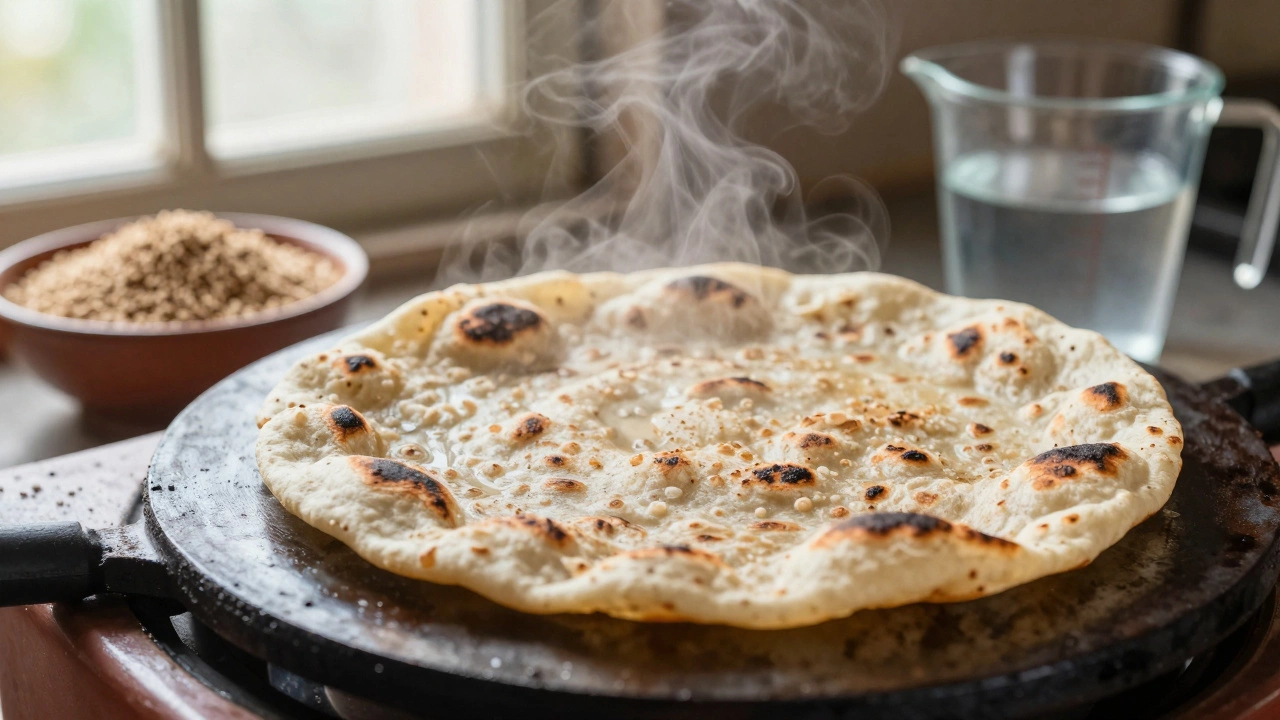
Nothing beats a warm, soft roti fresh off the tawa-fluffy, pliable, and just a little charred at the edges. But if your roti comes out hard, rubbery, or tough, you’re not alone. Many home cooks struggle with this, even after years of making roti. The problem isn’t your recipe. It’s usually one or two small mistakes in the dough or cooking process.
Your dough is too dry
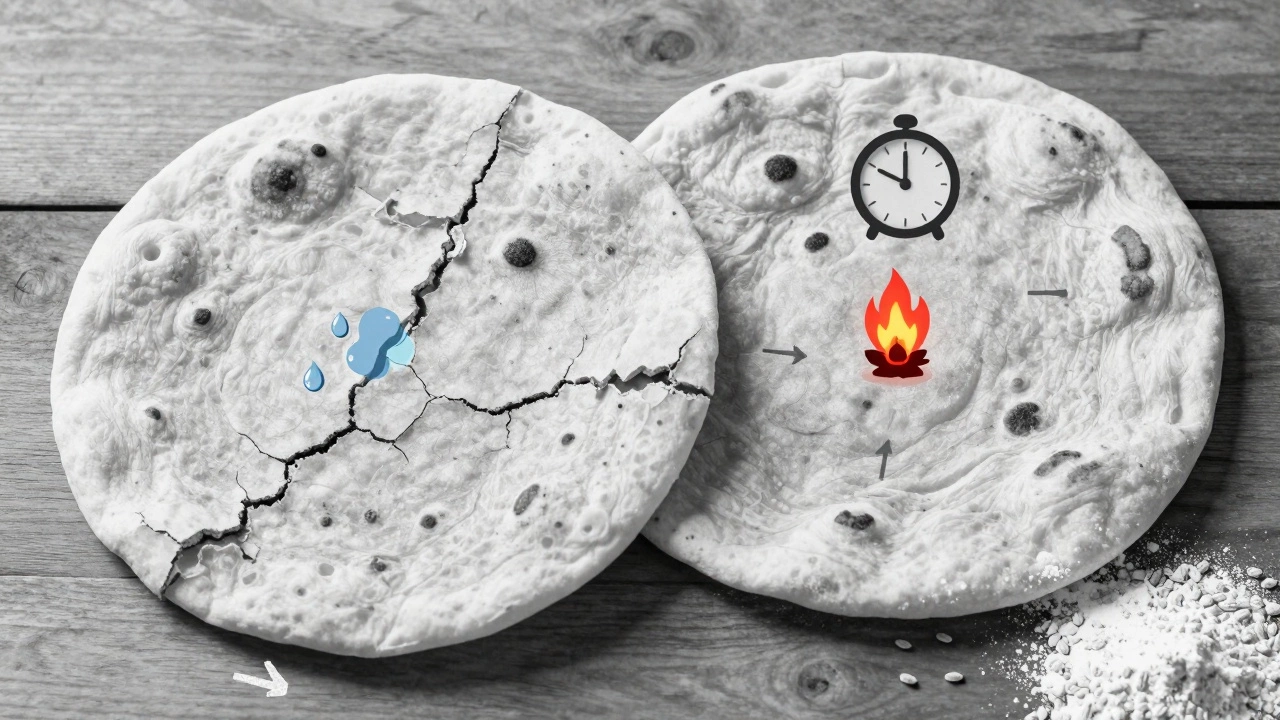
The most common reason roti turns hard? Not enough water. Roti dough needs to be softer than you think. If it feels like bread dough or even play-dough, it’s too dry. True roti dough should feel like soft earlobe-slightly sticky, but not wet. You need about 3/4 cup of water for every 2 cups of atta (whole wheat flour). Start with less, then add water a tablespoon at a time. If you add too little, the dough won’t stretch. When rolled, it cracks instead of flowing. That crack turns into a hard edge when cooked.Flour absorbs water differently depending on humidity, brand, and age. If you live in a dry climate like Bristol, your flour might be extra thirsty. Store it in an airtight container. Let it sit for 10 minutes after mixing to fully hydrate. Skip the temptation to add more flour while kneading. That’s how you end up with dense, brick-like roti.
You’re not resting the dough
Kneading isn’t enough. You need to let the dough rest. At least 30 minutes. Ideally, an hour. Why? Gluten needs time to relax. If you roll and cook right after kneading, the dough springs back like a rubber band. That tension translates into a chewy, hard texture. Resting also lets the flour absorb water evenly. No dry patches. No uneven cooking.Cover the dough with a damp cloth, not a dry towel. A dry towel pulls moisture out. A damp cloth keeps the surface soft. If you’re in a hurry, wrap it in plastic. But don’t skip the rest. Even 15 minutes helps. I’ve seen people skip this step and blame the tawa. It’s never the tawa.
Your tawa isn’t hot enough
A cold or lukewarm tawa is the second most common mistake. Roti needs high, even heat. If the surface isn’t hot enough, the dough sits there and dries out before it can puff. You’ll get a flat, hard disc that looks more like a cracker than roti.Test your tawa: sprinkle a few drops of water. If they sizzle and vanish in under 2 seconds, it’s ready. If they sit there and bubble slowly, wait longer. Preheat for 5-7 minutes on medium-high. Don’t grease it. A dry, hot surface is what makes roti puff. Grease makes it greasy and dense.
Some people switch to gas stoves because they think electric is slower. That’s not true. It’s about heat control. If your electric stove has hot spots, rotate the roti halfway through. Use a heavy-bottomed tawa-cast iron or seasoned steel. Thin pans cool down fast when you lay the roti on them.
You’re rolling it too thin
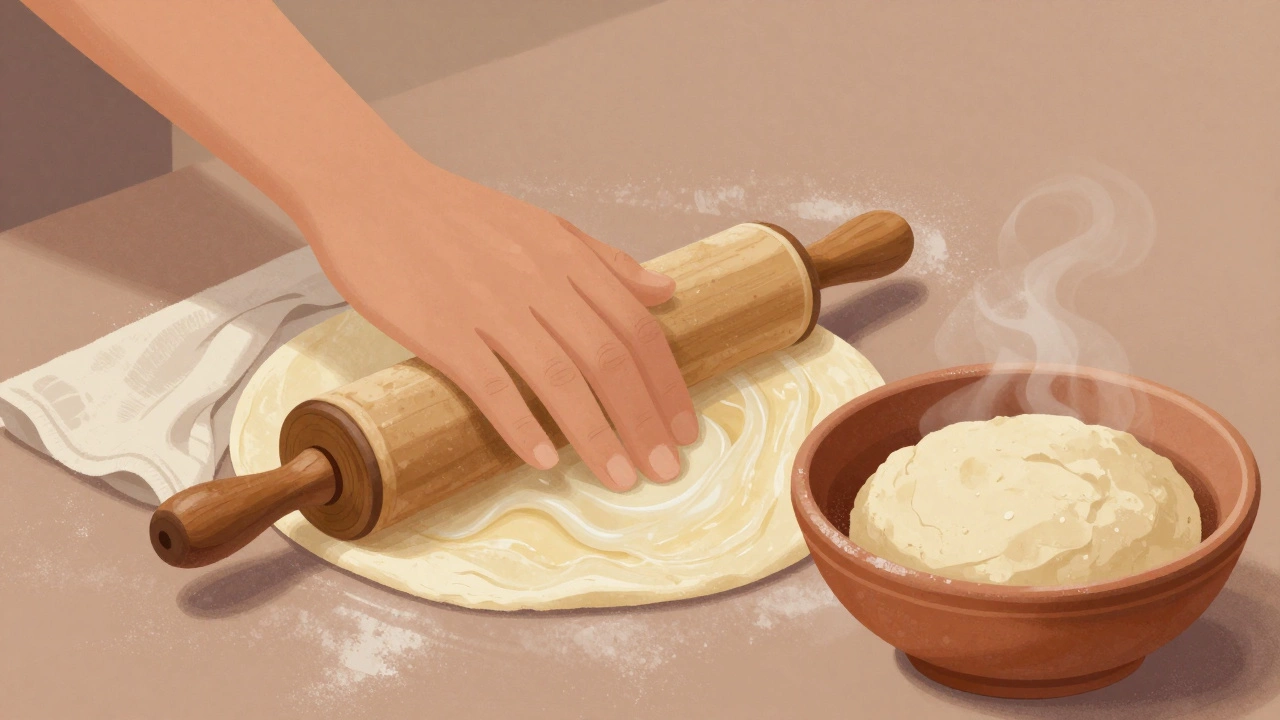
Roti isn’t a paper-thin tortilla. It should be about 5-6 mm thick. Roll it thinner than that, and it bakes too fast. The outside crisps before the inside can steam. That’s how you get hard edges and a dry center. Use a little flour on the rolling pin and surface to prevent sticking, but don’t overdo it. Excess flour gets trapped in the layers and turns into grit.Roll from the center outward. Don’t roll back and forth like you’re sanding wood. That compresses the dough. Lift the roller slightly at the edges to keep them thicker. A slight rim helps trap steam inside when cooking.
You’re flipping too early or too often
Let the roti cook undisturbed until you see bubbles forming and the bottom turns golden. That usually takes 45-60 seconds. Flip it once. Press gently with a spatula-not hard, just enough to help it puff. If it doesn’t puff, don’t panic. Some rotis don’t puff fully, especially if the dough is under-rested. But if you flip it twice, three times, or press it like you’re trying to iron it, you crush the air pockets. That’s how you get a dense, hard roti.Don’t stack rotis right after cooking. They need to breathe. Stack them while hot, and the steam gets trapped. That softens the crust, but then it turns soggy and eventually gummy. Instead, keep them in a covered basket or wrap them in a clean kitchen towel. That traps just enough warmth without making them wet.
Your atta isn’t fresh
Whole wheat flour goes rancid. Not overnight, but over months. If your atta smells sour, musty, or like old cardboard, it’s past its prime. Rancid flour doesn’t absorb water well. It makes dough feel grainy and hard to knead. It also affects fermentation-even if you’re not using yeast, the natural enzymes in flour help with softness.Buy small batches. Store in the fridge if you don’t use it weekly. Check the expiry date. Don’t use flour that’s been sitting since last Diwali. Fresh atta has a nutty, earthy smell. It feels fine and powdery, not gritty. If you’ve switched brands and your roti turned hard, that’s why.
You’re skipping the final touch
The last secret to soft roti? A quick pass over an open flame. After cooking on the tawa, hold the roti over the flame for 5-10 seconds on each side. The direct heat makes it puff up one last time. It also adds a smoky flavor and seals in moisture. You don’t need a gas stove. A camping stove, induction burner, or even a candle flame (with caution) works. This step is optional but transformative.Some people brush the hot roti with ghee. That helps too-but only if the roti is already soft. Ghee on a hard roti just makes it greasy. Always cook right first. Then add flavor.
Quick checklist for soft roti every time
- Use 3/4 cup water per 2 cups atta-add slowly
- Knead for 8-10 minutes until smooth
- Rest dough for at least 30 minutes, covered with a damp cloth
- Preheat tawa until water drops vanish in 2 seconds
- Roll to 5-6 mm thickness-not paper thin
- Flip only once, press gently to help puff
- Keep cooked rotis wrapped in a clean towel
- Use fresh atta-no old or smelly flour
- Optional: Briefly toast over flame for extra softness
Hard roti isn’t a cooking failure. It’s a signal. Something in your process is off. Fix the dough, fix the heat, fix the rest. You don’t need fancy tools. You just need to pay attention to the little things. Try one change at a time. Start with resting the dough. That alone changes everything.
Why does my roti get hard the next day?
Roti hardens overnight because moisture escapes. If you leave it uncovered, the surface dries out. Even if you store it in the fridge, the cold pulls out water and makes starches firm up. To prevent this, wrap hot rotis in a clean cotton towel and keep them in an airtight container. Reheat briefly on a tawa or in a microwave with a damp paper towel over them. Never freeze roti unless you plan to use it for parathas-freezing makes the texture grainy.
Can I use all-purpose flour instead of atta?
You can, but it won’t be traditional roti. All-purpose flour has less fiber and protein than whole wheat atta. The texture will be softer, but it lacks the nutty flavor and chewy structure. It also doesn’t puff as well. If you’re using AP flour, reduce the water slightly-about 1/4 cup less per 2 cups flour. But for authentic roti, stick to atta. It’s the right flour for the job.
Does adding oil or ghee to the dough help?
A tiny bit-about 1 teaspoon per 2 cups of flour-can make the dough easier to roll and slightly softer. But too much fat interferes with gluten formation. That means the roti won’t puff properly. It also makes the surface greasy. Don’t add oil if your dough is already sticky. Focus on water and rest time first. Oil is a bonus, not a fix.
My roti puffs up but still feels hard. Why?
If your roti puffs but stays hard, the issue is likely under-kneading or overcooking. Under-kneaded dough doesn’t form enough gluten to hold steam properly. Overcooked roti loses all moisture. Try kneading longer-10-12 minutes-and cook for only 45 seconds per side. The puff means steam is being made. If it’s still hard, the steam isn’t being trapped. That’s a dough texture problem, not a heat problem.
Can I make roti dough ahead of time?
Yes. Make the dough, rest it, then refrigerate it in an airtight container for up to 24 hours. Let it sit at room temperature for 20 minutes before rolling. Cold dough is harder to stretch. But if you’re short on time, this works better than trying to knead and rest on a busy morning. Just don’t leave it longer than a day-the flour starts to ferment slightly and changes the taste.
If you’ve tried everything and your roti is still hard, go back to basics. Fresh atta. Enough water. Full rest. Hot tawa. One flip. That’s all you need. No magic. No secret ingredients. Just patience and attention.