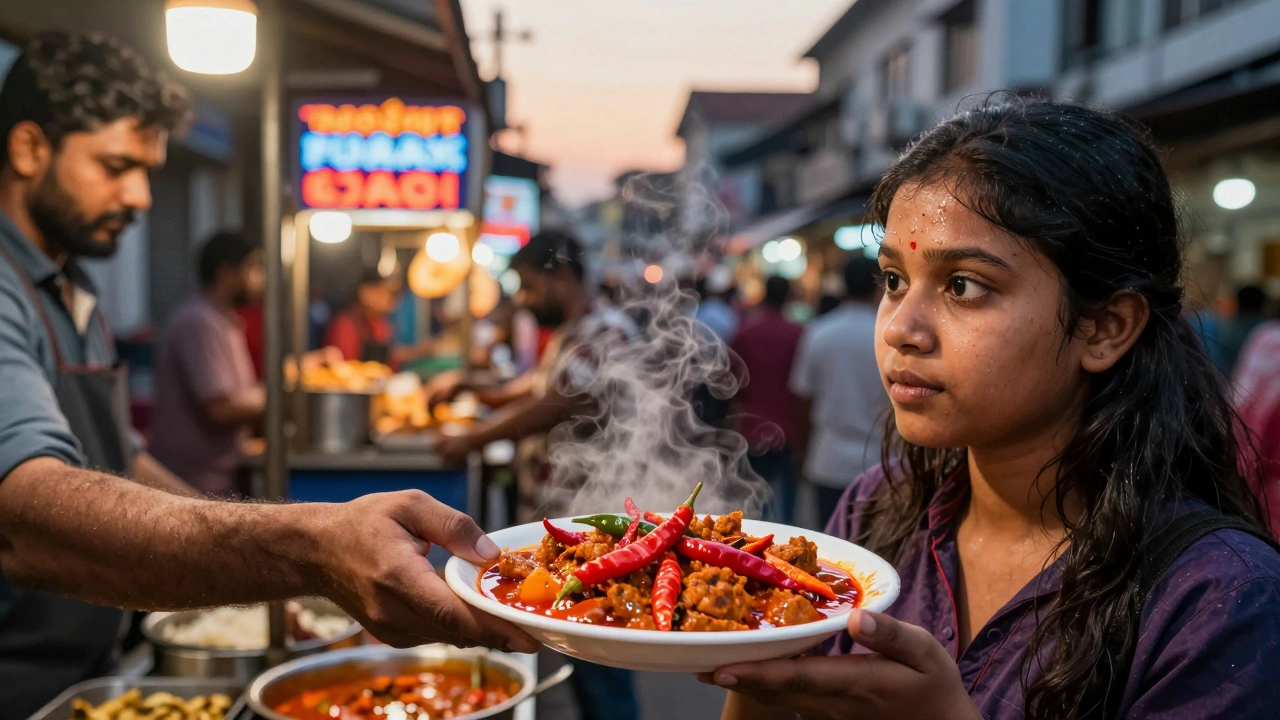
Everyone knows chicken tikka - creamy, mildly spiced, served in nearly every Indian restaurant outside India. But if you’ve ever bitten into a curry that made your eyes water, your nose run, and your tongue feel like it was holding a live wire, you’ve probably tasted something hotter than tikka. And yes, it’s not just a myth. In the bustling lanes of Mumbai, Delhi, and Kolkata, street vendors serve curries that make tikka look like a warm hug. So what curry is actually hotter than tikka? Let’s cut through the noise and name the real heat kings.
Chicken Tikka Isn’t Even Close to the Spiciest
Chicken tikka is designed to be approachable. It’s marinated in yogurt, garlic, ginger, and mild spices like cumin and coriander. The heat? Barely there. Most versions clock in at 1,000-2,000 Scoville Heat Units (SHU). For comparison, a jalapeño hits 2,500-8,000 SHU. So if you think tikka is spicy, you haven’t met its rivals yet.
Street vendors in India don’t serve tikka to challenge your tolerance. They serve it to please crowds - tourists, kids, older folks. The real heat comes from dishes made for locals who grew up with fire in their food.
Vindaloo: The Original Heat Monster
If you want to know what curry is hotter than tikka, start with vindaloo. Not the British pub version with sweet vinegar and mild paprika. The real Goan vindaloo - the kind sold by street stalls in Panjim or roadside carts in Karnataka - is a beast.
It’s made with pork or chicken, soaked in vinegar and soaked in dried red chilies. The chilies? Often Byadgi, Guntur Sannam, or even Bhut Jolokia (ghost pepper). One bite and your mouth goes numb, then burns, then screams. Vindaloo can hit 100,000-150,000 SHU. That’s 50 times hotter than tikka.
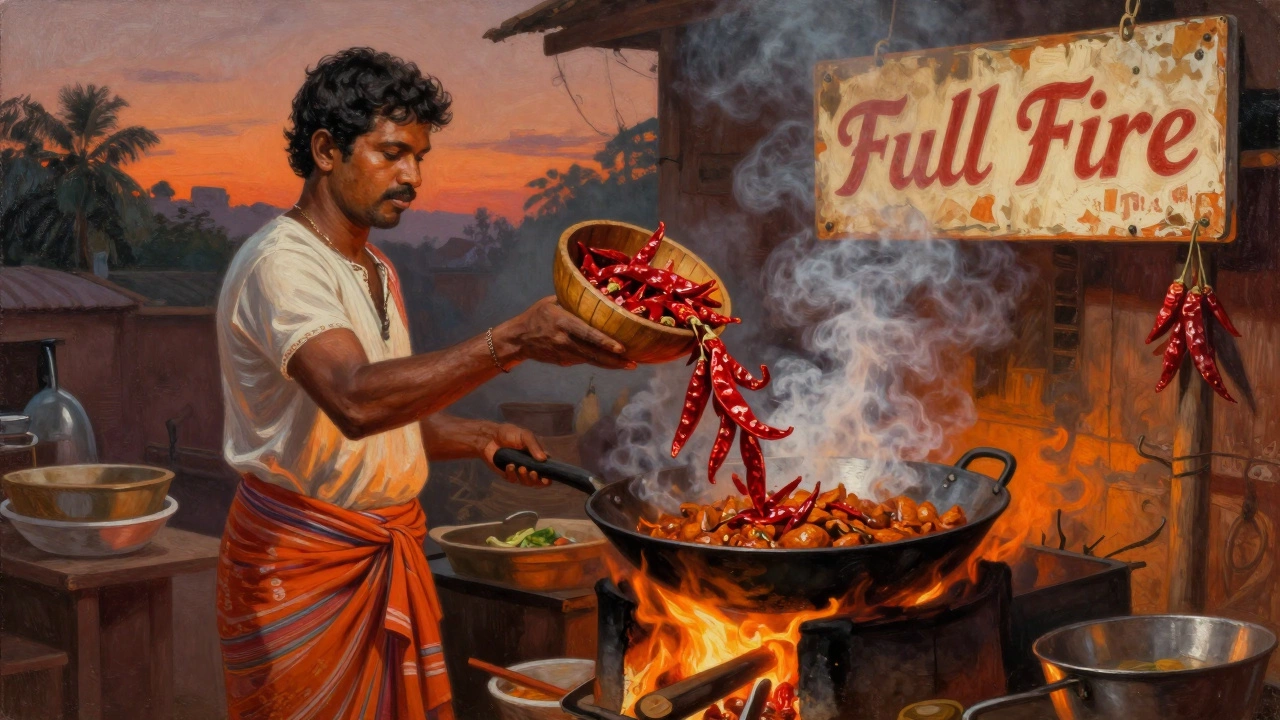
Street vendors in Goa don’t ask if you want it spicy. They ask, “Kitna spicy? Medium? Or full fire?” And if you say “full fire,” they’ll slide a plate in front of you with a warning sign: “Drink milk, not water.”
Kerala’s Meen Kuzhambu: Fish Curry That Stings
Don’t think heat only comes from meat. In Kerala, fish curry isn’t just about coconut milk and tamarind. It’s about dried red chilies - lots of them. Meen Kuzhambu, a sour fish curry, uses at least 15-20 dried red chilies per pot. Some versions include bird’s eye chilies, which pack 50,000-100,000 SHU.
It’s served with steamed rice and a side of sliced raw onion. The onion isn’t just for crunch - it’s a cooling counterbalance. Locals eat it without flinching. Tourists? They need three glasses of buttermilk.
On the beachside stalls of Kovalam, you’ll see men in saris eating this curry for breakfast. No one blinks. No one asks for yogurt.
Phaal Curry: The Restaurant Challenge
Phaal isn’t traditional. It was invented in the UK in the 1990s to compete with the “spiciest curry” title. But it’s now served in Indian restaurants from Birmingham to Bangalore.
It’s made with fresh ghost peppers, scotch bonnets, and habaneros - sometimes ground into a paste with the seeds still in. The sauce is thick, oily, and bright red. It’s not meant to be eaten slowly. It’s meant to be a dare.
Some restaurants in London still offer a “Phaal Challenge”: finish your plate, get your name on the wall, and get a free dessert. Fewer than 10% succeed. The average person lasts 45 seconds before reaching for milk. The record? 2 minutes 14 seconds - and the winner cried for an hour.
And Then There’s Chilli Chicken (Street Style)
Forget the sweet-and-sour version you get in American Chinese restaurants. In Delhi’s Chandni Chowk or Mumbai’s Juhu Beach, chilli chicken is a spicy stir-fry of crispy chicken, green chilies, garlic, and soy sauce. The chilies? Fresh green bird’s eye chilies - 10-15 of them, chopped and fried right into the oil.
It’s served on a banana leaf or in a paper cone. You eat it with your fingers. No forks. No napkins. Just heat, crunch, and sweat. One bite, and your lips tingle. Two bites, and your eyes water. Three bites, and you’re asking for a Coke.
It’s not a curry, technically. But it’s street food. And it’s hotter than tikka - no question.
Why Do People Eat This Stuff?
You might wonder: why would anyone eat something that hurts? It’s not about pain. It’s about culture.
In India, heat isn’t just flavor - it’s a sign of authenticity. A curry that doesn’t make you sweat isn’t considered “real.” Spices are medicine. They kill bacteria. They aid digestion. In humid climates, spicy food makes you sweat, which cools you down.
And then there’s the social part. Eating a fiery curry in front of friends? That’s bravery. That’s bonding. That’s how you earn respect.
At a street food stall in Jaipur, I watched a 70-year-old man eat a plate of spicy lamb curry with one hand and sip lassi with the other. He smiled. No tears. No complaints. Just quiet satisfaction. That’s the real test.
How to Handle the Heat - If You Dare
If you’re new to Indian street food heat, here’s how to survive:
- Start small. Ask for “medium spice” - not “normal.” In India, “normal” means “you’re weak.”
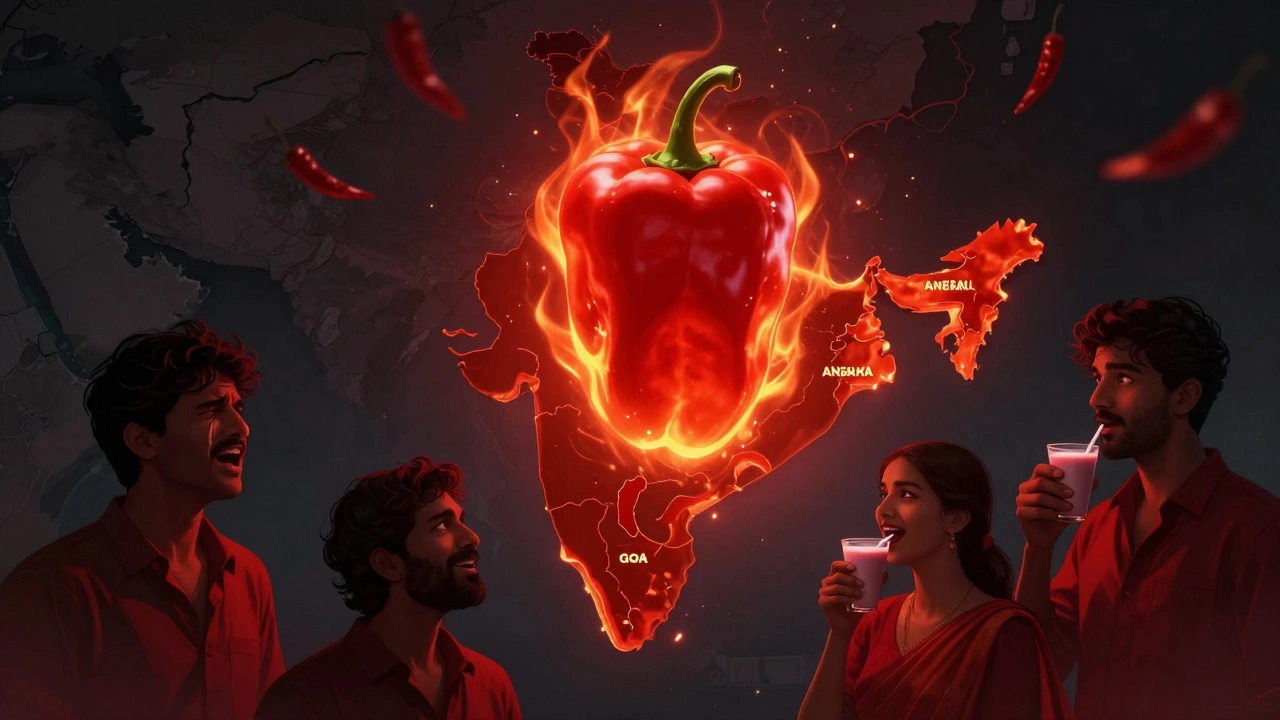
- Drink milk, not water. Water spreads capsaicin. Milk has casein, which binds to it and washes it away.
- Eat yogurt or raita. Cucumber yogurt with cumin is your best friend.
- Don’t touch your eyes. Seriously. Your fingers will be burning. Wash them immediately.
- Bring sugar. A teaspoon of sugar on your tongue can mute the burn faster than anything.
And if you’re still unsure? Order a side of plain naan. Dip it in the sauce. Let it soak up the heat. Then eat it slowly. It’s not cheating. It’s strategy.
What’s the Absolute Hottest?
There’s no official winner - but if you ask street vendors across India, they’ll point to one thing: ghost pepper curry.
It’s not always labeled. Sometimes it’s just called “extreme” or “danger.” It’s made with Bhut Jolokia - the same chili that once held the Guinness World Record for hottest pepper. It’s not for tourists. It’s for locals who’ve trained their palates since childhood.
One vendor in Assam told me, “If you cry eating this, you’re not ready for real Indian food.”
So yes - vindaloo, phaal, chilli chicken, meen kuzhambu - they’re all hotter than tikka. But if you want the real thing? Find the ghost pepper curry. And bring milk.
Is vindaloo always hotter than tikka?
Yes, if it’s the real Goan version. Most restaurant tikka is mild, while authentic vindaloo uses dried red chilies and sometimes ghost peppers. The heat difference can be 50 times greater. But some places dilute vindaloo for tourists - so ask for “traditional” or “Goan style.”
Can I make ghost pepper curry at home?
You can, but be careful. Ghost peppers are extremely potent. Use gloves when handling them. Start with one pepper, ground fine, and add to a curry base with tomatoes, garlic, and cumin. Taste before adding more. One whole pepper can make enough curry to burn six people.
What’s the best drink to cool down after eating spicy curry?
Milk is the best - full-fat works best. Yogurt drinks like lassi or buttermilk are next. Sugar water helps a little, but not as much. Avoid soda, water, or beer - they spread the burn instead of calming it.
Is phaal curry authentic Indian food?
Not originally. Phaal was created in UK Indian restaurants in the 1990s to compete for “spiciest curry” titles. But it’s now so popular that many Indian chefs in India use it too - especially in cities like Bangalore and Delhi. It’s not traditional, but it’s real in today’s context.
Why doesn’t everyone in India eat super-hot curry?
Not everyone likes heat. Just like not everyone likes coffee black or beer bitter. Many families cook mild versions for kids, elderly, or those with sensitive stomachs. Street vendors offer spice levels - from “no heat” to “full fire.” It’s about choice, not obligation.
What to Try Next
If you’ve survived vindaloo and are curious for more, look for:
- Chettinad chicken - from Tamil Nadu, uses star anise and black pepper, with a slow-building heat.
- Pork Vindaloo (Goan) - the original, made with vinegar and palm vinegar, not wine.
- Andhra-style chicken curry - from Andhra Pradesh, known for fiery red chili paste.
- Kashmiri rogan josh - not the hottest, but the most complex. Uses dried chilies and Kashmiri red powder - deep color, medium heat.
Don’t rush. Taste one at a time. Let your palate adjust. The heat doesn’t just burn - it blooms. And once you learn to read it, you’ll start to crave it.