Khoya Yield & Sweet Type Calculator
Input Your Ingredients
Enter milk amount and select a sweet to see results.
Estimated Khoya Yield:
Quick Reference Guide
| Khoya Type | Characteristics | Best For |
|---|---|---|
| Danedar | Granular, Dry (~50% moisture) | Barfi, Kalakand, Peda |
| Batti | Dense, Smooth (~30% moisture) | Gulab Jamun, Doughs |
| Chikna | Creamy, Wet (~60% moisture) | Rabri, Kheer, Fillings |
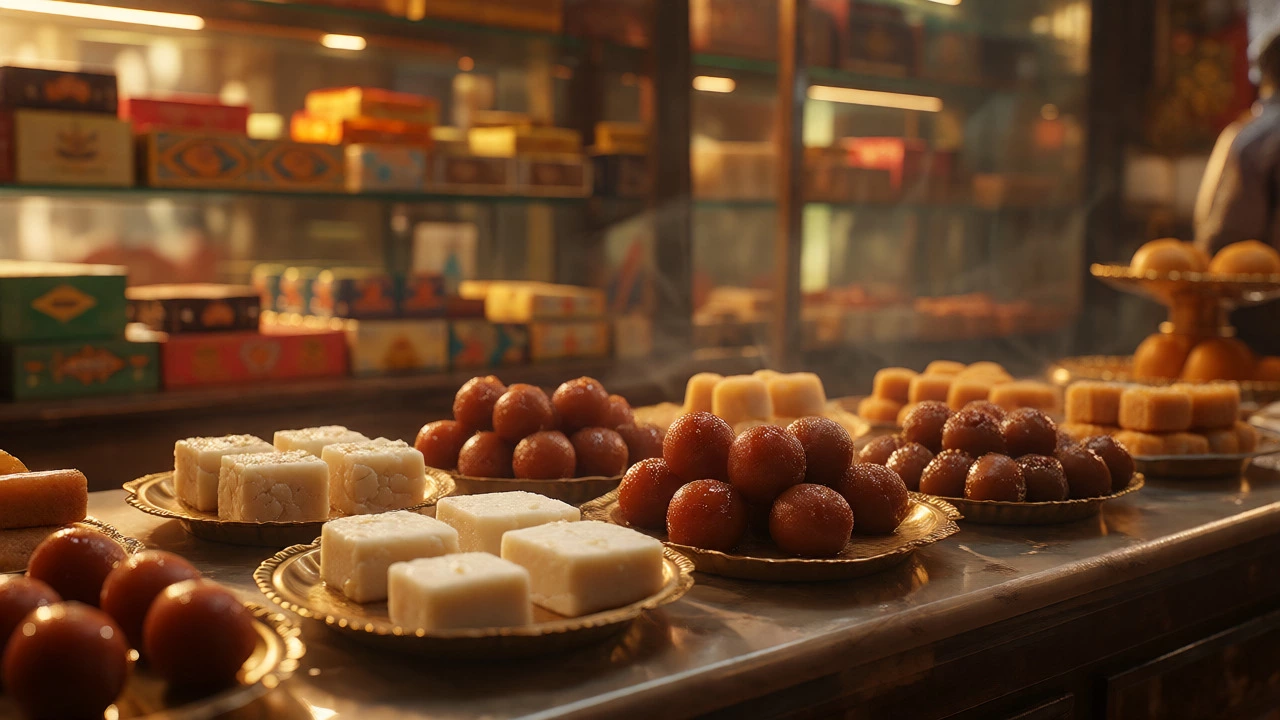
You walk into a sweet shop in London or Mumbai, and the air hits you first. It’s thick with the scent of caramelized milk and cardamom. You pick up a barfi, soft and yielding, or a gulab jamun, dark and syrupy. They taste rich, dense, and undeniably luxurious. But if you look at the ingredient list on a packaged box, you might be confused. Where is the flour? Where is the butter?
The answer lies in one humble, labor-intensive process that transforms liquid milk into solid gold. The main ingredient in most premium Indian sweets isn't just sugar or flour-it's khoya, also known as mawa. This is essentially milk solids obtained by evaporating moisture from whole milk until it becomes a dense, granular paste. Without khoya, you don’t get the authentic texture of half the sweets on the counter. Understanding what khoya is, how it’s made, and why it dominates the confectionery landscape changes how you view every bite of mithai.
The Alchemy of Milk: Defining Khoya and Mawa
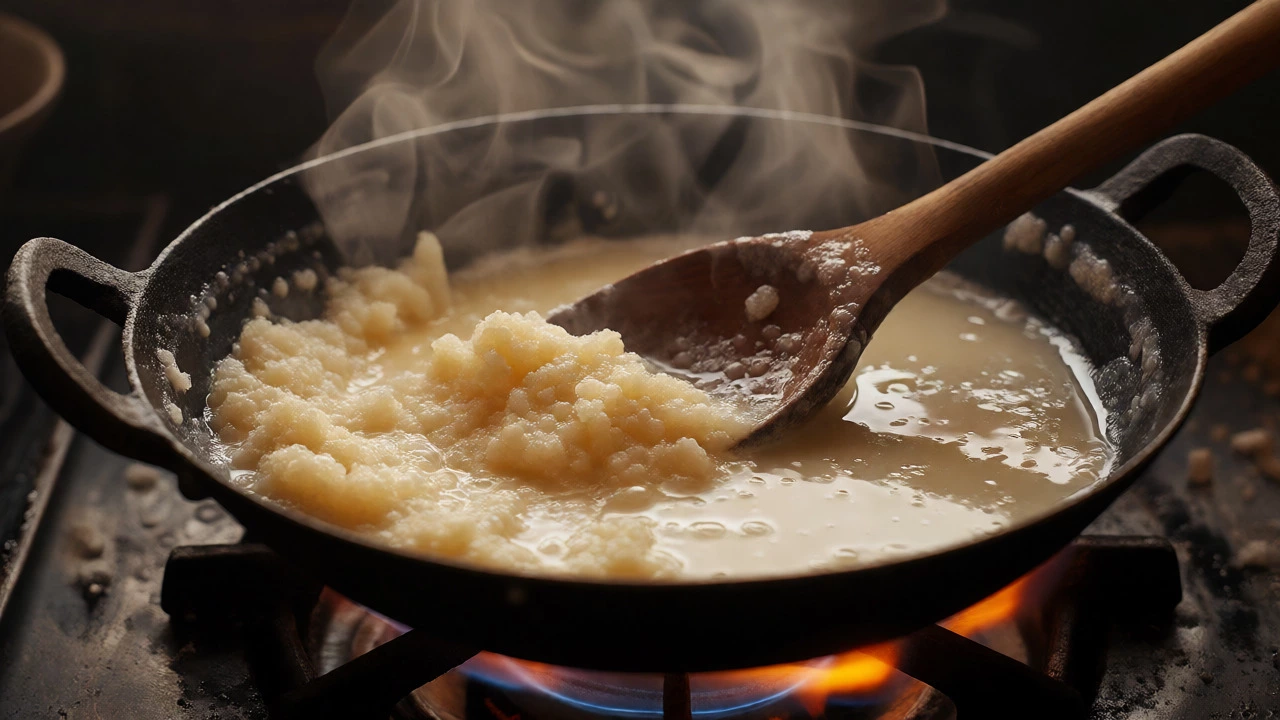
Khoya is not cheese, and it’s not exactly condensed milk, though it shares DNA with both. It is the result of slow-cooking full-fat cow or buffalo milk in a wide, heavy-bottomed iron kadhai (pan). As the water content evaporates over several hours, the proteins and fats concentrate. Eventually, the mixture reduces to about 10-15% of its original volume, turning into a semi-solid mass. This process is called reduction.
In culinary terms, khoya acts as the structural backbone of many desserts. Unlike Western pastries that rely on wheat gluten for structure, Indian sweets often use the coagulated casein protein in milk solids to hold their shape. When you bite into a piece of kaju katli or peda, that smooth, melt-in-the-mouth texture comes from the fat content in the khoya coating the other ingredients.
Why does this matter? Because substituting khoya with powdered milk or cream rarely yields the same result. Powdered milk lacks the complex Maillard reaction flavors developed during slow reduction. Cream adds richness but misses the grainy, dry texture needed for certain barfis. If you are trying to replicate authentic Indian tastes, sourcing or making real khoya is non-negotiable.
Types of Khoya: Not All Milk Solids Are Equal
One common mistake home cooks make is assuming all khoya looks and behaves the same. In reality, there are three distinct types, classified by their moisture content and color. Using the wrong type can ruin a recipe’s consistency.
| Type | Moisture Content | Texture & Color | Best Used For |
|---|---|---|---|
| Danedar Khoya | Lowest (~50%) | Granular, white to light yellow | Kalakand, Barfi, Peda |
| Batti Khoya | Medium (~30%) | Dense, smooth, off-white | Gulab Jamun, Rasgulla filling |
| Chikna Khoya | Highest (~60%) | Smooth, creamy, pale yellow | Rabri, Kheer, Halwa |
Danedar Khoya has a grainy texture because the milk curdles slightly as it dries out. This granularity provides a pleasant mouthfeel in sweets like Kalakand, where you want some resistance between your teeth. Batti Khoya is kneaded while hot to become smooth and pliable, making it perfect for rolling into balls for Gulab Jamun. If you use Danedar for Gulab Jamun, they will crack and disintegrate in the oil. Chikna Khoya is still wet enough to be stirred directly into liquids, acting as a thickener for puddings without needing rehydration.
How to Make Khoya at Home: Patience is Key
Can you buy khoya? Yes, especially in Indian grocery stores abroad. But store-bought versions often contain added preservatives or vegetable fats to extend shelf life. Making it yourself ensures purity. Here is the straightforward method used in households across India.
- Select the Right Milk: Use full-fat cow or buffalo milk. Skimmed milk yields too little product and results in a rubbery texture. Buffalo milk produces more khoya due to higher fat content, but cow milk offers a sweeter, lighter flavor.
- The Vessel Matters: Use a heavy-based steel or iron pan. Iron pans impart a slight metallic depth that enhances the flavor profile, traditionally preferred for high-quality khoya.
- Simmer and Stir: Bring the milk to a boil, then reduce heat to low. Stir continuously. This prevents scorching at the bottom. Scorching turns the milk brown prematurely and adds a bitter taste.
- Watch the Reduction: As the volume decreases, the milk thickens. Continue stirring until the milk separates into solid particles and whey. The whey should run clear when pressed.
- Cool and Knead: Once the desired consistency is reached, transfer the khoya to a plate. Let it cool slightly, then knead it with clean hands to remove lumps. For Batti khoya, knead thoroughly; for Danedar, break it up gently.
This process takes time-often 2 to 4 hours depending on quantity. Do not rush it by increasing the heat. High heat burns the lactose sugars before the water evaporates, resulting in a burnt, dark product rather than the golden hue you desire.
Sweeteners and Flavor Profiles: Beyond Sugar
While khoya provides the body, sugar provides the sweetness. However, Indian sweets rarely use plain white sugar alone. The choice of sweetener affects the color and aroma significantly.
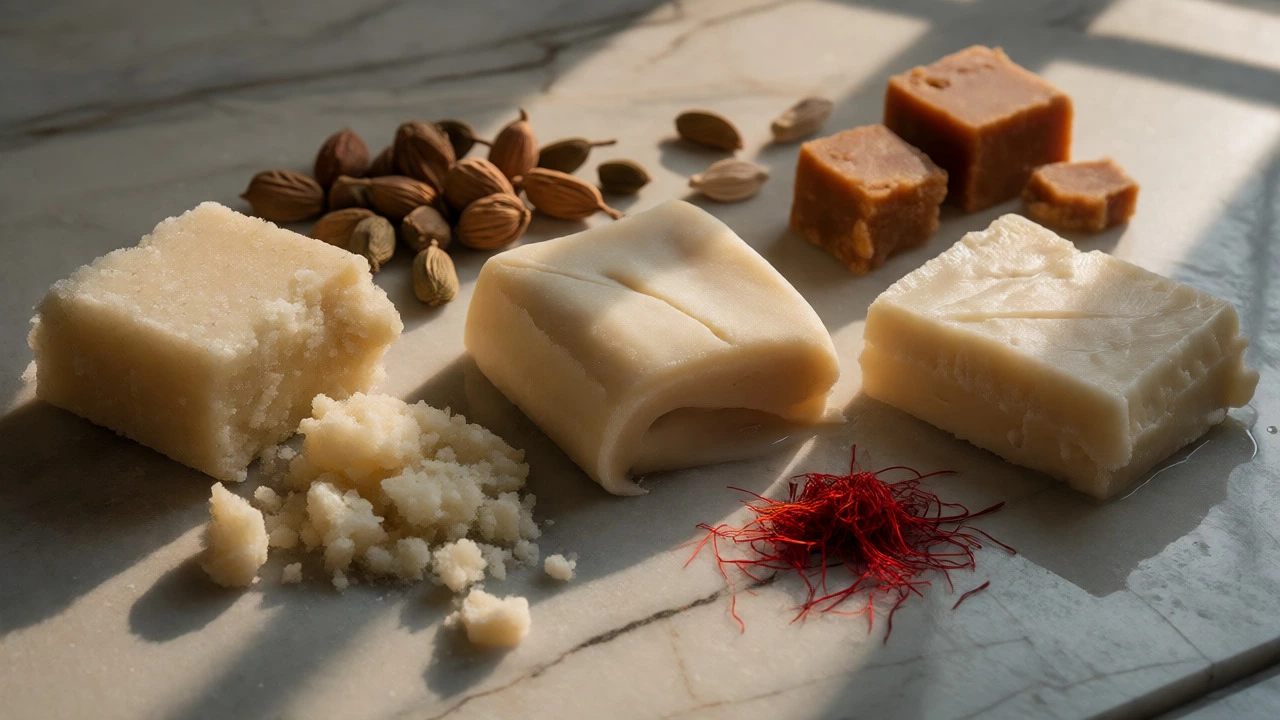
Jaggery (Gur) is unrefined cane sugar. It retains molasses traces, giving sweets a deep amber color and earthy notes. Sweets like Besan Ladoo or Gur Ki Barfi rely on jaggery for their signature warmth. Jaggery also has a lower glycemic index than refined sugar, though it is still high in calories.
Sugar Syrup (Chashni) is used for soaking sweets like Gulab Jamun. The concentration of the syrup determines whether the sweet remains firm or becomes juicy. A thin syrup keeps the exterior crisp; a thick syrup makes it sticky and preserves it longer.
Aromatic agents play a crucial role too. Cardamom (Elaichi) and Saffron (Kesar) are almost universally paired with khoya. Cardamom cuts through the richness of the milk fat, providing a fresh, citrusy top note. Saffron adds a floral complexity and a vibrant yellow tint. Nutmeg and rose water are less common but appear in specific regional variations, such as Kashmiri Phirni or Lucknowi Malai Makhan.
Regional Variations: How Geography Shapes Ingredients
India’s vast geography means the "main" ingredient shifts slightly based on local agriculture and dairy traditions. While khoya is ubiquitous, its dominance varies.
In Punjab and Haryana, dairy farming is intensive. Here, khoya-based sweets like Rabri and Peda reign supreme. The abundance of fresh milk allows for frequent preparation of these perishable treats.
In South India, rice flour and coconut often take center stage alongside milk solids. Sweets like Mysore Pak use gram flour (besan) and ghee, with minimal khoya. However, even here, Payasam uses reduced milk (similar to chikna khoya) as a base.
In Eastern India, particularly Bengal, cottage cheese (Chhana) is the star. Chhana is technically a precursor to khoya-freshly drained curds. Sweets like Rosogolla and Sandesh use chhana instead of fully dried khoya. This distinction is vital: Chhana is moist and spongy; Khoya is dry and crumbly. Confusing them leads to failed recipes.
Health Considerations: Is Khoya Healthy?
Let’s address the elephant in the room. Khoya is calorie-dense. Since it is concentrated milk fat and protein, it packs significant energy. A 100-gram serving of khoya contains approximately 350-400 calories, mostly from saturated fats.
However, it is also nutrient-rich. Khoya provides calcium, phosphorus, and vitamin B12. For those watching their weight, portion control is essential. One small peda is roughly equivalent to a slice of cake in terms of caloric load. If you are looking for lighter alternatives, consider using skimmed milk khoya, though the texture will suffer. Alternatively, mix khoya with fruit purees to dilute the density without losing the milky essence.
Diabetics should exercise caution. The combination of high-fat dairy and high-sugar content creates a rapid glucose spike followed by a sluggish digestion phase due to the fat. Pairing sweets with unsweetened chai or green tea can help mitigate blood sugar impacts.
Common Mistakes When Cooking with Khoya
Even experienced cooks stumble when handling khoya. Here are pitfalls to avoid:
- Using Old Khoya: Fresh khoya spoils quickly. If it smells sour or looks yellowish-brown, discard it. Oxidized khoya ruins the delicate flavor of white sweets.
- Overcooking: Burning the milk solids during reduction creates acrid compounds. If your khoya tastes bitter, no amount of sugar will mask it.
- Ignoring Temperature: When mixing khoya with sugar syrup, ensure the syrup is at the correct thread consistency. Too hot, and the khoya melts into a soup; too cold, and it doesn’t bind properly.
- Skipping the Rest Period: Many sweets need time to set. Don’t cut barfi immediately after pouring. Let it cool completely to allow the fats to solidify, ensuring clean cuts.
Frequently Asked Questions
Is khoya the same as paneer?
No. Paneer is fresh cheese made by curdling milk with acid (like lemon juice), retaining moisture. Khoya is made by evaporating milk without adding acid, concentrating the natural solids. Paneer is savory and soft; khoya is sweet-friendly and dense.
Can I substitute khoya with milk powder?
You can, but the taste and texture differ. Milk powder lacks the caramelized notes of slow-reduced milk. To mimic khoya, mix milk powder with a little ghee and milk, then cook briefly. It works for quick recipes but won't match authentic quality.
How long does homemade khoya last?
Fresh khoya lasts only 2-3 days in the refrigerator. For longer storage, freeze it in airtight containers for up to 3 months. Thaw slowly in the fridge before use to prevent condensation from making it soggy.
Which Indian sweets do not use khoya?
Many popular sweets rely on flour, nuts, or fruits instead. Examples include Besan Ladoo (gram flour), Mysore Pak (gram flour/ghee), Coconut Macaroons, and Fruit-based halwas. These offer variety for those avoiding dairy-heavy desserts.
Why is my Gulab Jamun hard?
Hard gulab jamuns usually result from using old or overly dry khoya, or over-kneading the dough. Ensure your khoya is fresh and moist (Batti type). Add a pinch of baking soda or milk to soften the dough if it feels stiff.