Chutney Substitute Finder
Find the perfect alternative for your chutney when you can't find it in stores. Select your chutney type to see the best substitute and why it works.
When you hear the word chutney, you might think of that sweet-and-spicy spoonful that comes with your samosa or dosa. But if you’ve ever asked, what is another name for chutney?, you’re not alone. People around the world have tried to find a simple label for this flavorful Indian condiment - and while there’s no exact one-word replacement, there are several close cousins and regional equivalents that do the same job.
Chutney Isn’t Just One Thing - It’s a Family
Chutney isn’t a single recipe. It’s a whole category of condiments made by grinding, cooking, or blending ingredients like fruits, vegetables, herbs, spices, and sometimes nuts. The word itself comes from the Hindi word chatni, which means "to lick" - because you want to savor every bit of it. In South India, you’ll find coconut chutney served with idli. In North India, mint chutney pairs with tikki. In Maharashtra, there’s tamarind chutney on the side of pav bhaji. Each one is distinct, but they all share the same purpose: to add brightness, heat, sweetness, or tang to balance a meal.What Do People Call Chutney Outside India?
If you’re trying to explain chutney to someone who’s never had it, you might say it’s like:- A salsa - but smoother and often cooked longer
- A relish - but usually spicier and more complex
- A jam - but savory, not sweet
- A pesto - but made with fruit instead of herbs
Closest Western Equivalents
If you’re looking for a substitute in a recipe, here are the most practical stand-ins:- Mango chutney → Think of it like a spiced fruit preserve. In the U.S., you might substitute it with peach jam mixed with a pinch of cumin and chili powder.
- Mint chutney → Similar to Middle Eastern zhug or Lebanese toum, but with cilantro and green chilies. You can use a pesto-like herb paste as a base.
- Tamarind chutney → Closest to a sweet-and-sour sauce like Thai tamarind sauce or even a reduced balsamic glaze with a dash of soy.
- Coconut chutney → Think of it as a creamy herb dip, like a Greek tzatziki but made with coconut milk instead of yogurt.

Regional Names You Might Hear
Within India, chutney doesn’t always go by that name:- In Tamil Nadu, coconut chutney is often called thengai chutney - literally "coconut sauce."
- In Karnataka, you might hear holige chutney for sweet tamarind versions.
- In Bengal, a sweet mango condiment is called aam chutney - but it’s sometimes labeled as achar (pickle), even if it’s not fermented.
- In Gujarat, a spicy peanut chutney is called moongphali chutney - and it’s used like a dip, not a side.
Why There’s No Perfect Translation
Chutney doesn’t have a direct English name because it doesn’t fit neatly into Western food categories. It’s not a sauce, not a dip, not a jam, not a condiment in the ketchup sense. It’s a flavor bridge - it cuts through richness, wakes up bland food, and adds layers of taste you didn’t know you needed. That’s why, even in modern kitchens, people just say "chutney." Even chefs in London, New York, or Sydney use the word. It’s become part of the global food vocabulary - like curry, tofu, or kimchi.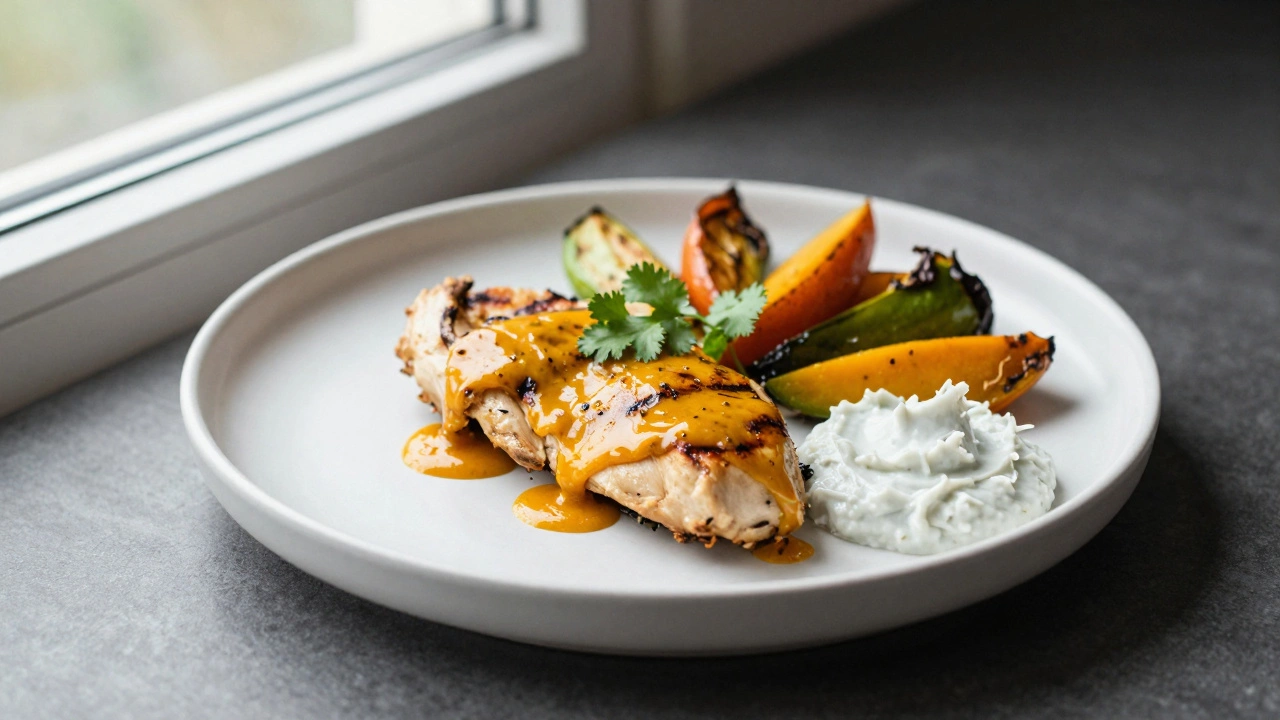
When You Can’t Find Chutney - What to Do
If you’re cooking an Indian meal and can’t find chutney at the store, here’s what to try:- For mango chutney: Mix 1 cup chopped mango, 2 tbsp sugar, 1 tsp vinegar, a pinch of ground ginger, and a tiny pinch of chili powder. Simmer for 10 minutes.
- For mint chutney: Blend 1 cup fresh mint, ½ cup cilantro, 1 green chili, 1 tbsp lemon juice, 1 tsp sugar, and a splash of water. Add a pinch of cumin if you have it.
- For tamarind chutney: Simmer 2 tbsp tamarind paste with 3 tbsp jaggery or brown sugar, ½ tsp cumin, and a pinch of salt until thickened.
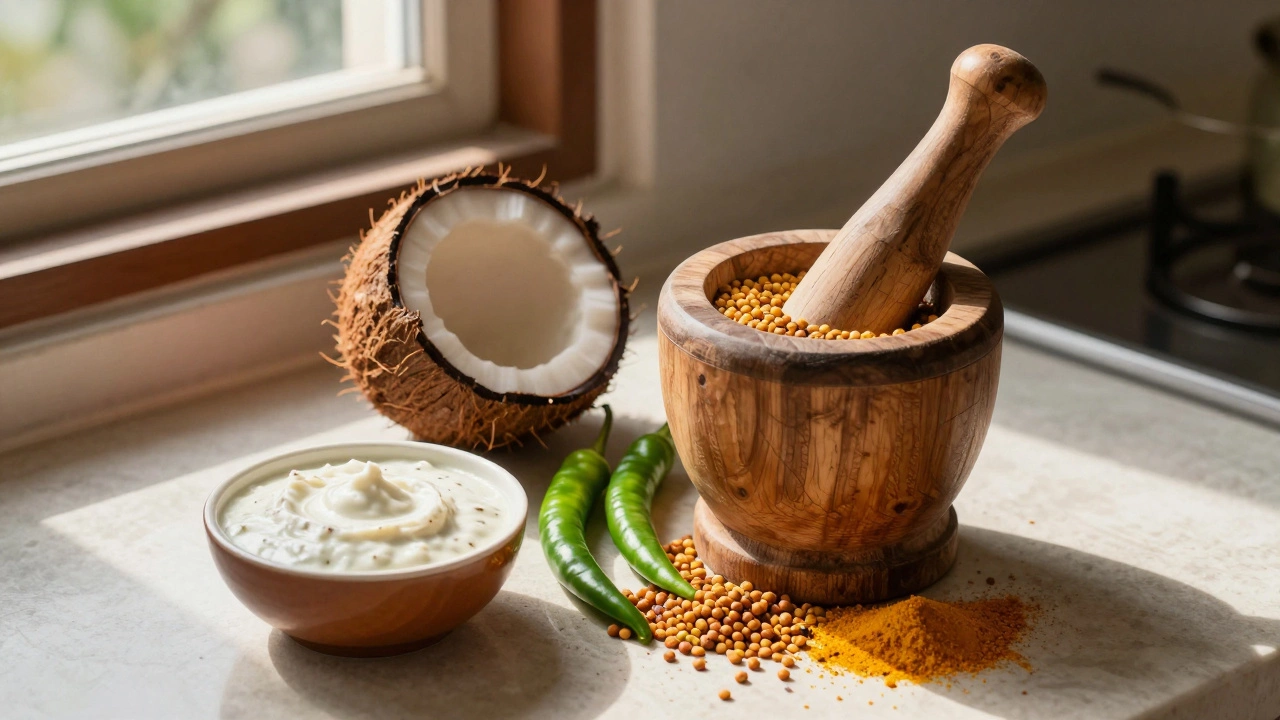
- For coconut chutney: Blend 1 cup fresh coconut, 2 green chilies, 1 tbsp roasted chana dal, ½ tsp mustard seeds, and water until smooth. Heat a little oil, add curry leaves, and pour over.
Chutney in Modern Cooking
These days, chutney isn’t just for Indian food. You’ll find it on charcuterie boards, drizzled over roasted vegetables, stirred into yogurt for a quick dressing, or even used as a glaze for grilled chicken. In Bristol, where I live, local cafes serve "chutney toast" - sourdough with goat cheese and a spoonful of tamarind chutney. It’s not traditional, but it works. The truth is, chutney doesn’t need a new name. It’s already found its place - as itself.Is chutney the same as salsa?
No. Salsa is usually raw, chunky, and made with tomatoes, onions, and cilantro. Chutney is often cooked, smoother, and includes spices like cumin, mustard, or asafoetida. Chutney can be sweet, sour, or spicy - salsa is mostly tangy and fresh.
Can I use relish instead of chutney?
Only in a pinch. Relish is pickled and crunchy, usually made from cucumbers or corn. It lacks the depth of flavor from spices and fruit that chutney has. If you’re out of chutney, try mixing relish with a little sugar, vinegar, and ground cumin to get closer.
Is mango chutney the same as jam?
Not really. Mango jam is just fruit and sugar, cooked until thick. Mango chutney includes vinegar, spices, and sometimes dried fruit or nuts. It’s more complex - savory-sweet, not just sweet. You wouldn’t spread chutney on toast like jam - it’s meant to balance strong flavors, not sweeten them.
What’s the difference between chutney and pickle?
Chutney is usually fresh or lightly cooked and eaten within days. Pickle (achar) is fermented in oil or vinegar and can last months. Pickles are crunchy and intensely sour. Chutneys are soft, balanced, and meant to be eaten right away.
Why do some stores call chutney "fruit spread"?
It’s a marketing trick. In Western countries, people don’t know what "chutney" means. Calling it "fruit spread" makes it sound familiar - like jam or preserves. But it’s misleading. Chutney has spices, vinegar, and savory notes. It’s not meant to be eaten on toast like jam.