Indian Dish Comparison Tool
Dish Comparison
Chicken Tikka Masala
Butter Chicken
Key Differences
Flavor Profile
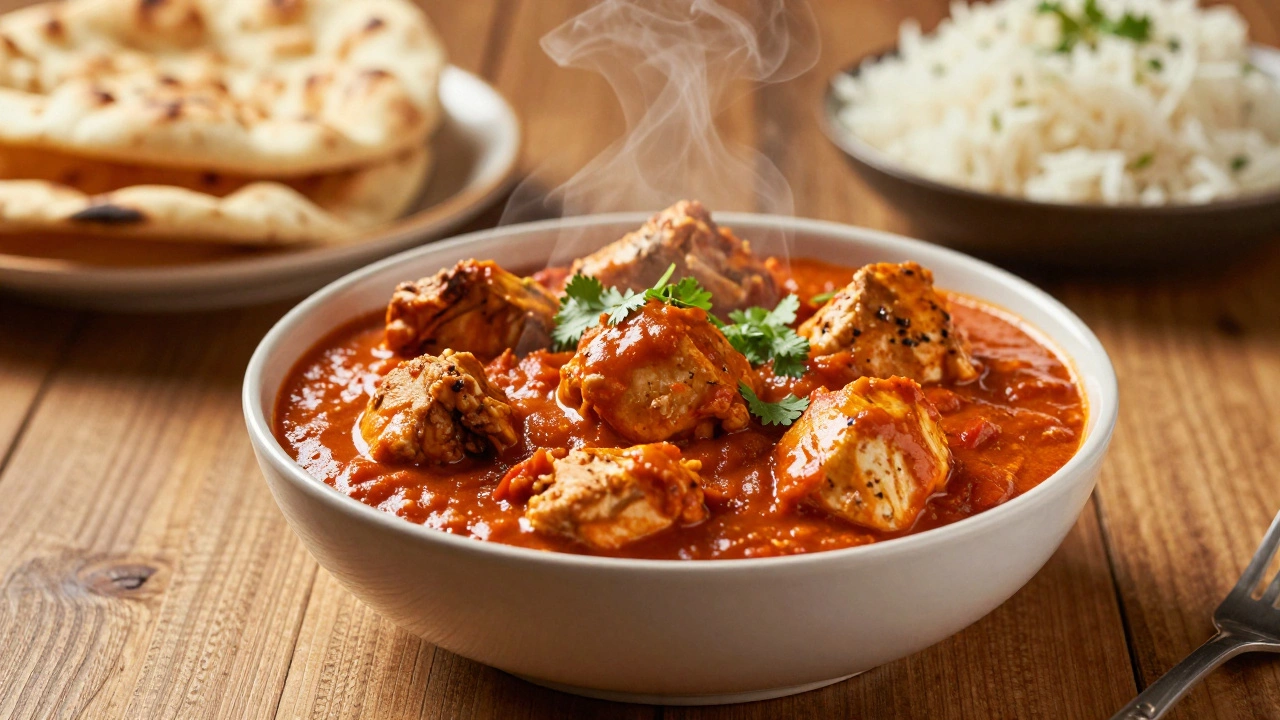
Chicken tikka masala has a thicker, more robust tomato-cream balance with a slight sweetness, while butter chicken is lighter, smokier, and has a more delicate flavor from tandoori chicken.
Sauce Texture
Tikka masala sauce clings heavily to the chicken, while butter chicken sauce is thinner and silkier with a cashew paste finish.
Cultural Context
Tikka masala is a British-invented adaptation that became the global face of Indian cuisine, while butter chicken is a traditional Delhi dish that represents authentic Indian cooking.
Did you know?
Chicken tikka masala was created in the UK in the 1970s to adapt Indian flavors for British tastes. Despite being a British invention, it's now considered the most popular Indian dish worldwide and is served in over 10,000 Indian restaurants across the US, Canada, Australia, and Europe.
Ask anyone outside India what Indian food they know, and chances are they’ll say chicken tikka masala. It’s not just popular-it’s everywhere. From small towns in England to food trucks in Mexico City, this dish has become the unofficial global ambassador of Indian cuisine. But here’s the twist: it wasn’t born in India. It was created in the UK, likely in Glasgow or London, in the 1970s. And yet, it’s now more closely tied to Indian food than many dishes that actually come from India.
Why Chicken Tikka Masala Took Over the World
Chicken tikka masala isn’t just creamy and comforting-it’s the perfect bridge between bold Indian flavors and Western tastes. The dish starts with chunks of chicken marinated in yogurt, spices like turmeric, cumin, and garam masala, then grilled. Those pieces get tossed in a rich, tomato-based sauce with cream, butter, and a touch of sweetness. It’s not spicy-hot like some Indian curries. It’s mild, smooth, and deeply satisfying. That’s why it works for kids, grandparents, and people who’ve never tasted cumin before.
It became a staple in British pubs and takeaways after World War II, when South Asian immigrants opened restaurants to serve the growing demand for something new. The British loved the spice but wanted it gentler. So chefs adjusted-adding cream to tame the heat, tomato to give it body, and sugar to round it out. By the 1990s, it was so popular that the UK Parliament jokingly called it a “national dish.”
Today, chicken tikka masala is served in over 10,000 Indian restaurants across the U.S., Canada, Australia, and Europe. It’s on menus from high-end hotels to airport food courts. In 2019, a survey by the British Food Trust found that 47% of Brits ate chicken tikka masala at least once a month. That’s more than fish and chips.
What Makes It Different From Other Indian Curries
If you’ve had butter chicken, you might think it’s the same thing. But there’s a difference. Butter chicken, from Delhi, uses a tandoori-marinated chicken in a tomato-cream sauce too-but it’s lighter, less thick, and often has a smoky note from the grill. Chicken tikka masala is heavier, richer, and the sauce clings to the chicken like a coating. It’s designed to be eaten with rice or naan, soaking up every drop.
Compare it to a North Indian paneer butter masala or a South Indian coconut curry, and the contrast is clear. Those dishes use dairy or coconut milk as their base, but chicken tikka masala’s signature is its tomato-cream fusion. It’s not traditional in India, but it’s the version most people outside the country recognize as “Indian.”
How to Make It at Home (Easy Version)
You don’t need a tandoor oven or a spice shop to make chicken tikka masala. Here’s how to do it in under an hour with ingredients you probably already have:
- Marinate 500g boneless chicken breast or thigh in 1/2 cup plain yogurt, 1 tsp ground cumin, 1 tsp paprika, 1/2 tsp turmeric, 1/2 tsp garam masala, a pinch of cayenne, and salt. Let it sit for 30 minutes (or overnight if you can).
- Heat a skillet over medium-high. Cook the chicken until browned on all sides-about 6-8 minutes. Remove and set aside.
- In the same pan, add 1 tbsp oil. Sauté 1 chopped onion until soft. Add 2 minced garlic cloves and 1 tbsp grated ginger. Cook for 1 minute.
- Pour in one 400g can of crushed tomatoes. Add 1/2 cup heavy cream, 1 tbsp sugar, and 1 tsp salt. Simmer for 10 minutes until thickened.
- Stir in the cooked chicken. Let it simmer another 5 minutes. Garnish with chopped cilantro.
That’s it. Serve with basmati rice or store-bought naan. No fancy tools. No hard-to-find spices. Just flavor that works.
Why It’s Not the Only Popular Indian Dish
Don’t get it wrong-chicken tikka masala isn’t the only Indian dish loved abroad. Biryani is huge in the Middle East and Southeast Asia. Samosas are everywhere from South Africa to New Zealand. Dal makhani is a favorite in Canada. But none of them have the same universal presence.
Why? Because chicken tikka masala doesn’t ask you to like spice, unfamiliar textures, or strange ingredients. It’s familiar in structure-like a creamy pasta sauce-but with a flavor profile that’s distinctly Indian. It’s the Indian dish that doesn’t feel foreign.
Even in India, younger generations are now ordering it in cities like Mumbai and Delhi-not because it’s traditional, but because they’ve grown up eating it abroad and brought it back home. It’s become a global dish that’s now influencing India itself.
The Cultural Impact Beyond the Plate
This dish changed how people think about Indian food. Before chicken tikka masala, many Westerners thought Indian food was all about heat and weird spices. Now, they know it can be rich, comforting, and adaptable. That opened the door for other dishes-like palak paneer, chana masala, and even vegan versions of butter chicken-to find their audience.
It also helped Indian chefs gain respect. For decades, Indian restaurants in the West were seen as “cheap takeaways.” Now, chefs like Vikas Khanna and Romy Gill are celebrated globally, and many credit chicken tikka masala as the gateway that made people curious enough to try their more authentic work.
What’s Next for Indian Food Globally?
As people get more adventurous, dishes like masala dosa, vada pav, and even South Indian fish curry are gaining traction. But chicken tikka masala isn’t going anywhere. It’s too deeply woven into the food culture of the UK, the U.S., and beyond. It’s the dish that taught the world how to love Indian flavors.
And here’s the real secret: it’s still evolving. Vegan versions use chickpeas or tofu. Some chefs add smoked paprika for depth. Others swap cream for coconut milk to make it dairy-free. It’s not static. It’s alive. And that’s why it lasts.
If you’ve never tried it, give it a shot. If you’ve had it a hundred times, try making it yourself. You’ll see why it’s not just the most popular Indian dish in the world-it’s the one that made the world fall in love with Indian food.
Is chicken tikka masala actually from India?
No, chicken tikka masala was not created in India. It was developed in the UK, likely in the 1970s, by South Asian chefs adapting traditional tandoori chicken to suit British tastes. The addition of a creamy tomato sauce was a local innovation that made the dish milder and more appealing to Western palates. While its components-like marinated chicken and spices-are Indian, the dish as we know it today is a British invention.
What’s the difference between chicken tikka masala and butter chicken?
Both dishes use grilled chicken in a creamy tomato sauce, but butter chicken is lighter, smokier, and originates from Delhi. Chicken tikka masala is thicker, richer, and has a more pronounced tomato-cream balance. Butter chicken often uses a touch of cashew paste for silkiness, while tikka masala relies on cream and sugar for body. The sauce in tikka masala clings to the chicken more heavily, making it ideal for scooping with bread.
Can I make chicken tikka masala without cream?
Yes. Many modern versions use coconut milk, cashew paste, or even blended silken tofu to replace cream. Coconut milk adds a subtle sweetness and works well for dairy-free diets. Cashew paste gives the sauce a similar richness without dairy. The flavor changes slightly, but it still tastes delicious. Just make sure to simmer the sauce longer to thicken it properly.
Why is chicken tikka masala so popular in the UK?
It became popular because it was one of the first Indian dishes that didn’t overwhelm British diners with heat or unfamiliar textures. It was mild, creamy, and filling-similar to comfort foods like shepherd’s pie or creamy pasta. Indian restaurants in the UK adapted their menus to local tastes, and chicken tikka masala became the top seller. By the 1990s, it was so common that it was officially dubbed a national dish by a UK parliamentary committee.
Is chicken tikka masala healthy?
It’s not a health food, but it’s not terrible either. The chicken provides lean protein, and the spices have anti-inflammatory benefits. The main concerns are the cream, butter, and added sugar in the sauce, which increase calories and saturated fat. You can make it healthier by using Greek yogurt instead of cream, skipping the butter, and reducing sugar. Serve it with brown rice and a side of greens to balance the meal.