Coconut Chutney: The Secret Behind South India’s Favorite Condiment
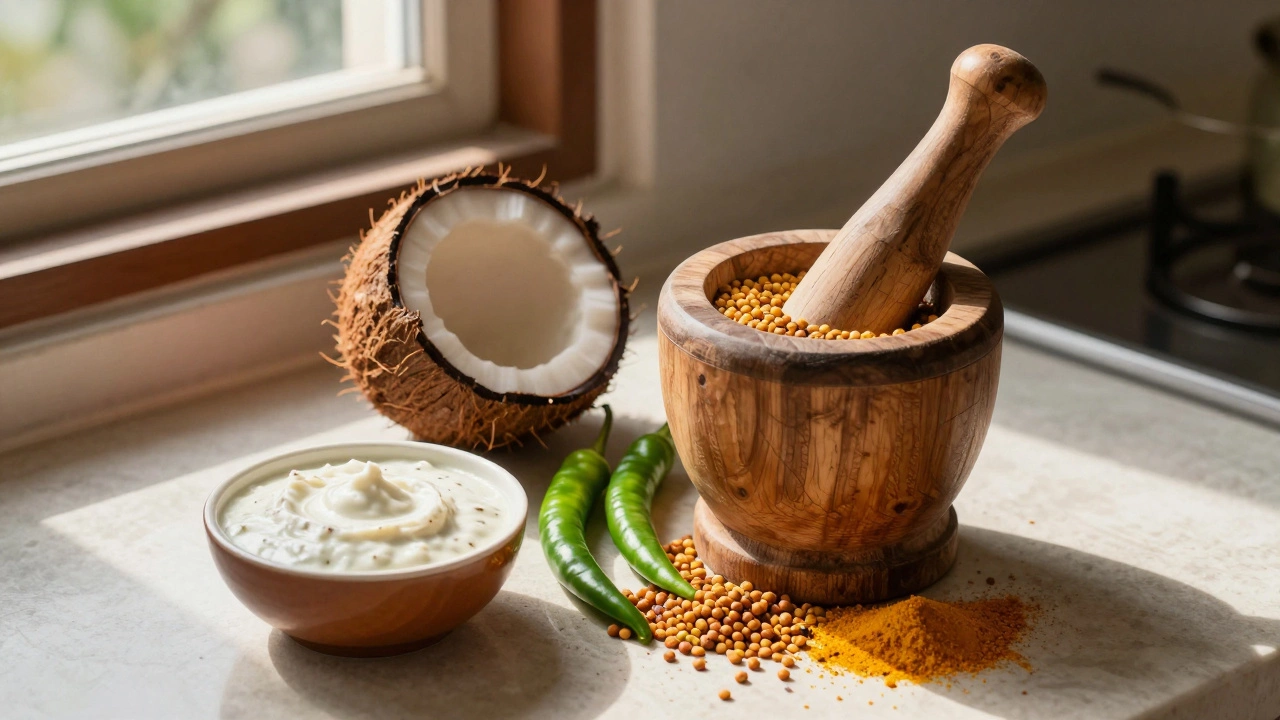
When you think of coconut chutney, a creamy, mildly spicy paste made from fresh coconut, lentils, and chilies, often served with dosa or idli. Also known as thengai chutney, it’s not just a side—it’s the flavor anchor that ties together breakfasts across Tamil Nadu, Karnataka, and Kerala. This isn’t some fancy restaurant garnish. It’s the kind of thing your grandmother made every morning, grinding coconut and roasted chana dal in a stone mortar, just enough to wake up the taste buds without overpowering the meal.
What makes coconut chutney work isn’t just the ingredients—it’s the balance. Too much tamarind? It turns sour and dull. Not enough green chili? It’s bland. And if you skip roasting the dal or urad dal before grinding, you lose that nutty depth that turns ordinary chutney into something unforgettable. It’s also tied to another essential Indian process: fermentation, the natural breakdown of sugars by bacteria that enhances flavor and digestibility, seen in dosa batter and yogurt-based dishes. While coconut chutney doesn’t ferment like dosa batter, its texture and freshness rely on the same principle—using fresh, active ingredients. That’s why store-bought versions often taste flat. They skip the grind, the roast, the timing.
People ask why coconut chutney is always served with dosa, a fermented rice and lentil crepe that’s crispy on the edges and soft inside, a staple of South Indian breakfasts. Simple—it cuts through the starch. The cool, creamy chutney balances the heat of the griddle, the slight tang from fermentation, and the oil from frying. It’s the same reason it works with idli, steamed rice cakes that are soft, mild, and perfect for soaking up bold flavors. Without chutney, these dishes feel incomplete. And if you’ve ever tried to eat them with just sambar? You’ll know what’s missing.
There’s a reason you’ll find coconut chutney in every South Indian household—and why it shows up in nearly every post about dosa, idli, or breakfast rituals here. Some recipes use roasted coconut. Others add curry leaves or mustard seeds. Some use coconut milk for creaminess. But the best ones? They stick to the basics: fresh coconut, a handful of lentils, a few chilies, and patience. No shortcuts. No preservatives. Just flavor built from scratch.
Below, you’ll find real recipes, real mistakes, and real fixes—like why your chutney turns watery, how to store it without losing crunch, and which coconut type works best. No fluff. Just what works.
What Is Another Name for Chutney? Common Alternatives and Regional Variants
Chutney has no exact English equivalent, but it's closest to a spiced fruit relish or savory jam. Learn its regional names, substitutes, and why it stands apart from salsa, jam, or relish.
Read More