Apple Safety & Washing Score Calculator
Not sure how clean your apple really is? Answer these questions to get a personalized safety score and recommendation.
1. Apple Origin & Type
2. How will you wash it?
Your Apple Safety Score
Why this score?
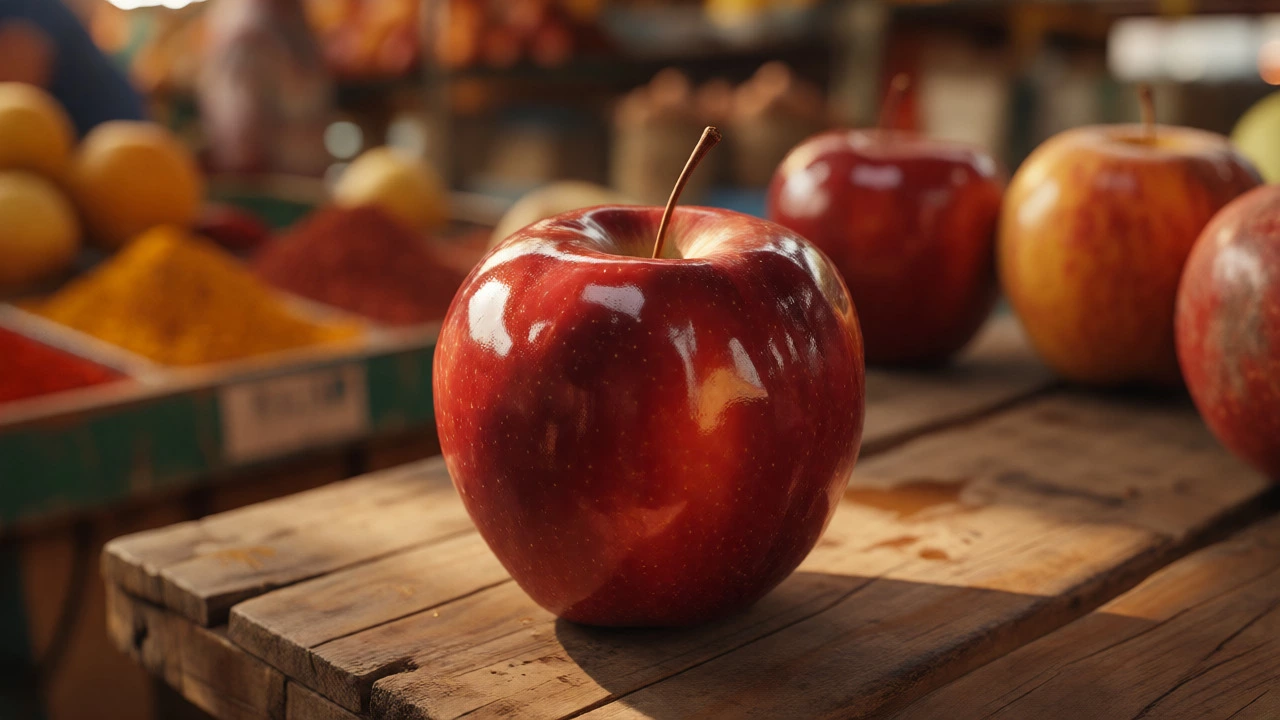
You’re standing in a local fruit vendor's stall in Delhi or Mumbai, eyeing those shiny, red apples. They look perfect. Too perfect, maybe? You wonder if that glossy sheen is just wax or something worse. Are you about to eat a cocktail of pesticides, or is this simply how modern agriculture works?
This isn't just paranoia. In India, the conversation around food safety has shifted from "is it fresh?" to "is it clean?" With apple imports skyrocketing and domestic orchards in Himachal Pradesh and Kashmir expanding, knowing what’s on your skin-literally-is crucial for your health.
The Reality of Apple Production in India
India doesn’t grow enough apples to feed its population, so we rely heavily on imports. According to data from the Agricultural and Processed Food Products Export Development Authority (APEDA), a significant portion of apples sold in metros come from Iran, Turkey, China, and New Zealand. Domestic production is centered in Himachal Pradesh and Jammu & Kashmir.
Why does origin matter? Imported apples often undergo different post-harvest treatments than locally sourced ones. To survive long transit times and shelf life requirements, imported varieties like Red Delicious or Granny Smith are frequently coated with edible waxes. These aren't toxic, but they can trap residues underneath. Domestic apples, while fresher, may carry higher loads of field-applied pesticides if not managed correctly by small-scale farmers who lack access to integrated pest management tools.
Pesticide Residues: What’s Actually On Your Skin?
Let’s cut through the noise. Yes, apples appear on the Environmental Working Group’s "Dirty Dozen" list globally. But context matters. The Food Safety and Standards Authority of India (FSSAI) sets Maximum Residue Limits (MRLs) for over 300 pesticides. However, enforcement varies wildly between organized retail chains and unorganized wet markets.
A study conducted by the National Institute of Nutrition in Hyderabad found that while most samples fell within legal limits, the cumulative effect of low-level exposure to multiple chemicals remains a concern for daily consumers. Common culprits include chlorpyrifos and carbendazim, used to fight pests like the San Jose scale and fungal diseases common in humid Indian summers.
The Wax Myth vs. Reality
That slippery feeling when you rub an apple? It’s usually shellac or carnauba wax. Both are FDA-approved and generally safe. Shellac comes from lac bugs; carnauba comes from palm leaves. Their job is to prevent moisture loss, keeping the apple crisp for weeks.
But here’s the catch: wax seals in whatever was sprayed on the apple before harvest. If the farmer used a heavy pesticide load, the wax acts as a lid on that pot. So, the issue isn’t the wax itself-it’s what’s trapped beneath it. Peeling the apple removes both the wax and the highest concentration of surface residues, though you lose fiber and nutrients in the process.
How to Wash Apples Effectively in India
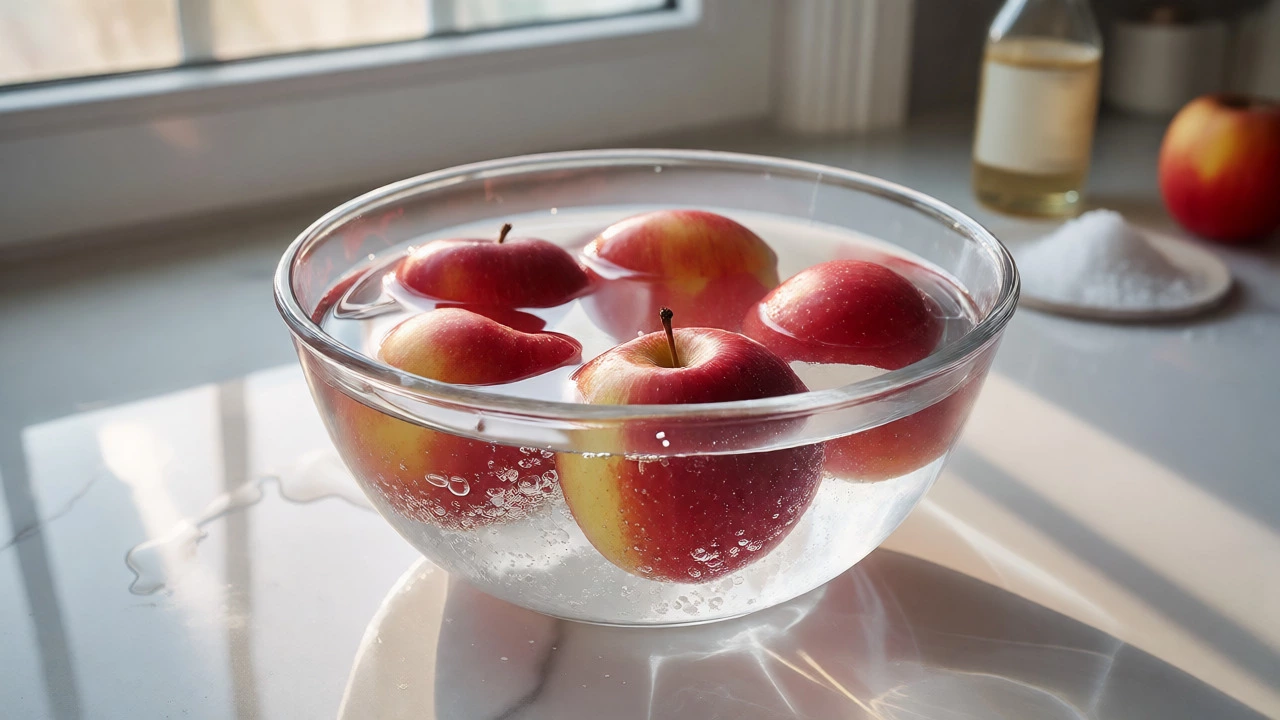
Rinsing under tap water isn’t enough to remove hydrophobic pesticides or wax. You need a method that breaks down these bonds. Here’s what actually works, tested against lab standards:
- Baking Soda Solution: A 2017 study published in *Food Chemistry* showed that soaking apples in a solution of 1 teaspoon baking soda per 2 cups of water for 12-15 minutes removed up to 80% of surface pesticides. This is more effective than bleach or plain water.
- Salt Water Soak: A 2% salt solution helps dislodge insects and some chemical residues. It’s cheap and accessible in every Indian kitchen.
- Vinegar Dip: A mix of one part white vinegar to three parts water can kill bacteria and loosen dirt. Note: It might leave a slight taste, so rinse well afterward.
- Commercial Fruit Washes: Brands like Veggie Wash or local alternatives exist, but check ingredients. Many are just surfactants similar to dish soap. Avoid anything with artificial fragrances.
Pro Tip: Always wash apples right before eating or cooking. Washing them early and storing them wet promotes mold growth.
Organic vs. Conventional: Is the Price Tag Worth It?
In cities like Bangalore and Gurgaon, organic apples command a 40-60% premium. Are they safer? Technically, yes. Organic farming prohibits synthetic pesticides and fertilizers. However, "organic" in India faces certification challenges. Look for the NPOP (National Programme for Organic Production) logo. Without it, "organic" is just marketing fluff.
If budget is tight, prioritize buying conventional apples from trusted suppliers who provide traceability. Some farm-to-table startups now offer batch-tested produce. For kids and pregnant women, where toxin thresholds are lower, the extra cost for certified organic might be justified.

Buying Guide: Spotting Quality and Safety Clues
You can’t see pesticides, but you can spot neglect or excessive handling. Use this checklist at the market:
| Feature | Good Sign | Warning Sign |
|---|---|---|
| Skin Texture | Firm, slight natural bloom (dusty look) | Excessively shiny/greasy feel |
| Stem Area | Greenish-brown stem attached | Brown/black sunken area (rot starting) |
| Smell | Mild, sweet fragrance | Fermented or musty odor |
| Weight | Heavy for size (juicy) | Light/hollow sound (dry inside) |
| Origin Label | Clear country/state of origin | No labeling or vague "Imported" sticker |
Special Considerations for Children and Pregnant Women
Developing brains and fetuses are more vulnerable to neurotoxic pesticides like organophosphates. If you’re feeding toddlers, consider peeling non-organic apples entirely. The nutrient loss is minor compared to the risk reduction. Alternatively, opt for varieties known to have thicker skins or lower residue profiles, such as Gala or Fuji, which are often grown with less intensive spraying than Red Delicious.
Conclusion: Don’t Fear the Apple, Just Respect the Prep
Apples remain one of the healthiest fruits available in India. The antioxidants, fiber, and vitamin C outweigh the marginal risks of pesticide exposure, provided you clean them properly. Don’t stop eating them because of fear. Instead, upgrade your cleaning routine. Switch from a quick rinse to a baking soda soak. Buy from sources that value transparency. And remember, variety is key-don’t let apples dominate your fruit bowl exclusively. Rotate with bananas, papayas, and guavas to diversify your chemical exposure profile.
Is the wax on imported apples harmful?
No, the wax used on imported apples is typically food-grade shellac or carnauba wax, which is safe for consumption. Its primary purpose is to preserve freshness during transport. However, it can trap pesticide residues underneath, so thorough washing or peeling is recommended.
Do I need to peel apples in India?
Peeling is not mandatory but is advisable for children, pregnant women, or if you cannot perform a deep clean (like a baking soda soak). Most pesticides reside on the skin, so peeling significantly reduces intake, though you lose some fiber and vitamins.
Which apple variety has the least pesticides?
While all apples can carry residues, varieties with thicker skins like Granny Smith or Fuji tend to absorb fewer chemicals into the flesh. Additionally, domestically grown apples from regulated farms in Himachal Pradesh often have lower transit-related chemical treatments than some imported batches.
Can I use dish soap to wash apples?
Yes, but only use mild, unscented dish soap and rinse extremely thoroughly. Dish soap is not meant for ingestion and can leave a residue that tastes bad. Baking soda or vinegar solutions are generally preferred for food safety.
Are Indian apples safer than imported ones?
Not necessarily. Indian apples are fresher and have fewer preservatives for transit, but they may have higher field-applied pesticide levels due to variable farming practices. Imported apples have stricter export controls but may use more post-harvest treatments. Origin alone doesn't guarantee safety; proper washing is the equalizer.