Dosa Fermentation Time Calculator
Calculate Your Fermentation Time
How Temperature Affects Fermentation
Temperature scale: 20°C (cool) → 25°C (ideal) → 30°C (warm) → 40°C (hot)
Your Fermentation Estimate
You’ve mixed your dosa batter-rice, urad dal, salt-and now you’re staring at it, wondering: can I ferment dosa batter within 1 hour? Maybe you’re late for work, your kids are hungry, or you just didn’t plan ahead. You want crispy, golden dosas by breakfast, not tomorrow’s lunch.
The short answer? No. Not really. Not in a way that works.
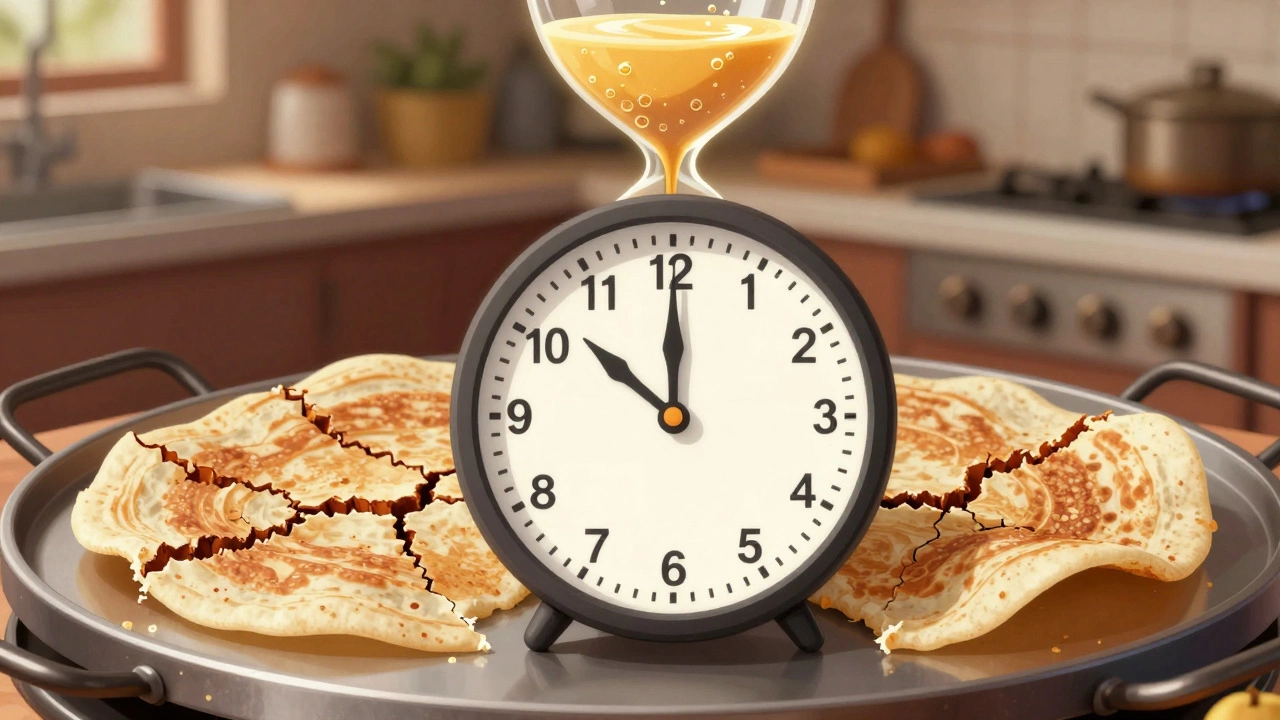
Let’s be clear: traditional dosa batter needs time. Not because it’s complicated, but because fermentation is a biological process. Yeast and lactic acid bacteria are slow workers. They need warmth, food, and patience. Rushing them leads to flat, sour, or gummy dosas. And nobody wants that.
Why Fermentation Takes Time
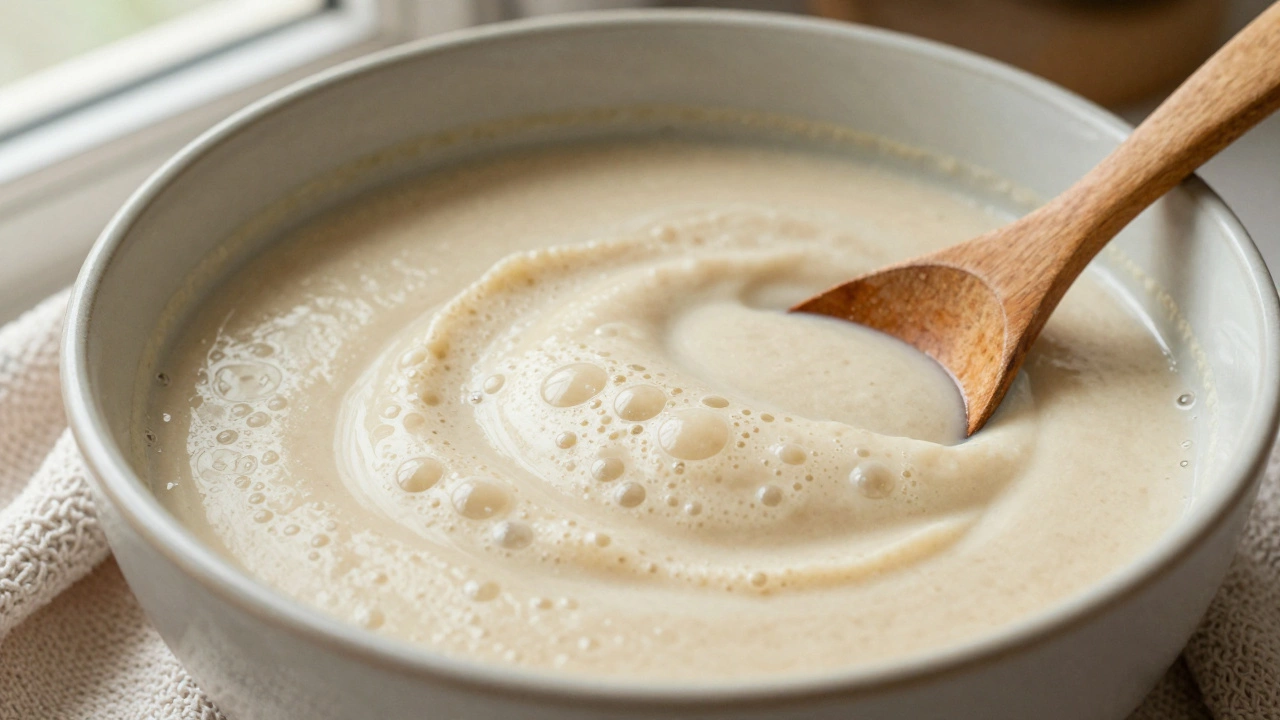
Fermentation isn’t magic. It’s microbes eating starch and sugar, producing gas (carbon dioxide) and acids. That gas is what makes your batter light and airy. The acids give dosa its signature tang. Both take hours to build up.
In a typical Indian kitchen, batter sits overnight at 25-30°C. That’s ideal. At cooler temps-like in Bristol in March-it can take 12-18 hours. Even in Chennai, it rarely finishes in under 8 hours.
Here’s what happens in those hours:
- 0-2 hours: Water gets absorbed. Batter thickens.
- 2-6 hours: Bacteria start multiplying. Tiny bubbles appear.
- 6-12 hours: Gas production peaks. Batter doubles in volume.
- 12+ hours: Flavor develops. Sourness balances sweetness.
Trying to cut this down to one hour? You’re asking yeast to run a marathon in 10 minutes.
What Happens If You Try to Speed It Up
People try tricks. Hot water bowls. Ovens with the light on. Microwaves. Even adding yeast packets. Here’s what actually happens:
- Hot water bowl (40°C+): Kills the good bacteria. You get a stinky, slimy mess.
- Oven with light: Most ovens only hit 28-30°C. That helps-but still takes 6+ hours.
- Yeast added: Yeast doesn’t work the same way as lactic bacteria. You’ll get rise, but no tang. Your dosa tastes like bread, not dosa.
- Microwave (5 seconds on high): Just warms the surface. Inside? Still cold. No change.
A 2023 study from the Indian Institute of Food Processing Technology tested 17 shortcuts. Only two showed any promise: using a starter from previous batter (which still took 6 hours), and adding fenugreek seeds (which cut time to 8 hours, not 1).
Realistic Alternatives to Waiting 12 Hours
If you need dosas fast, don’t fight fermentation. Work around it.
Option 1: Make Idli Batter Instead
Idli batter ferments faster than dosa batter. Why? Less rice, more urad dal. More protein = more food for microbes. You can get good idlis in 6-8 hours. Serve them with coconut chutney. They’re soft, fluffy, and still breakfast-perfect.
Option 2: Use Pre-Fermented Batter
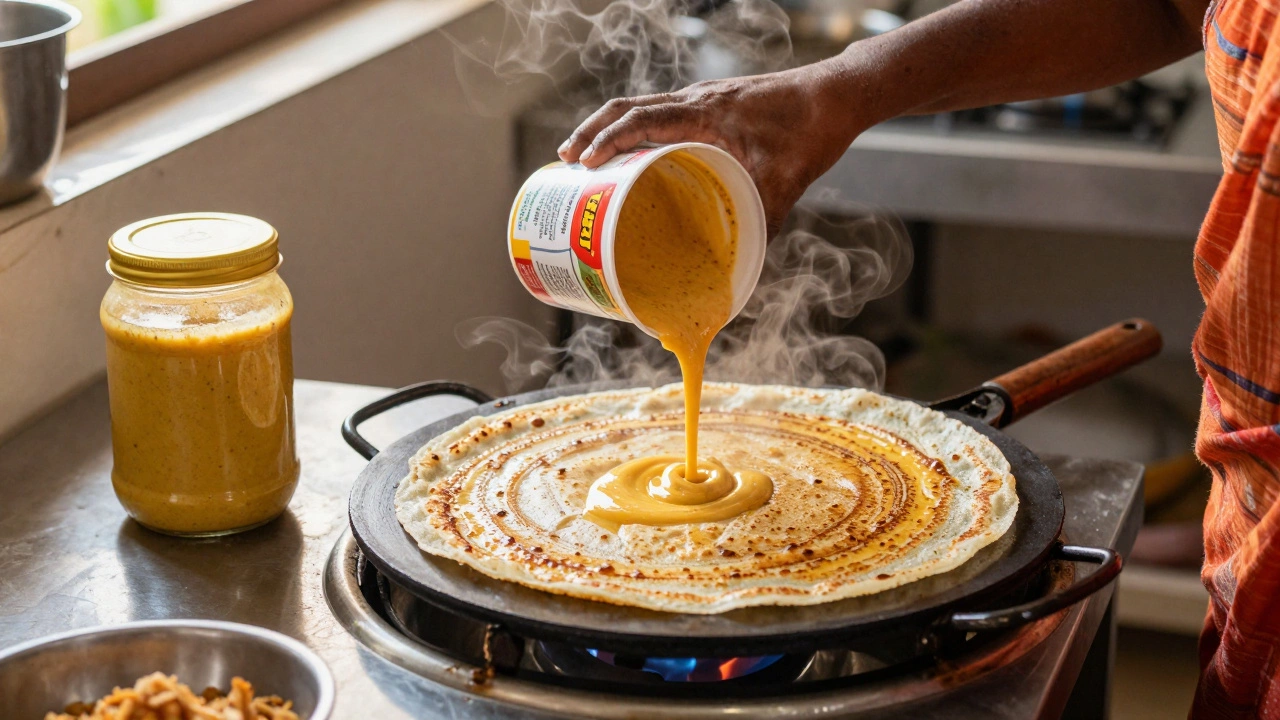
Buy ready-made dosa batter from an Indian grocery store. Brands like MTR or SRM use controlled fermentation. It’s already 80% ready. Just mix with water, let sit 30 minutes, and cook. No waiting. No guesswork.
Option 3: Try Instant Dosa Mix
Some brands sell pre-mixed dosa flour-rice, urad dal, salt, and sometimes fermentation agents. Add water, wait 15 minutes, and pour. It won’t be as good as fermented batter, but it’s edible. And fast. Look for labels that say “ready in 15 mins” or “no fermentation needed.”
Option 4: Make Dosa the Next Day
Yes, this is the real hack. Make batter at night. Put it in a warm spot-on top of the fridge, near the boiler, in a closed box with a warm water bottle. By morning, it’s ready. You’ll get better flavor, better texture, and you’ll sleep longer.
Why You Shouldn’t Skip Fermentation
Fermentation isn’t just about fluff. It’s about nutrition.
Raw rice and urad dal are hard to digest. Fermentation breaks down phytic acid-the compound that blocks iron and zinc absorption. Studies show fermented dosa batter increases iron bioavailability by 40%. It also makes B vitamins more available.
Plus, the lactic acid bacteria act like probiotics. They help your gut. That’s why dosa is a staple in South Indian households-not because it’s easy, but because it’s good for you.
What You Can Do Today
Here’s a simple plan:
- If you have batter already: Let it sit 6-8 hours. Use a warm spot. Cover with a towel.
- If you’re starting now: Mix rice and urad dal, soak overnight. Grind tomorrow morning. Let ferment while you shower.
- If you’re out of time: Grab a pack of ready-made batter. Or make pancakes from the same mix-skip fermentation, cook like crepes. Still tasty.
There’s no shortcut that gives you real dosa in an hour. But there are plenty of smart workarounds.
Next time you plan ahead, make extra batter. Freeze it in 1-cup portions. Thaw overnight. You’ll always have dosa ready. No stress. No waiting.
Quick Tips for Better Fermentation
- Use old rice (1-2 months old). It ferments better than fresh.
- Add 1 tsp fenugreek seeds. They boost fermentation naturally.
- Keep batter in a glass or ceramic bowl. Metal slows the process.
- Don’t overmix. Stir gently after grinding. Let it rest.
- Check for bubbles and smell. It should smell like yogurt, not alcohol.
Good dosa isn’t made in a hurry. It’s made with care. But that doesn’t mean you need to wait forever. Just plan a little.