When you think about religions that avoid meat, one name stands out far above the rest: Jainism. It’s not just about avoiding beef or pork-it’s about a total, intentional refusal of animal flesh in any form. While many people associate vegetarianism with Hinduism or Buddhism, Jainism takes it further. Followers of Jainism eat less meat than any other major religion in the world. In fact, they don’t eat meat at all. Not even fish. Not even eggs. Not even root vegetables like potatoes or onions in some strict cases. This isn’t a trend. It’s a 2,500-year-old practice built into daily life.
Why Jainism Avoids All Meat-and More
Jainism is built on the principle of ahimsa, or non-violence. But for Jains, this isn’t just about not hitting someone. It’s about not harming any living being, no matter how small. That includes insects, worms, and even microscopic organisms in the soil. This belief leads to dietary rules that go beyond what most people consider vegetarian.
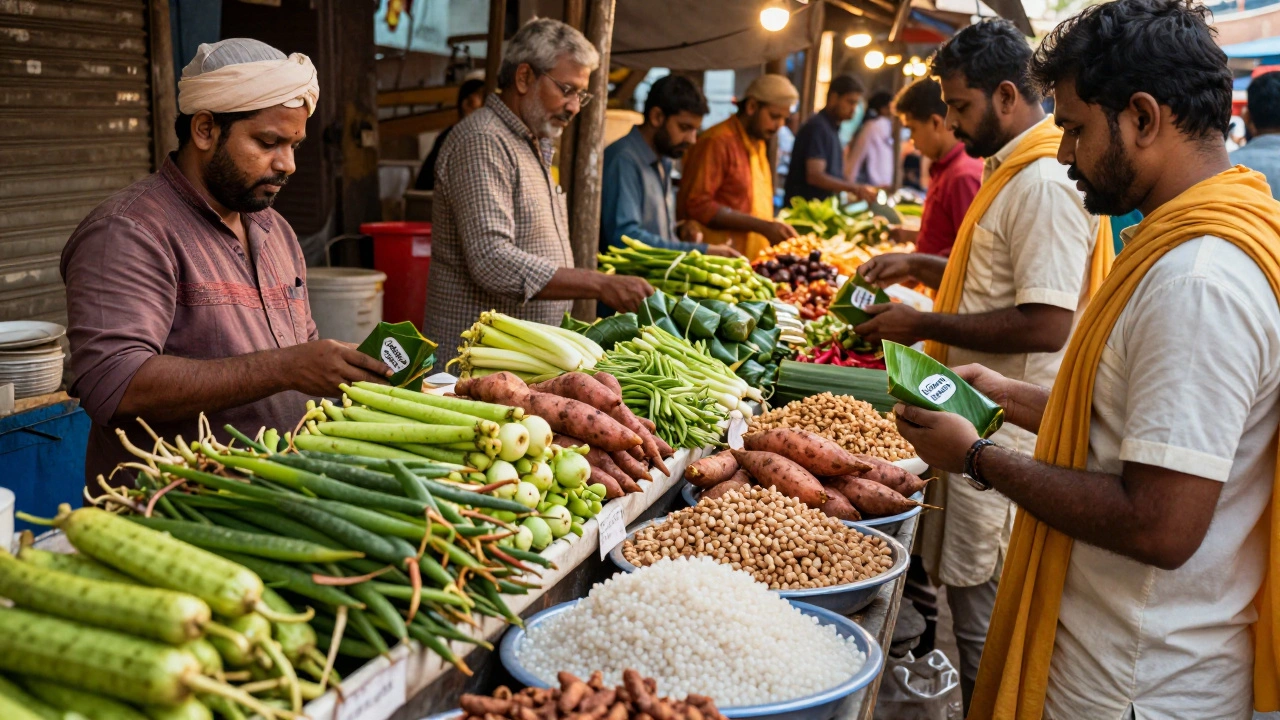
For example, many Jains avoid root vegetables like potatoes, garlic, and carrots. Why? Because pulling them from the ground kills the entire plant-and possibly countless tiny life forms in the soil. Some Jains even filter their water to avoid drinking microorganisms. These aren’t odd customs. They’re logical extensions of a belief system that sees life in everything.
Meat, of course, is out. But so is honey, gelatin, and even dairy in some strict households. The goal isn’t health or environment-it’s spiritual purity. Eating anything that causes harm to another living being is seen as a barrier to enlightenment. This is why Jain communities, even in modern cities like Mumbai or Surat, have entire grocery sections dedicated to meat-free, root-vegetable-free, and even onion-free foods.
How Jain Food Shapes Indian Vegetarian Cuisine
Indian cuisine is famous for its vegetarian dishes, but not all of them are Jain-friendly. Many popular dishes like paneer tikka, dal makhani, or even some chutneys use garlic, onions, or ghee made from cow’s milk. Jains avoid these. So what do they eat?
They eat dishes like:
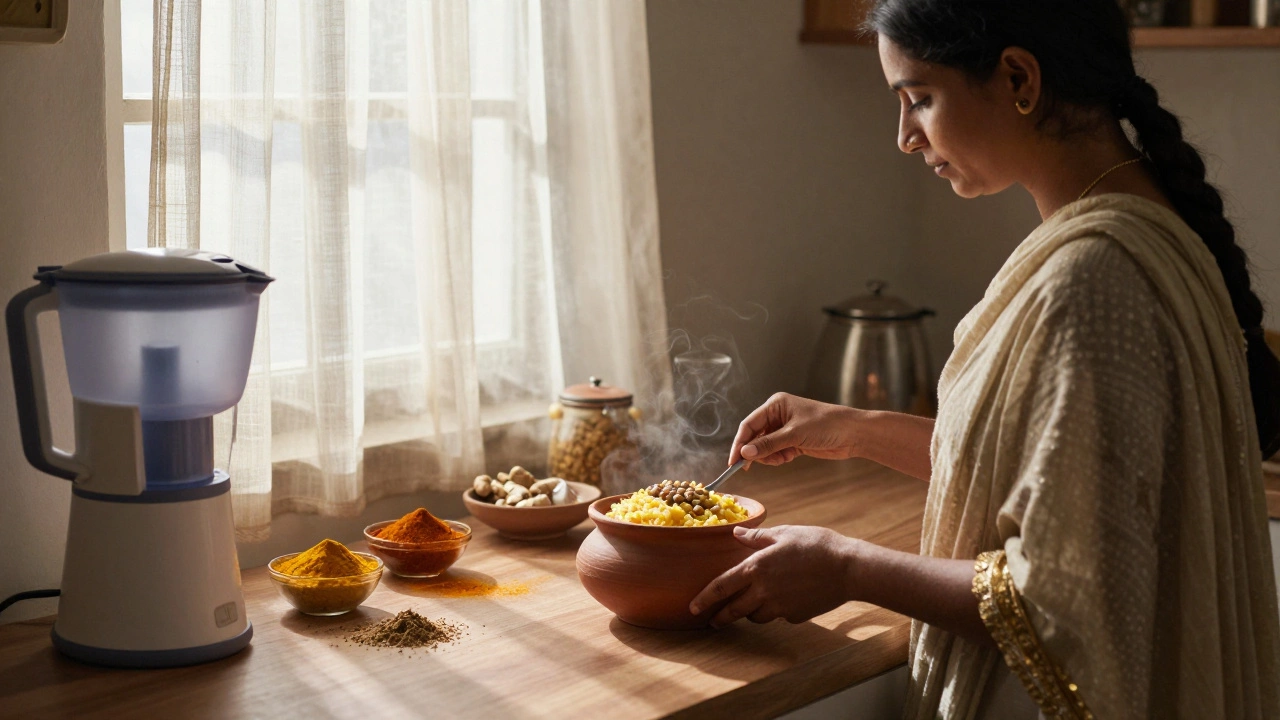
- Khichdi made with rice, lentils, and ginger-no garlic, no onions
- Sabudana Khichdi made from tapioca pearls, peanuts, and potatoes (though some avoid potatoes too)
- Shakarkand ki sabzi (sweet potato curry)-if root vegetables are allowed
- Laapsi (a sweet porridge made from wheat or semolina)
- Non-root vegetable dals made with lentils, tomatoes, and spices like cumin and turmeric
These dishes aren’t just for Jains-they’ve become staples in vegetarian households across India. That’s because Jain cuisine influenced the broader vegetarian food culture. In cities like Ahmedabad, Vadodara, and Jaipur, restaurants proudly label their menus as “Jain-friendly.” Even outside Jain communities, many people choose these meals because they’re light, clean, and deeply flavorful.
Other Religions That Avoid Meat-But Not Like Jainism
Other religions also encourage plant-based eating, but none match Jainism’s strictness.
Hinduism has many vegetarians, especially in North India. But not all Hindus avoid meat. Many eat chicken, fish, or goat meat on certain days. Temple offerings often include meat in some regions. Vegetarianism is common, but not universal.
Buddhism varies by region. In Tibet and Mongolia, monks eat meat because of the harsh climate. In Thailand and Sri Lanka, monks eat whatever is offered to them-even meat. Only in East Asian Mahayana traditions do some monks avoid meat entirely. But even then, it’s not based on the same level of microscopic concern as Jainism.
Sikhism doesn’t require vegetarianism. Many Sikhs eat meat, though some avoid beef out of respect for Hindu beliefs. But there’s no religious rule against it.
Seventh-day Adventists in the U.S. and Europe have high rates of vegetarianism, often for health reasons. But their diet includes dairy, eggs, and sometimes fish. It’s not about non-violence-it’s about longevity.
Jainism remains the only major religion where avoiding meat isn’t optional, isn’t cultural, and isn’t situational. It’s a daily, non-negotiable part of spiritual discipline.
What You Can Learn From Jain Eating Habits
You don’t have to be a Jain to benefit from their food philosophy. Their approach offers practical lessons:
- Food is more than fuel-it’s connected to ethics
- Simple ingredients can be deeply satisfying-Jain meals rely on lentils, rice, spices, and vegetables, not processed substitutes
- Eliminating one thing can open up new flavors-cutting out garlic and onion forces cooks to use cumin, asafoetida, ginger, and dried mango powder in creative ways
- Consistency matters-Jains don’t eat vegan on Mondays and meat on Fridays. Their diet is consistent, which makes it sustainable
If you’re trying to eat less meat, Jainism shows that it’s possible to build a full, rich, satisfying diet without it. And you don’t need fancy ingredients. Just good spices, fresh vegetables, and a clear intention.

The Real Impact of Jain Vegetarianism
There are about 4-5 million Jains worldwide. Most live in India, especially in Gujarat and Rajasthan. But their influence is huge. In Mumbai, over 1,200 restaurants serve Jain food. In Delhi, Jain-run food stalls dominate the vegetarian street food scene. Even outside India, Jain communities in the U.S., U.K., and Canada run grocery stores that stock only Jain-approved items.
Studies show that Jain communities have among the lowest rates of meat consumption per capita in the world. In fact, in some Indian districts where Jains are concentrated, meat sales are nearly zero. This isn’t because of poverty-it’s because of belief.
And it’s not just about meat. Jainism has helped preserve traditional Indian farming methods. Many Jain households grow their own vegetables using organic, non-chemical methods. They avoid synthetic fertilizers because they kill microbes in the soil. This has made Jain communities unintentional leaders in sustainable agriculture.
Where to Find Jain-Friendly Dishes Today
If you want to try Jain food, you don’t need to travel to India. In cities like Bristol, London, or Birmingham, you’ll find Jain restaurants or vegetarian cafés with Jain options. Look for menus that say:
- “No onion, no garlic”
- “Jain-friendly”
- “No root vegetables”
Many Indian grocery stores now carry pre-made Jain meals. Brands like Shree Krishna and Swad offer ready-to-eat dal, rice, and sabzi labeled for Jain diets. You can also find Jain cookbooks online-some even include recipes for “onion-free chutney” made with tamarind and dried ginger.
Start simple. Try a bowl of khichdi with a side of yogurt and a sprinkle of roasted cumin. No garlic. No onion. Just warmth, spice, and peace.