Biryani Cooking Calculator
Calculate the perfect rice and meat ratios for your biryani. Based on the article's recommendation: 1 cup basmati rice to 1/2 cup meat for most recipes.
Results
Rice needed: 0 cups
Meat needed: 0 cups
Vegetables (if applicable): 0 cups
Tip: Don't overcook rice - boil only until 70% done. Steam finishes cooking!
People often say biryani is too complicated to make at home. You see it on restaurant menus with fancy garnishes, layered with saffron and fried onions, and think, There’s no way I can pull this off in my kitchen. But here’s the truth: biryani isn’t hard to cook-it just looks that way because of all the showmanship. The real secret isn’t in fancy tools or rare spices. It’s in timing, layering, and a little patience.
Why Does Biryani Feel So Intimidating?
Most of the fear around biryani comes from what you see online. Videos show chefs carefully placing fried onions in perfect rings, drizzling rose water, and sealing pots with dough. That’s theater. It’s beautiful, but it’s not required. The core of biryani is simple: rice, meat or vegetables, spices, and steam. That’s it.
Think of it like pasta. You can make spaghetti with just boiled noodles and tomato sauce. Or you can go all out with handmade ragù, truffle oil, and fresh basil. Both are valid. Biryani is the same. The basic version-made with chicken, basmati rice, cumin, cardamom, and a few other common spices-is totally doable on a weeknight.
What makes it feel hard? Probably because you’ve never done it before. And when you don’t know the steps, everything seems like a potential mistake. But once you break it down, biryani follows a clear rhythm. You don’t need to be a professional chef. You just need to follow the sequence.
The Three Simple Stages of Biryani
There are only three real steps to making biryani: cook the meat, cook the rice, and layer them together. That’s it. No magic. No secret techniques. Just three things done right.
- Cook the meat with onions, ginger, garlic, and spices until tender. Use chicken thighs-they stay juicy. Lamb or goat works too, but it needs longer. Don’t rush this part. Let the spices bloom in oil. That’s where the flavor starts.
- Cook the rice separately. Use long-grain basmati. Rinse it until the water runs clear-that removes excess starch and keeps grains separate. Boil it halfway. Not fully. Just until it’s about 70% cooked. You’ll finish it in the pot later with the meat.
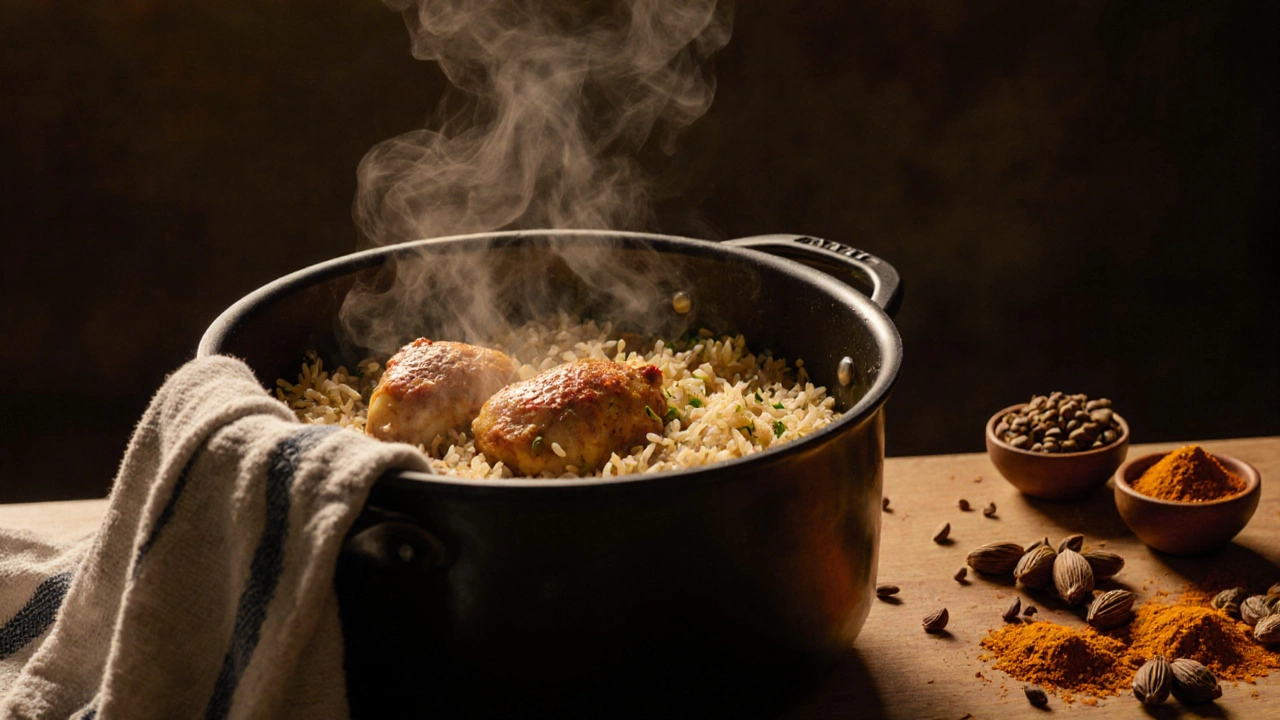
- Layer and steam. Put half the rice in the pot, then the meat and its gravy, then the rest of the rice. Sprinkle fried onions, saffron milk, and fresh coriander on top. Cover tightly with a lid and cook on low heat for 20 minutes. That’s called dum-slow steam cooking. No fancy seal needed. Just a clean kitchen towel under the lid works fine.
That’s the whole process. No pressure cooker tricks. No special biryani pots. Your regular pot with a tight-fitting lid is enough.
What Spices Do You Actually Need?
You don’t need a shelf full of exotic powders. The core spice mix for biryani is simple:
- Cumin seeds
- Cardamom pods
- Cloves
- Cinnamon stick
- Bay leaves
- Black peppercorns
- Turmeric
- Red chili powder
- Garam masala (added at the end)
That’s it. You probably have most of these already. Skip the expensive pre-mixed biryani masala. It’s just a blend of these same spices, often with added salt and fillers. Making your own is cheaper and tastes better.
For color and fragrance, a pinch of saffron soaked in warm milk is optional but nice. It’s not essential. A little food coloring? No. That’s not traditional. Stick to natural. The rice should turn golden from turmeric and saffron, not orange from dye.

Common Mistakes (And How to Avoid Them)
Most people mess up biryani in three ways:
- Overcooking the rice. If you boil it all the way before layering, it turns mushy. Always stop at 70%. The steam will finish it.
- Adding too much water. The meat releases juice, and the rice absorbs it. Add extra water only if the mix looks dry. Too much water = soggy biryani.
- Opening the lid too soon. That steam is your friend. Lift the lid before the 20 minutes are up, and you lose flavor and texture. Wait. Trust the process.
Another mistake? Trying to make it perfect the first time. Biryani improves with practice. Your first batch might be a little salty. Or the rice might be a bit sticky. That’s okay. The second time, you’ll adjust. The third time, you’ll impress your family.
Can You Make Biryani Without a Pressure Cooker?
Yes. Absolutely. Pressure cookers speed things up, but they’re not necessary. You can cook chicken or lamb on the stovetop in a heavy pot. It’ll take 45-60 minutes, but the result is richer. Slow cooking lets the meat fall off the bone and the spices sink deep.
And if you don’t have a heavy-bottomed pot? Use a Dutch oven. Or even a deep saucepan with a tight lid. The key isn’t the pot-it’s the steam. Cover it well. Let it sit. That’s all.

Vegetarian Biryani? Easy.
Want to skip the meat? No problem. Swap chicken for potatoes, carrots, peas, cauliflower, or paneer. Fry the vegetables lightly first-this adds depth. Use the same spice mix. The rice stays the same. Layer it like you would with meat. Vegetarian biryani is just as satisfying.
Some people add boiled eggs or fried cashews for texture. That’s a nice touch, but not required. Keep it simple. The spices do the work.
How Long Does It Really Take?
From start to finish, you can make biryani in under 90 minutes. Here’s the breakdown:
- Prep: 15 minutes (chopping, rinsing rice, measuring spices)
- Cooking meat: 30-45 minutes
- Cooking rice: 10 minutes
- Layering and steaming: 20 minutes
- Resting: 10 minutes (let it sit before serving-this helps flavors blend)
That’s less time than ordering delivery. And you get to eat something warm, fragrant, and made by you.
Why This Recipe Works for Beginners
You don’t need to master every detail to make good biryani. Focus on three things:
- Don’t overcook the rice.
- Let the meat cook slowly.
- Don’t peek while it’s steaming.
Get those right, and you’ll have a dish that tastes like it came from a street vendor in Hyderabad-or your grandmother’s kitchen.
Biryani isn’t about perfection. It’s about aroma. It’s about that moment when you lift the lid and the steam carries the scent of cardamom and fried onions into the room. That’s the magic. And you can make it. Right now. Tonight.
Is biryani hard to make for beginners?
No, biryani isn’t hard for beginners. The key is following three simple steps: cook the meat, cook the rice halfway, and steam them together. You don’t need fancy tools or rare ingredients. Most people overthink it. Start with chicken, basmati rice, and basic spices like cumin, cardamom, and turmeric. Your first batch might not be perfect, but it’ll still taste great.
What’s the most important tip for cooking biryani?
The most important tip is to not overcook the rice. Boil it only until it’s 70% done-still slightly firm in the center. The rice finishes cooking in the pot with the meat and steam. If you boil it fully, it turns mushy. This one step makes the difference between good biryani and bad biryani.
Can I use regular rice instead of basmati?
You can, but it won’t be the same. Basmati rice is long, thin, and fragrant. It stays separate when cooked and absorbs flavors well. Regular short-grain rice gets sticky and dense. If you use it, your biryani will be more like a rice casserole. For the real experience, stick with basmati. It’s worth the extra cost.
Do I need a special pot to make biryani?
No, you don’t need a special pot. A heavy-bottomed pot with a tight-fitting lid works fine. Some people use a Dutch oven or even a deep saucepan. The trick isn’t the pot-it’s sealing in the steam. If your lid doesn’t fit tightly, put a clean kitchen towel between the pot and lid. That traps the steam just as well as dough.
Can I make biryani ahead of time?
Yes, biryani actually tastes better the next day. Cook it fully, let it cool, and store it in the fridge. Reheat it gently on the stove with a splash of water or milk to bring back the moisture. The spices deepen in flavor as they sit. Many families make biryani on Sunday and eat it all week.
Is biryani spicy?
It doesn’t have to be. The spice level comes from red chili powder, which you can adjust. For a mild version, use half a teaspoon. For heat, use a full teaspoon or more. The rest of the spices-cardamom, cinnamon, cloves-are aromatic, not spicy. You control the heat. It’s not about being fiery; it’s about balance.