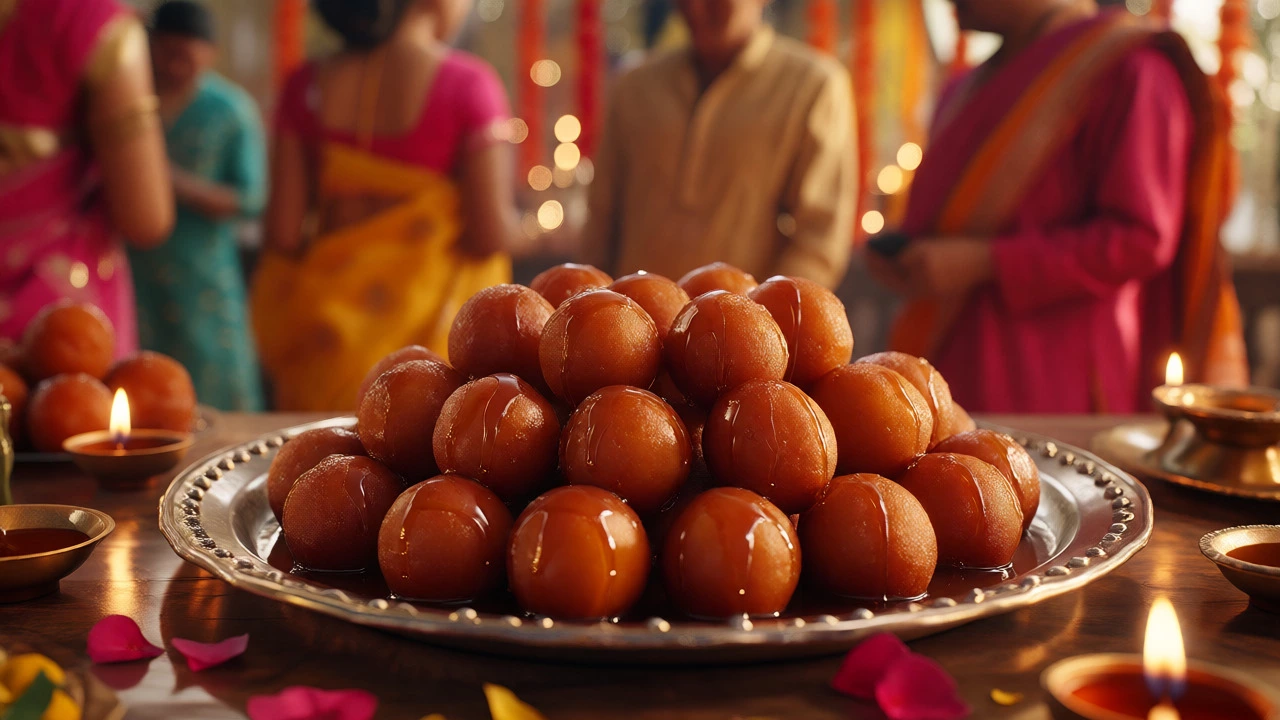
Indian Sweet Personality Matcher
India has no official national sweet. Discover which contender fits your palate!
You walk into an Indian wedding or a Diwali party, and you are greeted by a mountain of colorful, sugary treats. Some people insist that Gulab Jamun is the undisputed king. Others argue for Rasgulla, the spongy cheese balls from Bengal. Then there are those who swear by Laddu. So, what is the national sweet of India? Here is the twist: officially, there isn't one.
India does not have a single government-designated "national sweet" in the same way it has a national bird (the Peacock) or a national flower (the Lotus). But if you ask anyone on the street, they will tell you that Mithai-a broad term for traditional confections-is the heart of Indian culinary identity. If we had to pick a contender that represents the sheer scale of consumption and cultural ubiquity, it would likely be Gulab Jamun. It appears at almost every celebration across North and Central India. Yet, this simple answer ignores the massive regional diversity that defines Indian cuisine. Let’s unpack why no single sweet can claim the throne, and which ones come closest.
The Myth of a Single National Dessert
We love neat labels. We want one flag, one anthem, one dish. But India is a continent masquerading as a country. With 28 states and 8 union territories, each with distinct linguistic and culinary traditions, picking one sweet is like picking one song to represent all of music. The idea of a "national sweet" is more of a marketing myth than a historical fact.
Why do people think Gulab Jamun is the national sweet? Because it is everywhere. From Delhi to Mumbai, from small town tea stalls to five-star hotels, you will find these deep-fried dough balls soaked in rose-scented syrup. Its popularity stems from its accessibility. It uses common ingredients: milk solids (khoya), flour, sugar, and ghee. It travels well. It looks impressive but is relatively easy to make. This universality makes it a strong candidate for the title, even if the government never stamped it with official approval.
However, take a trip to Odisha, and the conversation shifts entirely to Rasgulla. In West Bengal and Odisha, Rasgulla is not just a dessert; it is a matter of pride, legal battles, and religious offering. To suggest that a Bengali would accept Gulab Jamun as their primary cultural symbol might start a friendly but heated argument over chai.
The Top Contenders for the Title
If we were to hold a referendum among Indians, three names would dominate the ballot box: Gulab Jamun, Rasgulla, and Laddu. Each holds a specific place in the cultural psyche. Let’s look at what makes them special and why they compete for the top spot.
| Sweet Name | Primary Region | Main Ingredient | Cultural Significance | Texture Profile |
|---|---|---|---|---|
| Gulab Jamun | Pan-India (Strongest in North) | Milk Solids (Khoya), Flour | Weddings, Festivals, Restaurant staple | Soft, porous, syrup-soaked |
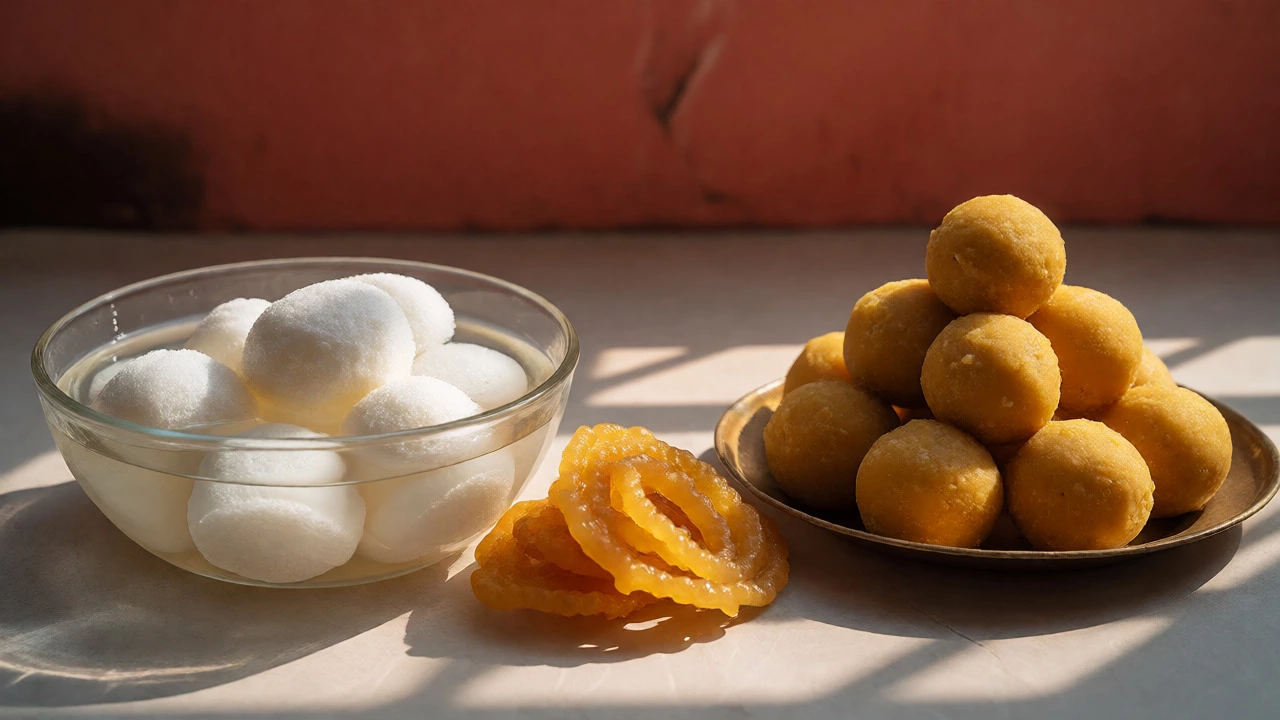
| Rasgulla | Bengal, Odisha | Chhena (Cottage Cheese) | Religious offerings, Durga Puja | Spongy, light, wet |
| Laddu | Pan-India | Gram Flour, Semolina, Sugar | Prasad (Temple offering), Birthdays | Dense, crumbly or smooth |
| Jalebi | North & West India | Fermented Batter, Sugar Syrup | Breakfast treat, Holi festival | Crispy outside, juicy inside |
Gulab Jamun: The Crowd Favorite
Gulab Jamun is a fried dumpling made from khoya (dried milk solids) and flour, soaked in a cardamom and rose-flavored sugar syrup. Its name literally translates to "rose jamun," referencing the dark purple color of the jamun fruit and the rose flavoring. Why does it feel so "national"? Because it bridges the gap between home cooking and commercial production. You can buy frozen packs at any supermarket in the UK, US, or Australia. It is the default dessert at Indian restaurants abroad. If you order "Indian food" in Bristol, and you ask for dessert, they will probably bring you Gulab Jamun. That global visibility gives it a perceived status that other sweets lack.
Rasgulla: The Intellectual Choice
If Gulab Jamun is the popular kid, Rasgulla is the scholar. Originating in the 19th century in Kolkata, Rasgulla requires technical skill. You must curdle milk to make chhena (fresh cottage cheese), knead it perfectly, boil it in thin sugar syrup, and ensure it expands without collapsing. A bad Rasgulla is dense and rubbery; a good one is airy and melts in your mouth.
The rivalry between West Bengal and Odisha over the origin of Rasgulla led to Geographical Indication (GI) tags for both regions. This legal recognition highlights how seriously Indians take their regional sweets. For many, Rasgulla represents sophistication and purity, often served after heavy meals because it is less cloyingly sweet than Gulab Jamun.
Laddu: The Spiritual Staple
You cannot talk about Indian sweets without mentioning Laddu. Specifically, Boondi Laddu or Besan Laddu. These are the sweets of the gods. When you visit a Hindu temple, the first thing you receive is prasad, often a Laddu. It is the sweet given to newborns, offered during weddings, and distributed during festivals like Ganesh Chaturthi.
While Gulab Jamun dominates restaurant menus, Laddu dominates rituals. If religion defines culture, then Laddu has a strong case for being the true national sweet. It is shelf-stable, easy to transport, and deeply embedded in the spiritual fabric of the nation.
Regional Heroes That Deserve Recognition
Reducing Indian sweets to three names ignores the incredible variety found in different corners of the country. India’s sweetness changes dramatically as you travel south, east, west, and north.
- South India: Here, Mysore Pak reigns supreme. Made from gram flour, ghee, and sugar, it is dense, rich, and melts instantly. Another favorite is Paysam (or Payasam), a vermicelli or rice pudding cooked with coconut milk and jaggery. Unlike the dairy-heavy sweets of the North, South Indian desserts often rely on coconut and jaggery, giving them a distinct earthy sweetness.
- West India: Gujarat and Maharashtra offer Shrikhand, a strained yogurt dessert flavored with saffron and cardamom. It is creamy, tangy, and luxurious. In Rajasthan, you’ll find Ghevar, a disc-shaped cake made from flour batter, drenched in syrup, and decorated with nuts. It is visually stunning and traditionally associated with the Teej festival.
- East India: Beyond Rasgulla, Bengal offers Sandesh, a delicate sweet made from fresh chhena and sugar. It comes in various shapes and flavors, from plain to stuffed with date palm syrup (nolen gur). Sandesh is considered the connoisseur’s choice, prized for its subtlety rather than its richness.
Each region protects its recipes fiercely. A Mysore Pak from Karnataka tastes different from one made in Tamil Nadu. The use of ghee versus oil, the type of sugar (white vs. jaggery), and the consistency vary widely. This fragmentation is why a single "national" label feels inadequate.
Why There Is No Official Designation
You might wonder, why hasn’t the Indian government declared a national sweet? After all, they declared the Mango as the national fruit and the Tiger as the national animal.
The reason is political sensitivity. Declaring one sweet as "national" implies superiority over others. If the government chose Gulab Jamun, Bengalis might feel marginalized. If they chose Rasgulla, North Indians might object. Food in India is tied to caste, religion, and region. Choosing one sweet could spark unnecessary controversy. Instead, the government celebrates Mithai as a collective heritage. They promote GI tags for specific regional products, allowing local economies to thrive without imposing a homogenized national identity.
Moreover, the concept of "sweetness" itself varies. What is too sweet for a Punjabi might be just right for a Gujarati. Imposing one standard would ignore these nuanced preferences. So, we live in a state of delicious anarchy where every household decides what constitutes the perfect end to a meal.
How to Choose Your Own "National" Sweet
Since there is no official winner, you get to decide. Your preference depends on what you value in a dessert. Do you want something indulgent and rich? Or light and refreshing?
Here is a quick guide to help you navigate the world of Indian Sweets:
- For the Rich and Indulgent: Go for Gulab Jamun or Kaju Katli (cashew fudge). These are heavy, calorie-dense, and perfect for celebrations where you want to impress guests.
- For the Light and Airy: Choose Rasgulla or Sandesh. These are based on fresh cheese and have a higher water content, making them easier to digest after a heavy biryani or curry.
- For the Traditionalist: Pick Laddu or Jalebi. These connect you directly to centuries of ritual and tradition. Jalebi, especially when eaten hot with rabri (condensed milk), is an experience unlike any other.
- For the Modern Palate: Try Mysore Pak or Shrikhand. These offer complex textures and flavors that appeal to those who enjoy sophisticated, less sugary desserts.
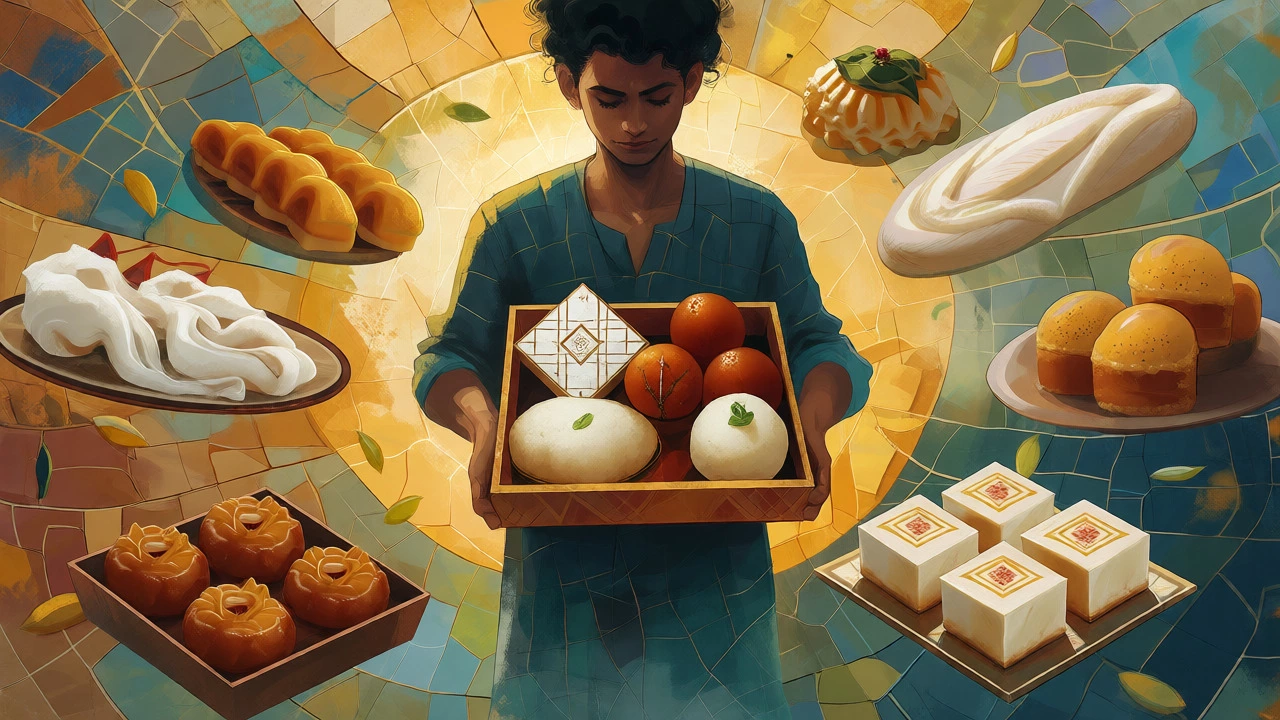
When I host dinner parties in Bristol, I often serve a platter called a "Mithai Box." It includes a mix of Kaju Katli, Gulab Jamun, and Rasgulla. This approach avoids the debate entirely. Everyone gets their favorite, and no one feels left out. It reflects the reality of modern India: a blend of traditions rather than a single dominant narrative.
The Future of Indian Sweets
Indian sweets are evolving. Health consciousness is driving changes in recipes. Bakers are replacing refined sugar with dates or stevia. They are using almond flour instead of maida (refined wheat flour) to lower the glycemic index. Vegan versions of Gulab Jamun now use cashew cream instead of khoya.
Yet, the core identity remains. Whether made with traditional ghee or modern alternatives, these sweets carry emotional weight. They are symbols of joy, hospitality, and community. The question "What is the national sweet of India?" is less about finding a factual answer and more about understanding the cultural landscape. It reveals that India’s strength lies in its diversity. There is no single sweet because there is no single India. There are thousands of flavors, each claiming its own rightful place on the plate.
So, next time someone asks you, don’t give a one-word answer. Tell them about the battle between Rasgulla and Gulab Jamun. Explain the sanctity of Laddu. Share the richness of Mysore Pak. The story is tastier than the label.
Is Gulab Jamun the official national sweet of India?
No, India does not have an officially designated national sweet. However, Gulab Jamun is widely considered the most popular and ubiquitous sweet across the country, often serving as the de facto representative in international contexts.
What is the difference between Rasgulla and Gulab Jamun?
Rasgulla is made from chhena (cottage cheese) and boiled in a light sugar syrup, resulting in a spongy, white texture. Gulab Jamun is made from khoya (milk solids) and flour, deep-fried, and soaked in a thick, rose-flavored syrup, resulting in a brown, soft, and richer taste.
Which Indian sweet is best for beginners to cook?
Laddu (specifically Besan Laddu) is generally easier for beginners because it involves roasting flour and mixing it with sugar and ghee, requiring less precise temperature control than frying dough balls or boiling cheese balls.
Are Indian sweets healthy?
Traditional Indian sweets are high in calories, sugar, and fat (ghee). While they provide energy and contain some protein from milk solids, they should be consumed in moderation. Modern variations use healthier substitutes like jaggery, nuts, and low-fat milk.
What is the most famous sweet in South India?
Mysore Pak is arguably the most famous sweet in South India, particularly in Karnataka. Other popular options include Payasam (a pudding-like dessert) and Adhirasam (a deep-fried sweet made from rice flour and jaggery).