Indian Staple Food Identifier
India's culinary landscape is diverse. This tool helps you identify what people actually eat daily across different regions, moving beyond tourist favorites like Biryani.
Meal Analysis
Staple: WheatPrimary Grain/Starch
Roti/Chapati
Common Accompaniment
Dal and Seasonal Sabzi
In Northern India, wheat cultivation thrives due to the climate. Rotis are quick to make and perfect for scooping up thick gravies.
You might think it’s Butter Chicken or maybe even Biryani. After all, those are the stars of every Instagram feed and restaurant menu. But if you walked into a million homes across India right now, from the snowy peaks of Kashmir to the humid coasts of Kerala, what would you actually find on the plates? It isn’t the fancy curries. It’s the humble, everyday staples that fuel a billion people. The answer depends entirely on where you stand, but one thing is certain: the most eaten "thing" in India is rarely a single dish-it’s a combination of grains, lentils, and vegetables prepared in thousands of regional ways.
The Great North-South Divide: Wheat vs. Rice
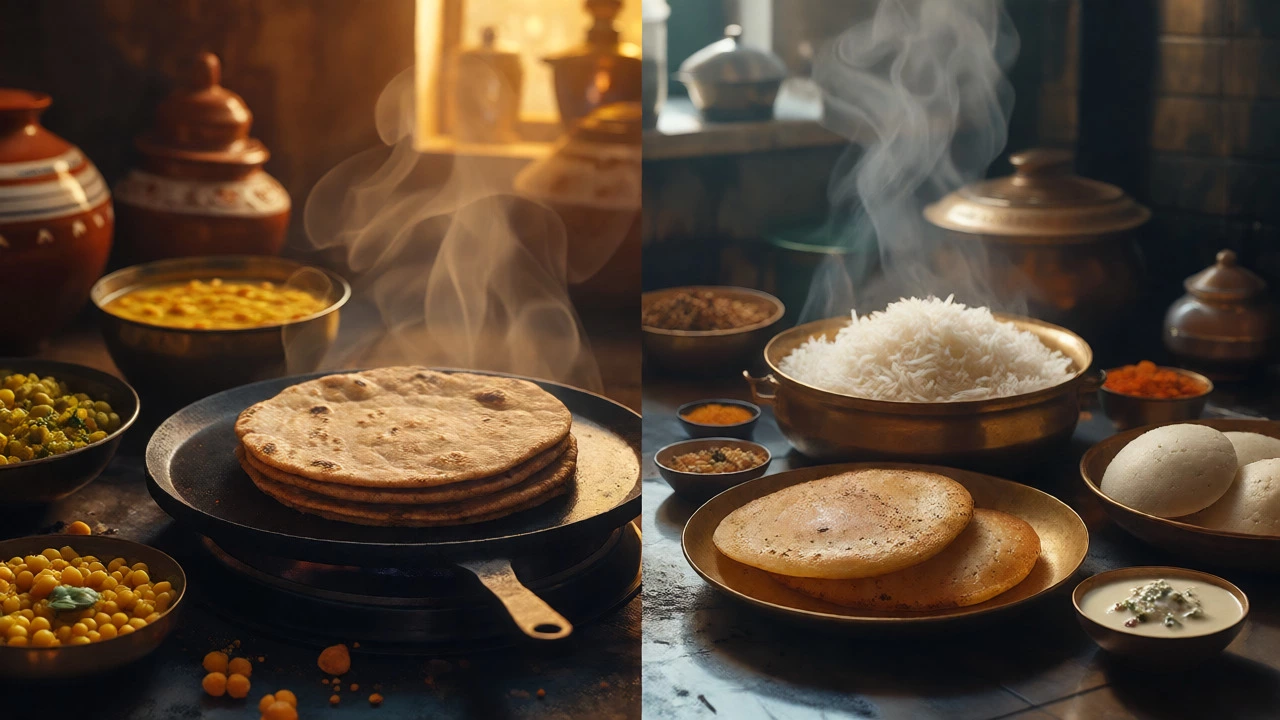
India doesn’t have one national dish; it has two dominant staples fighting for supremacy. In the north, west, and parts of central India, Wheat is king. This usually takes the form of Roti, Chapati, or Paratha. These flatbreads are made from whole wheat flour (atta) and water, cooked on a hot griddle (tawa). They are dense, nutritious, and perfect for scooping up thick gravies like Rajma or Aloo Gobi.
Cross over the Vindhya range, and the script flips. In South India, East India, and coastal regions, Rice reigns supreme. Here, steamed white rice or fragrant basmati is served alongside thin, crispy crepes called Dosa or fermented cakes known as Idli. According to data from the National Sample Survey Office (NSSO), per capita consumption of cereals remains high, with rice accounting for nearly 60% of total cereal consumption in southern states like Tamil Nadu and West Bengal, while wheat dominates in Punjab, Haryana, and Rajasthan.
| Region | Primary Staple | Common Form | Typical Accompaniment |
|---|---|---|---|
| North India (Punjab, UP) | Wheat | Roti, Paratha, Naan | Pulses (Dal), Vegetable Sabzi |
| South India (TN, Kerala) | Rice | Steamed Rice, Dosa, Idli | Sambar, Coconut Chutney |
| East India (Bengal, Odisha) | Rice | Steamed Rice, Pitha | Fish Curry, Lentil Soup |
| West India (Maharashtra, Gujarat) | Mixed (Rice/Wheat/Millet) | Bhakri, Bhakri, Jowar Roti | Kadhi, Dal, Vegetables |
The Invisible Hero: Lentils (Dal)
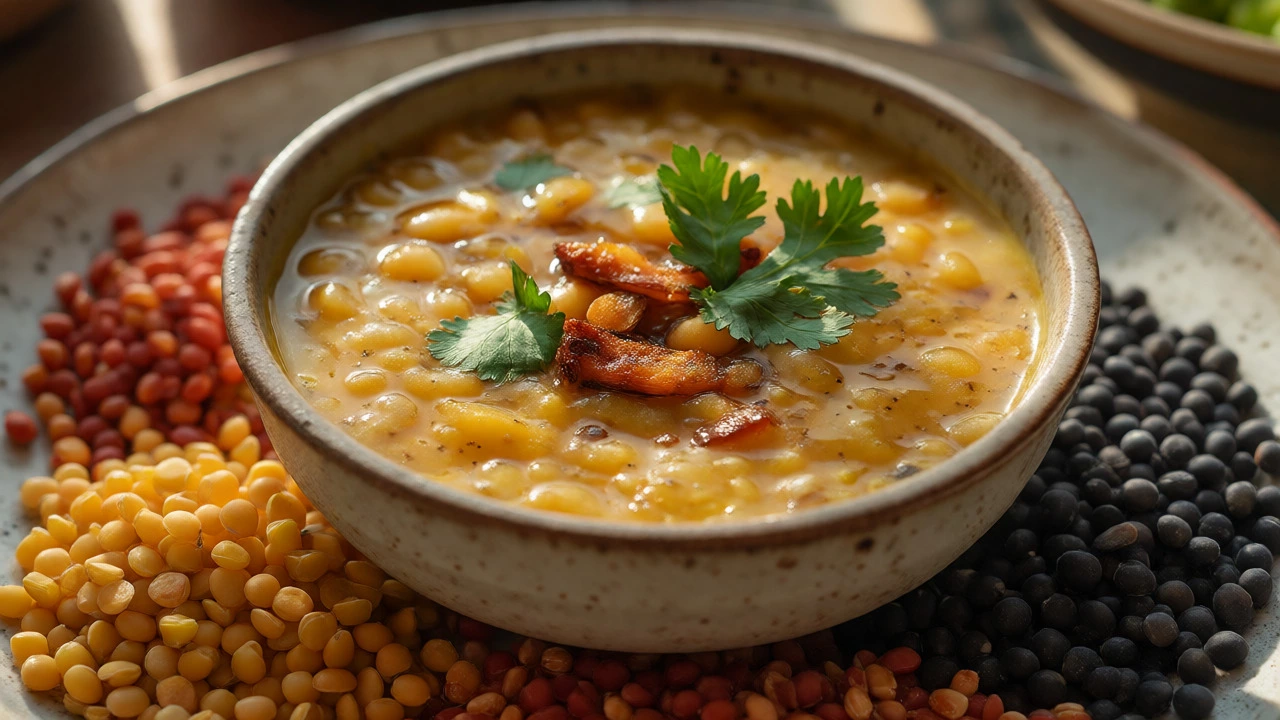
If rice and roti are the canvas, then Lentils, commonly known as Dal, are the paint. You cannot talk about what Indians eat without talking about dal. It is the primary source of protein for millions of vegetarians and non-vegetarians alike. From the creamy yellow Toor Dal paired with rice in Maharashtra to the rich black Urad Dal used in dosas, lentils are ubiquitous.
Dal isn’t just a side dish; for many households, it is the meal. A simple bowl of Khichdi-a mix of rice and moong dal-is often considered comfort food during illness or monsoon season. The variety is staggering: there are over 50 types of pulses consumed regularly, including Chana (chickpeas), Rajma (kidney beans), and Arhar (pigeon peas). The ease of cooking them makes them a daily staple. Soak, boil, temper with spices, and dinner is ready. This simplicity drives their massive consumption numbers.
Vegetables: The Daily Sabzi
Alongside the grain and the pulse, there is almost always a vegetable dish, locally called Sabzi. Unlike Western salads or roasted veggies, Indian sabzis are slow-cooked with oil, turmeric, cumin, and other spices until they meld into a flavorful gravy or dry stir-fry.
What gets eaten the most? Potatoes and onions form the base of countless recipes. Whether it’s Aloo Matar (potatoes and peas) or Aloo Gobhi (potatoes and cauliflower), potatoes appear in nearly every household’s weekly rotation. Onions are essential for the masala base of curries. Leafy greens like Palak (spinach) and Methi (fenugreek) are seasonal favorites, especially in winter. In the south, drumsticks and bitter gourd make frequent appearances. The key here is versatility: vegetables adapt to whatever grain is being served, making them an indispensable part of the daily plate.
Street Food Snacks: The Second Meal
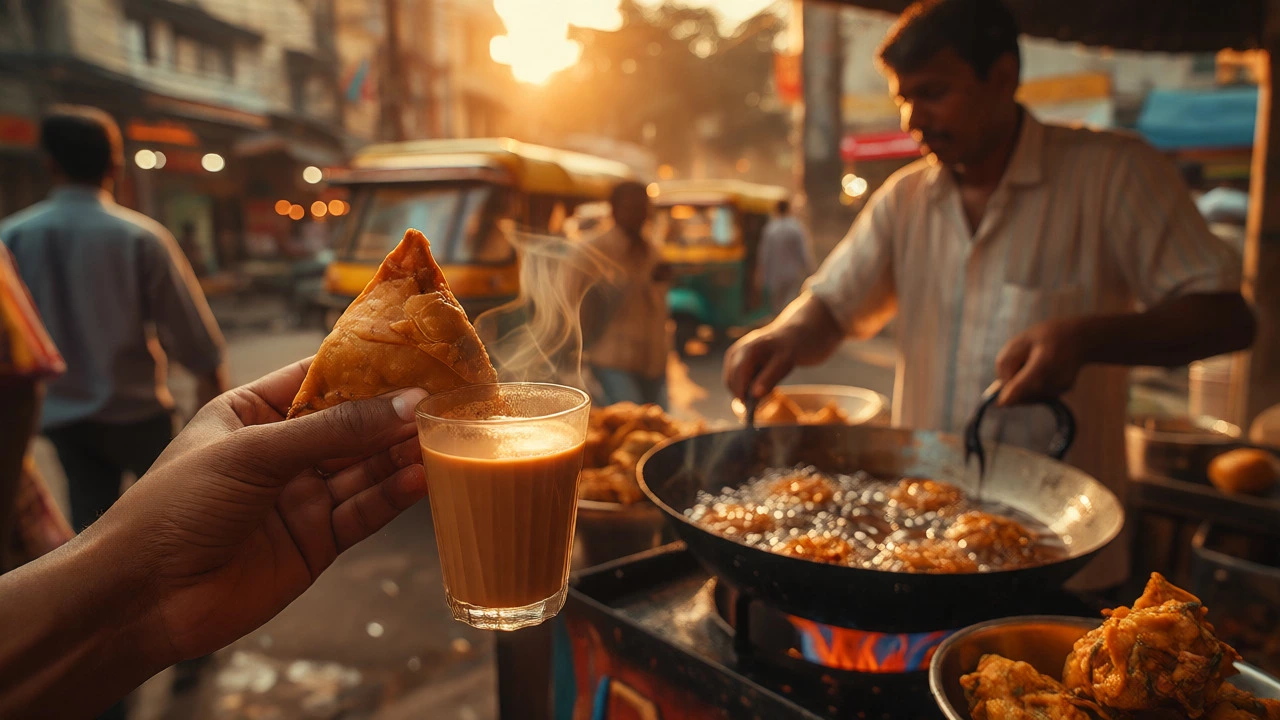
While home-cooked meals dominate lunch and dinner, India’s street food culture defines its snack time and evening habits. If we look at frequency rather than volume, items like Chai (tea) and Samosa might actually beat main courses in terms of how often they are purchased.
- Chai: Tea with milk and sugar is drunk multiple times a day by office workers, students, and laborers. It’s the social glue of India.
- Samosa: Fried pastry filled with spiced potatoes. It’s cheap, portable, and available everywhere.
- Vada Pav: Often called the "Indian Burger," this Mumbai specialty consists of a spicy potato fritter inside a bun. It’s quick energy for commuters.
- Pani Puri: Hollow crisp shells filled with flavored water and potatoes. This is less of a meal and more of a recreational eating activity enjoyed by all ages.
These snacks bridge the gap between meals. For a city dweller in Delhi or Mumbai, grabbing a samosa with chai at 4 PM is as routine as having breakfast. While not "nutritious" in the traditional sense, their cultural penetration is unmatched.
Why There Is No Single Answer
Trying to pinpoint one "most eaten thing" ignores the sheer diversity of India’s geography and climate. Climate dictates agriculture, which dictates diet. In arid Rajasthan, millet-based rotis (like Bajra and Jowar) are common because they survive heat better than wheat. In the fertile Gangetic plains, wheat thrives. In the rain-soaked Northeast, rice paddies cover the landscape.
Furthermore, economic factors play a role. Rice is generally cheaper and easier to store than fresh vegetables or meat. For lower-income families, rice and dal provide sufficient calories at minimal cost. As incomes rise, diets diversify, incorporating more dairy, eggs, and chicken. However, the core structure-grain + pulse + veg-remains intact regardless of income level.
How to Cook Like the Majority
If you want to eat like the average Indian, you don’t need a five-star kitchen. You need three things: a pressure cooker, a tawa (flat pan), and a spice box (masala dabba). Here is a typical day’s eating pattern for a middle-class family in Central India:
- Breakfast: Idli or Poha (flattened rice flakes) with tea.
- Lunch: Steamed rice, Toor Dal, seasonal vegetable (e.g., Bottle Gourd), and a small salad of onion-lemon.
- Snack: Chai with biscuits or a fried snack like Pakora.
- Dinner: Two Rotis, mixed vegetable curry, and yogurt (curd).
This pattern repeats with slight variations across regions. The beauty lies in its balance: carbohydrates for energy, proteins for repair, and fiber for digestion. It’s sustainable, affordable, and deeply satisfying.
Is Biryani the most eaten food in India?
No. While Biryani is extremely popular and iconic, it is typically reserved for special occasions, weekends, or restaurant visits due to its preparation time and cost. Daily consumption relies on simpler staples like rice, roti, and dal.
Do all Indians eat vegetarian food?
No. Approximately 39% of Indians are vegetarian, according to various surveys. The majority consume meat, particularly chicken, mutton, and fish, though the frequency varies greatly by region and community. Even non-vegetarians often eat vegetarian meals several days a week.
What is the most consumed drink in India?
Tea (Chai) is the most consumed beverage, followed closely by water and coffee in urban areas. Chai is integral to social interactions and daily routines across all socioeconomic classes.
Why is rice more popular in South India?
The tropical climate and abundant rainfall in South India support extensive paddy cultivation. Historically, rice became the primary crop, shaping culinary traditions around fermented rice batters (for dosa/idli) and steamed rice accompaniments.
Is Roti healthier than Rice?
Generally, yes, because traditional Indian Roti is made from whole wheat flour, retaining fiber and nutrients. White rice is refined and lacks fiber. However, brown rice or parboiled rice can be comparable. Health benefits depend on portion control and overall diet balance.