Biryani Addictiveness Calculator
How Addictive Is Your Biryani?
Based on the science behind why biryani is so addictive, this calculator scores your biryani based on key traditional preparation factors.
Critical Factors
Science Behind Your Score
Your biryani addictiveness score
Ever taken one bite of biryani and found yourself staring at the empty plate, wondering how it vanished so fast? You’re not alone. Biryani doesn’t just satisfy hunger-it pulls you back. Again and again. It’s not just spice. It’s not just rice. It’s a carefully engineered flavor bomb designed to hijack your brain’s reward system. And here’s why.
The Layering Effect: More Than Just Ingredients
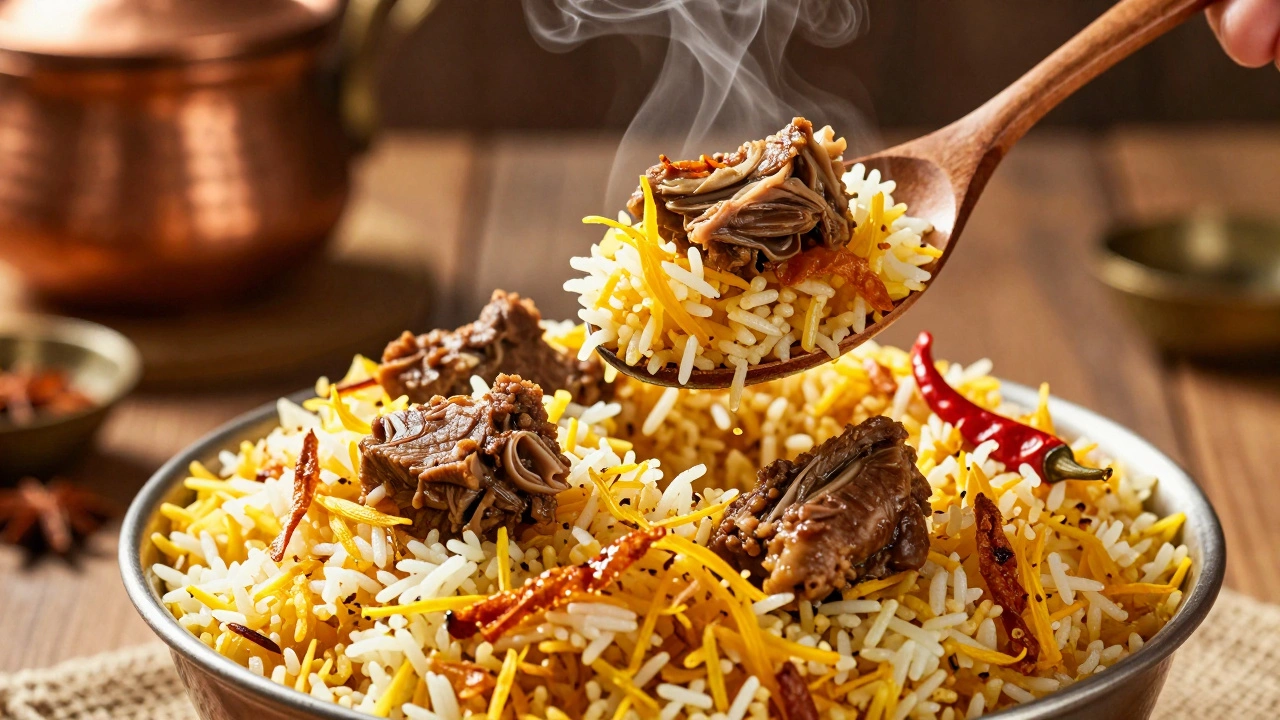
Biryani isn’t cooked in one pot. It’s built in layers-rice, meat, spices, fried onions, saffron water, herbs. Each layer adds a different texture, aroma, and taste. When you take a bite, your tongue doesn’t just taste one thing. It gets hit with the smoky depth of slow-cooked lamb, the sweetness of caramelized onions, the earthiness of cardamom, the floral lift of saffron, and the crunch of fried garlic-all at once. That’s not cooking. That’s sensory overload in the best way possible.
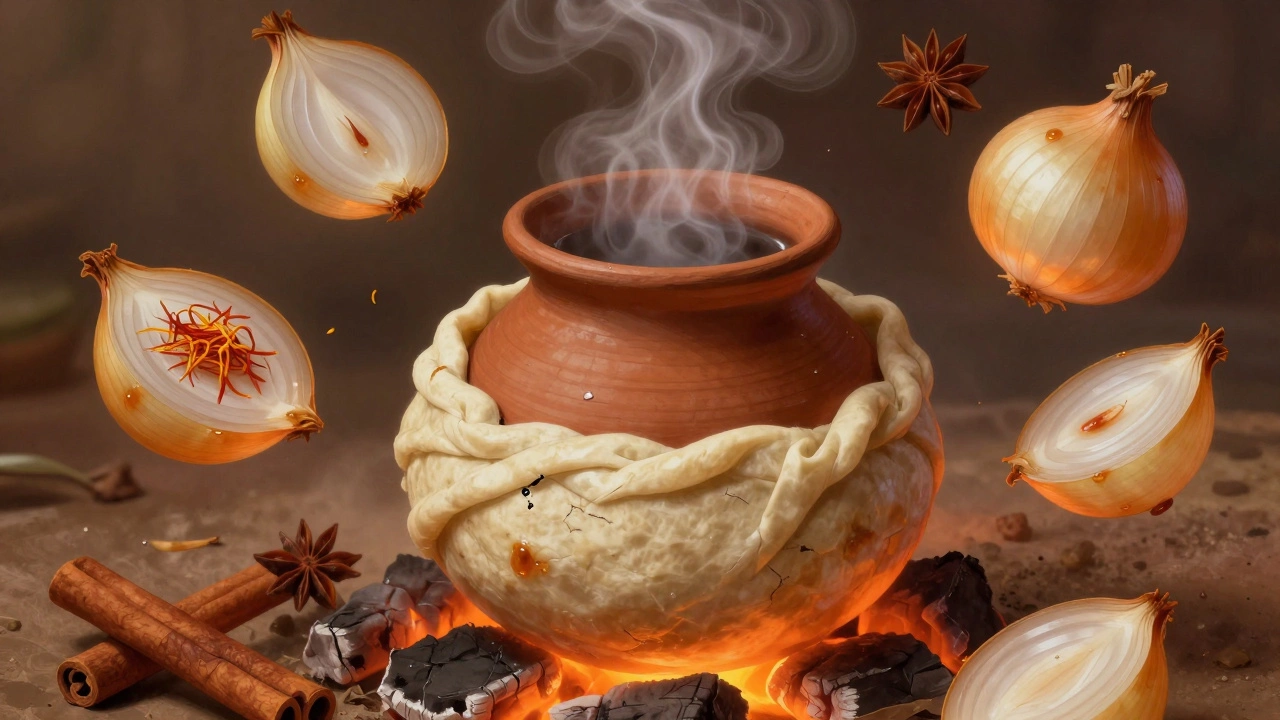
This layering isn’t random. It’s based on centuries of tradition. In Hyderabad, cooks use the dum method-sealing the pot with dough and letting steam slowly cook everything together. The result? Flavors don’t just mix. They marry. The rice absorbs the meat’s juices. The meat soaks up the spice oils. The saffron threads bloom into golden streaks that cling to every grain. You don’t eat biryani. You experience it.
The Spice Symphony: What’s Really in That Aromatic Mix
Most people think biryani is just about chili heat. It’s not. The magic lies in the blend: cinnamon, cloves, star anise, bay leaves, fennel seeds, nutmeg, black pepper, and cumin. These aren’t random spices. They’re chosen because they trigger specific responses in your brain.
Cinnamon and cloves contain eugenol and cinnamaldehyde-compounds that activate the TRPV1 receptor, the same one that responds to heat. That’s why biryani feels warm, even if it’s not spicy-hot. Star anise adds aniseed, which mimics licorice and triggers dopamine release. Fennel seeds help with digestion, but they also create a subtle sweetness that makes your brain think, “This is safe. This is good.”
And then there’s turmeric. Not just for color. Its active compound, curcumin, reduces inflammation and boosts serotonin. That’s why after a heavy biryani meal, you don’t just feel full-you feel calm. Happy. Like the world is a little softer.
The Fat Factor: Why Oil Isn’t the Enemy Here
Modern diets preach low-fat. But biryani? It’s loaded with fat. Ghee. Oil. The slow-cooked meat releases its own fat. And that’s not a flaw-it’s the secret.
Fat carries flavor. It binds spices to the rice. It coats your tongue, letting those aromas linger longer. Studies show that fat activates the brain’s opioid system, the same pathway triggered by sugar and alcohol. That’s why you crave biryani after a bad day. It’s not emotional eating. It’s biochemical.
And don’t forget the fried onions. Crispy, golden, caramelized. They’re not just garnish. They’re flavor anchors. The Maillard reaction-browning sugars and proteins-creates hundreds of new flavor compounds. One study in the Journal of Agricultural and Food Chemistry found that fried onions alone contribute over 80 volatile compounds to a dish. Biryani has layers of them.
The Rice: Not Just a Sidekick
Most rice dishes use plain white rice. Biryani uses long-grain basmati. And it’s not just because it’s fragrant. Basmati grains stay separate when cooked. Each grain holds its own flavor. That means every bite is different. One might have a burst of saffron. Another might be packed with cumin. You keep eating to find the next perfect bite.
And the cooking method? It’s precise. Rice is par-boiled, then layered with meat. The steam from the meat finishes cooking the rice. That’s why the grains are fluffy on the outside but tender inside. It’s texture contrast-crunchy onions, soft meat, chewy rice, sticky gravy. Your mouth loves variety. And biryani delivers it in every spoonful.
The Psychological Hook: Ritual and Memory
Why do you crave biryani more than any other dish? Because it’s tied to moments. Weddings. Festivals. Family dinners. The smell hits you before you even see the pot. That scent-cardamom, bay leaf, saffron-activates the olfactory bulb, which connects directly to the amygdala and hippocampus. Those are your memory and emotion centers.
That’s why a bowl of biryani can make you feel like you’re eight years old again, sitting cross-legged on the floor, waiting for your grandmother to serve you. It’s not just food. It’s nostalgia in a bowl.
And here’s the kicker: we eat with our eyes. The golden hue from saffron, the green of fresh coriander, the red of chili garnish-it’s visually rich. That color contrast tricks your brain into thinking the meal is more satisfying, even before you take a bite.

Why You Can’t Stop Eating It
Let’s put it all together:
- Spices trigger dopamine and serotonin
- Fat activates opioid receptors
- Layering creates texture variety
- Basmati rice gives you bite-by-bite surprise
- Scent links to emotional memories
- Color tricks your brain into thinking it’s a richer meal
This isn’t an accident. Biryani was designed over centuries to be irresistible. It’s the perfect storm of biology, chemistry, and culture. Your brain doesn’t just like biryani. It *needs* it.
That’s why people travel across cities for a single plate. Why families argue over who makes the best version. Why you’ll eat biryani for breakfast if you can get it.
What Makes a Biryani Truly Addictive?
Not every biryani is created equal. The addictive ones share a few traits:
- Slow-cooked meat (at least 3 hours)
- Homemade spice blend (no pre-mixed powders)
- Real saffron (not artificial color)
- Hand-fried onions (not store-bought)
- Basmati rice soaked for 30 minutes before cooking
Skip any of these, and you get a good rice dish. Not a biryani that haunts your dreams.
Try this: Make biryani once with store-bought masala. Then make it again with whole spices you toast and grind yourself. Taste the difference. That’s the gap between ordinary and unforgettable.
How to Enjoy Biryani Without Feeling Guilty
You don’t have to give it up. Just tweak it.
- Use brown basmati rice for more fiber
- Reduce oil by 25%-the flavor still comes through
- Add more vegetables: peas, carrots, potatoes
- Pair with cucumber-yogurt raita to balance the richness
It’s not about denying yourself. It’s about honoring the tradition without overdoing it. One plate, slow eaten, with company. That’s the real recipe for joy.
Is biryani healthy?
Traditional biryani isn’t a health food-it’s rich in fat, carbs, and sodium. But it’s not all bad. The spices have anti-inflammatory properties, and the meat provides protein. You can make it healthier by using lean cuts, reducing oil, swapping white rice for brown basmati, and adding more vegetables. It’s about balance, not elimination.
Why does biryani taste better the next day?
Flavors continue to meld after cooking. The spices penetrate deeper into the rice and meat. The fats solidify and then re-melt, redistributing flavor evenly. Leftover biryani isn’t just reheated food-it’s a more complex version of itself. That’s why many families make biryani on purpose the day before.
Can I make biryani without meat?
Absolutely. Vegetable biryani is just as addictive when done right. Use potatoes, carrots, peas, paneer, or even jackfruit. The key is still the spice blend, the layering, and the saffron-infused rice. Many South Indian households make vegetarian biryani for festivals. It’s not a compromise-it’s a tradition.
What’s the difference between Hyderabadi and Lucknowi biryani?
Hyderabadi biryani is spicier, uses more tomatoes and fried onions, and is cooked with meat and rice layered together. Lucknowi biryani is milder, uses less oil, and is made with the dum method where rice and meat are cooked separately before being layered. Hyderabadi is bold. Lucknowi is elegant. Both are addictive in their own way.
Why is saffron so important in biryani?
Saffron isn’t just for color. It adds a unique floral sweetness that balances the heat of spices. It also releases aroma compounds that trigger memory and emotion. Real saffron is expensive, but a few threads are enough. Fake saffron (like turmeric or marigold) gives color but none of the soul. That’s why authentic biryani always uses real threads.