Starter Culture: What It Is and How It Makes Indian Foods Like Dosa and Paneer Better
When you bite into a crispy dosa or scoop up soft paneer, you’re tasting the work of something invisible: starter culture, a natural mix of live bacteria and yeast that transforms milk and batter through fermentation. Also known as natural ferment, it’s what turns plain rice and dal into tangy, digestible dosa batter, and milk into firm, fresh paneer. This isn’t magic—it’s biology. And it’s been used in Indian homes for centuries, long before anyone called it a "probiotic" or "cultured food."
Think of lactic acid bacteria, the tiny microbes that feed on sugars and produce lactic acid during fermentation as the quiet workers in your kitchen. They’re what make dosa batter rise without yeast, give yogurt its tang, and help paneer curdle cleanly when you add lemon juice. These same bacteria are why traditional dosa batter tastes better the longer it sits—it’s not going bad, it’s getting smarter. And when you use a good starter culture, you don’t just get flavor—you get better digestion, longer shelf life, and nutrients your body can actually use.
Some people try to shortcut this by adding vinegar or yeast to speed things up. But that kills the natural balance. Yeast might make batter rise faster, but it steals the deep, complex sourness that comes from slow fermentation. Vinegar gives acidity, but not the probiotic benefits. True starter culture works with time, not against it. That’s why Indian grandmothers let batter sit overnight on the counter, and why paneer made with lemon juice still needs the right milk temperature to form properly. It’s not about being fancy—it’s about letting nature do its job.
What you’ll find in the posts below are real, tested stories from kitchens across India. You’ll learn why dosa batter turns sour, how much paneer you can really get from a gallon of milk, and why adding yeast ruins the traditional taste. These aren’t theories—they’re lessons from people who make these foods every day. Whether you’re trying to fix a batch of soggy dosa or make your own paneer without buying it at the store, the answers are all here. No jargon. No guesswork. Just what works.
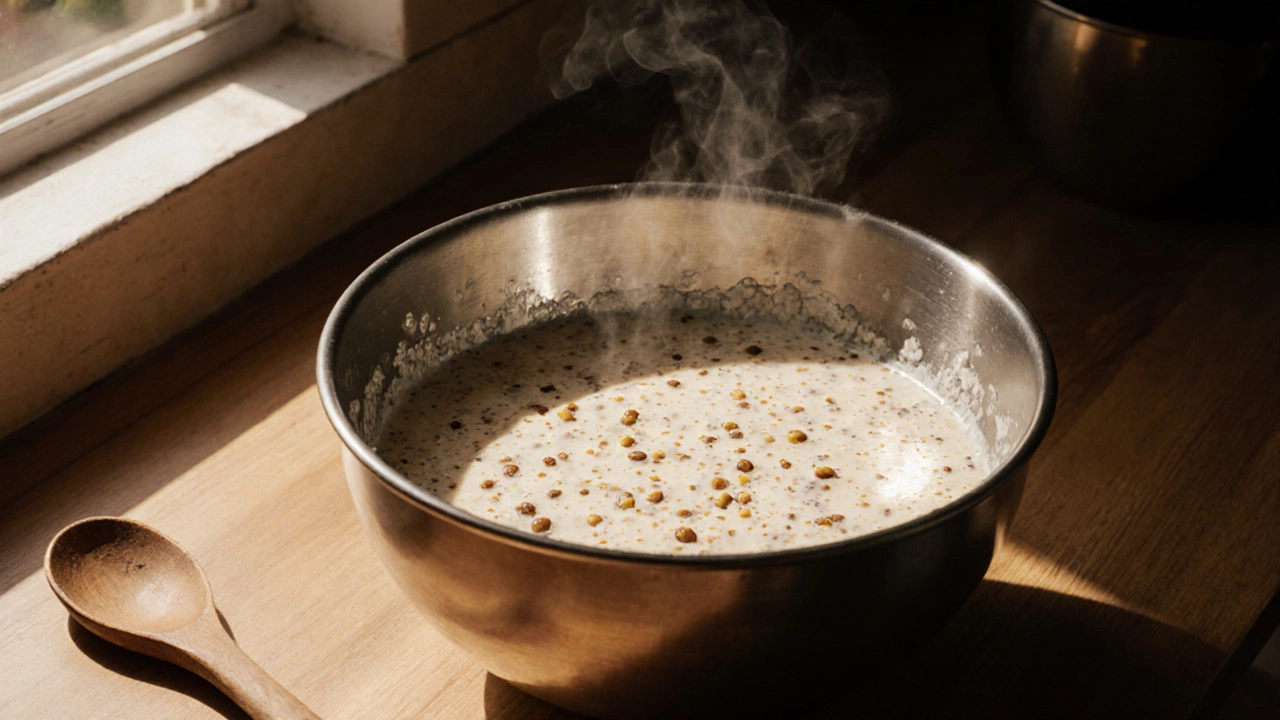
Dosa Batter Fermentation Time: How Many Hours Needed?
Learn the exact fermentation time for dosa batter, how temperature and starter culture affect it, and get tips to achieve perfect dosas every time.
Read More