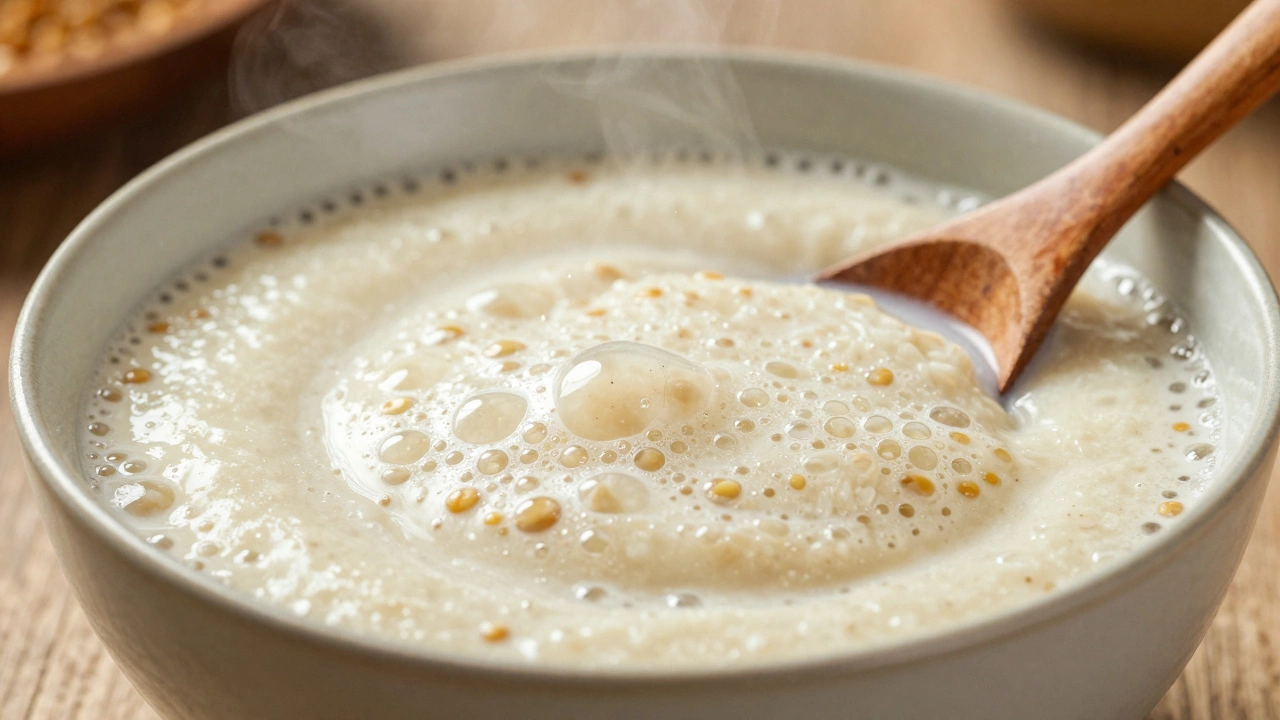
Dosa Batter Fermentation Calculator
Temperature Input
Enter your kitchen temperature to see when your batter will be ready
Recommended fermentation temperature: 25-35°C (77-95°F)
Tips for best results
- Use fresh ingredients
- Keep batter in warm place (28-32°C/82-90°F is ideal)
- Add a pinch of fenugreek seeds if fermentation is slow
- Store starter batter in fridge for faster next time
Ever made dosa batter only to find it smells tangy, bubbly, and smells like yogurt? That’s not a mistake - it’s supposed to be that way. The sour taste in dosa batter isn’t a flaw; it’s the result of natural fermentation, and it’s what makes dosas light, fluffy, and full of flavor. But why does this happen? And how do you know if your batter is properly fermented or if it’s gone bad?
What causes dosa batter to turn sour?
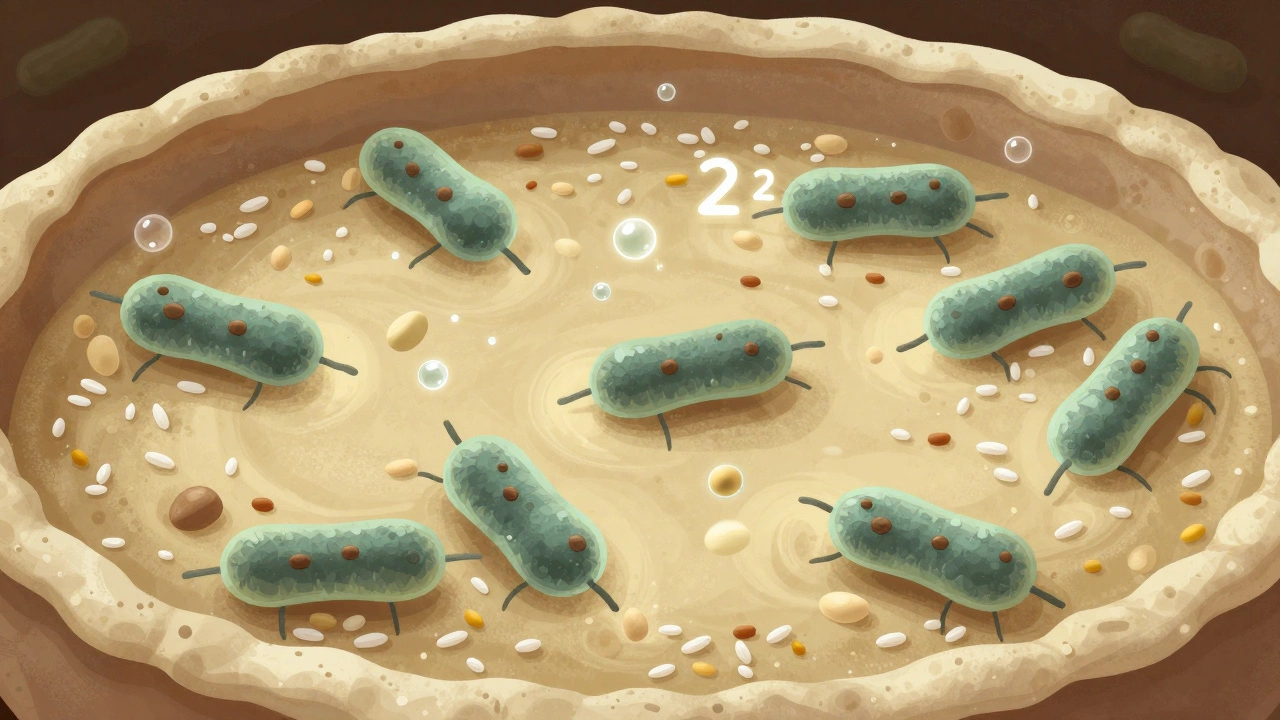
Dosa batter becomes sour because of lactic acid bacteria - tiny microorganisms that live naturally on rice, urad dal, and even in the air around your kitchen. When you mix soaked rice and black gram dal with water and leave it out, these bacteria get to work. They feed on the sugars and starches in the batter, breaking them down and producing lactic acid as a byproduct. That lactic acid is what gives the batter its tangy, sour flavor.
This isn’t just flavor. That sourness is tied directly to texture. The acid softens the grains, breaks down complex starches, and makes the batter easier to digest. At the same time, the bacteria release carbon dioxide gas, which creates tiny bubbles. These bubbles are what make your dosas rise and turn crisp on the edges while staying soft inside.
The sourness doesn’t come from added vinegar or lemon juice. It’s all natural. In fact, if your batter doesn’t get sour after 8-12 hours in warm weather, something’s wrong - maybe the temperature is too low, or the rice and dal weren’t soaked long enough.
How fermentation works step by step
Fermentation isn’t magic. It’s biology. Here’s what actually happens inside your batter bowl:
- Soaking: Rice and urad dal are soaked separately for 4-6 hours. This softens them and starts activating enzymes that break down starches into simple sugars - food for the bacteria.
- Grinding: The soaked ingredients are ground into a smooth paste. The finer the batter, the more surface area for bacteria to work on.
- Mixing: Rice and dal batter are combined. The ratio matters: 3 parts rice to 1 part urad dal is standard. Too much rice? Batter won’t ferment well. Too much dal? It gets slimy.
- Fermenting: Left in a warm place (28-32°C / 82-90°F), lactic acid bacteria like Lactobacillus multiply. Yeast may also join in, producing a little alcohol and CO2. This is why you see bubbles and smell a slight alcoholic tang.
- Maturing: After 8-12 hours, the batter doubles in volume, smells pleasantly sour, and holds its shape when scooped. That’s your signal it’s ready.
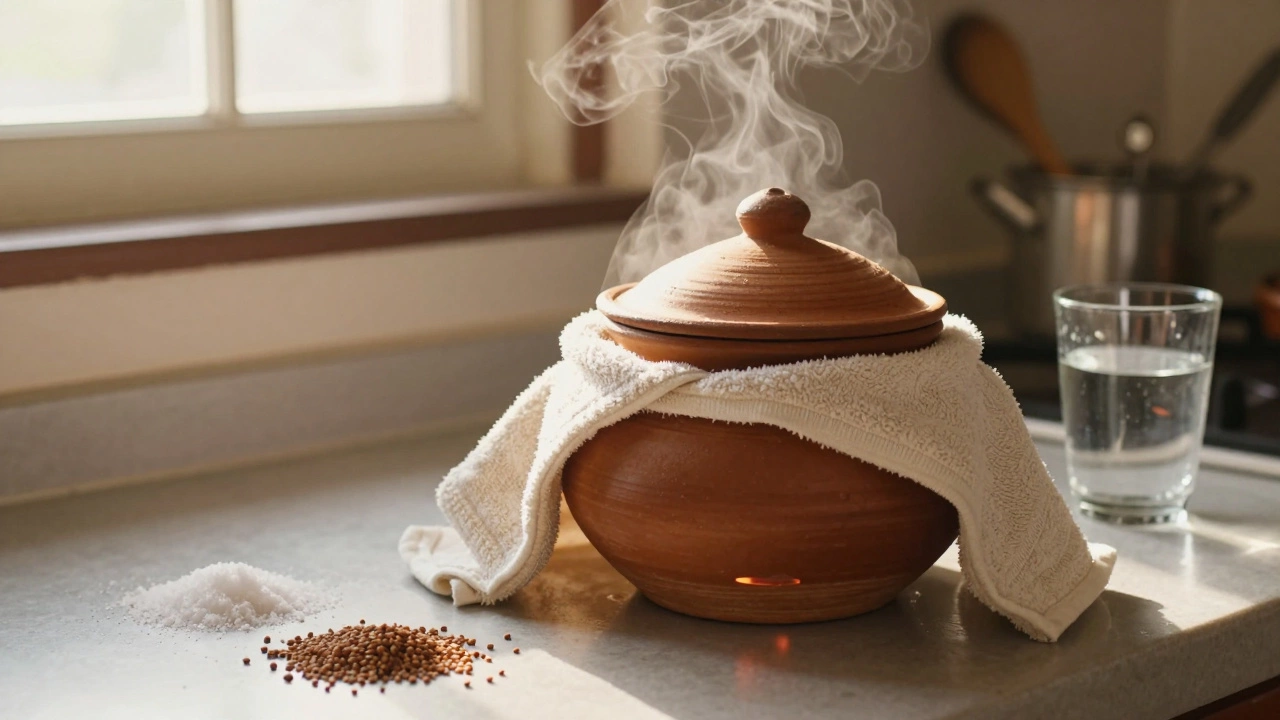
If you live in a cold climate, like Delhi in winter or Bangalore at night, fermentation slows down. That’s why people use warm ovens, place the bowl near a heater, or wrap it in a towel. Some even put it in the oven with the light on - the gentle heat does the trick.
What if your batter gets too sour?
Yes, batter can go too far. If you leave it for more than 24 hours in hot weather, it can become overly sour, even bitter. That’s because the lactic acid bacteria start producing too much acid, and other microbes might begin to grow.
Signs your batter is over-fermented:
- Strong, unpleasant vinegar-like smell
- Grayish or pinkish tint
- Slimy or stringy texture
- Visible mold spots
If you see mold or a weird color, throw it out. No amount of adding water or salt will fix spoiled batter. But if it’s just very sour - still white, bubbly, and smells like yogurt - it’s fine. In fact, many South Indian households prefer extra-sour batter for crispier dosas.
How to fix overly sour batter? Add a pinch of baking soda (1/4 tsp per cup of batter). It neutralizes the acid and gives back some fluffiness. But don’t overdo it - too much baking soda leaves a soapy taste.
Temperature and time: The secret to perfect fermentation
Fermentation speed depends entirely on temperature. Here’s what works:
| Temperature | Fermentation Time | Result |
|---|---|---|
| 25-28°C (77-82°F) | 10-12 hours | Perfect balance of sourness and rise |
| 30-35°C (86-95°F) | 6-8 hours | Faster, stronger sour flavor |
| Below 20°C (68°F) | 18-24+ hours | Slow, weak fermentation - may not rise |
In winter, many people ferment batter overnight inside a closed oven with a bowl of hot water beside it. Others use a yogurt maker, or even a heating pad wrapped in a towel. The key is consistency - don’t let the batter get cold once it starts.
Don’t refrigerate the batter before fermentation. Cold kills the bacteria. Only chill it after fermentation is complete if you want to store it for later.
Why does store-bought dosa batter not taste sour?
Most packaged dosa mixes are made with chemical leaveners like baking powder or yeast extract. They’re designed to be quick - you just add water and cook. But they lack the depth of flavor that real fermentation brings.
Real fermented batter has a complex taste: slightly sweet, tangy, nutty, and earthy. Store-bought versions taste flat. They’re convenient, yes, but they’re not the same. If you want authentic dosas - the kind you get at a street stall in Chennai or a home kitchen in Mysore - you need the sourness.
Some brands do sell pre-fermented batter in refrigerated sections. Those are better. They’ve been naturally fermented, then chilled to stop the process. But even then, they often lack the texture of freshly made batter.
How to tell if your batter is ready
You don’t need a timer. You need your senses.
- Smell: It should smell like yogurt or sourdough bread - pleasantly tangy, not rotten.
- Look: The surface should be covered in small bubbles. The batter should have doubled in volume.
- Texture: Scoop a little with a spoon. It should fall slowly, not run like water. If it holds its shape for a second before sinking, it’s ready.
- Float test: Drop a teaspoon of batter into a glass of water. If it floats, it’s fermented enough. If it sinks, wait another hour.
Once it’s ready, stir it gently. Don’t beat it hard - you want to keep the air bubbles. Then, add salt and water if needed to adjust consistency.
Common mistakes that stop fermentation
Here’s what goes wrong most often:
- Using old rice or dal: Stale grains have fewer natural enzymes and bacteria. Always use fresh, clean ingredients.
- Too much water: Watery batter ferments poorly. The bacteria need a thick, paste-like environment to thrive.
- Not soaking long enough: Rice needs at least 4 hours. Urad dal needs 6. Short soaking = slow fermentation.
- Cold kitchen: No heat = no activity. Fermentation stops below 20°C.
- Adding salt before fermentation: Salt slows down bacteria. Add it after the batter has risen.
- Using chlorinated water: Tap water with chlorine can kill good bacteria. Use filtered or boiled-and-cooled water.
One pro tip: Save a spoonful of fermented batter and store it in the fridge. Next time you make batter, add this as a starter. It’ll ferment faster and more reliably - just like sourdough.
What to do if your batter doesn’t ferment
If after 12 hours in a warm spot, your batter hasn’t changed:
- Check your water - is it chlorinated? Try boiled and cooled water.
- Is your rice old? Try a new batch.
- Is your kitchen below 20°C? Move the bowl to a warmer spot.
- Add a pinch of fenugreek seeds (1/4 tsp) to the soaked dal before grinding. It helps kickstart fermentation.
- Or, add 1-2 tablespoons of leftover fermented batter from a previous batch as a starter.
If none of this works, your environment might be too sterile. Try leaving the bowl uncovered for a few hours before covering it - this lets wild bacteria from the air settle in.
Why sour batter is healthier
Fermented dosa batter isn’t just tastier - it’s better for you. The lactic acid bacteria improve digestion by breaking down phytic acid, a compound in grains that blocks mineral absorption. That means your body gets more iron, zinc, and magnesium from the same amount of rice and dal.
Fermentation also pre-digests starches, making dosas easier on the stomach. People with mild gluten sensitivity often tolerate fermented dosas better than bread because the fermentation process breaks down complex proteins.
Plus, fermented foods are rich in probiotics - the good bacteria that support gut health. A single serving of fermented dosa batter can contain billions of live cultures, similar to yogurt or kefir.
That’s why traditional South Indian families ferment their batter for days - it’s not tradition for the sake of it. It’s science.