Chicken Curry Cooking Timer & Safety Guide
Cooking Parameters
Safety Information
Recommended Cooking Time
Select your chicken type and cooking parameters to see recommended time
You’ve got a pot of spices heating up, onions sizzling, garlic and ginger releasing their scent - and then you pause. You’re holding a piece of raw chicken. Should you toss it in now? Or wait until you’ve made the sauce? This question comes up more often than you think, especially in home kitchens where people are trying to make authentic Indian-style curry without a recipe book in hand.
Yes, you can put raw chicken into a curry - and most traditional recipes expect it
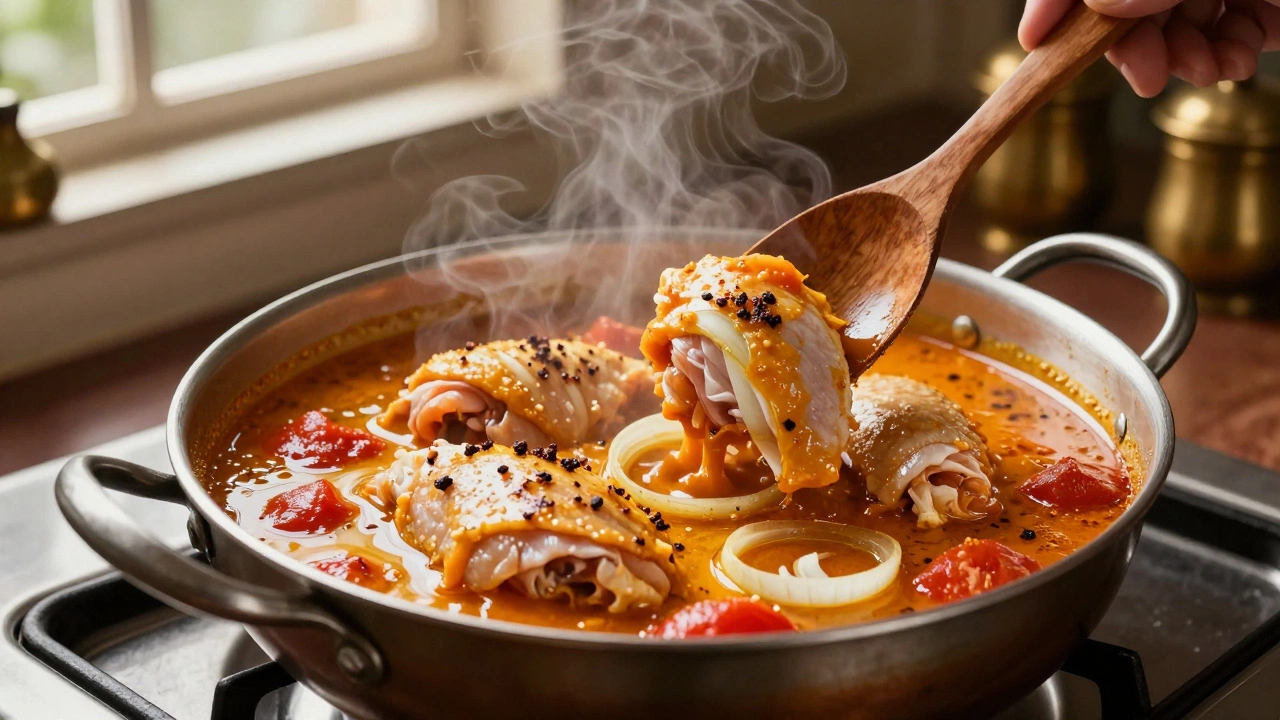
Traditional Indian, Thai, and Caribbean curries almost always start with raw chicken. In fact, cooking the chicken directly in the sauce is how you build deep flavor. The meat absorbs the spices as it cooks, and the natural juices blend into the gravy, making it richer. This isn’t a shortcut - it’s the standard method.
Think about it: if you browned the chicken first, you’d get a nice sear, but you’d lose the chance for the meat to simmer slowly in the spices. In a home kitchen in Mumbai, Delhi, or even Bristol, you’ll find people adding raw chicken pieces straight into the pot after the masala base is ready. The key isn’t whether you use raw chicken - it’s how you cook it after.
How to cook raw chicken in curry safely
Safety isn’t optional. Raw chicken carries bacteria like Salmonella and Campylobacter. You can’t just dump it in and walk away. The chicken must reach an internal temperature of 74°C (165°F) to be safe. That’s non-negotiable.
Here’s how to do it right:
- Start with clean, fresh chicken - no slimy texture, no odd smell.
- Add the chicken to a pot with hot oil and spices. Let it sit for 2-3 minutes without stirring so the surface begins to sear.
- Stir gently, then add liquids: coconut milk, tomato puree, stock, or water. The liquid lowers the temperature and starts the simmering process.
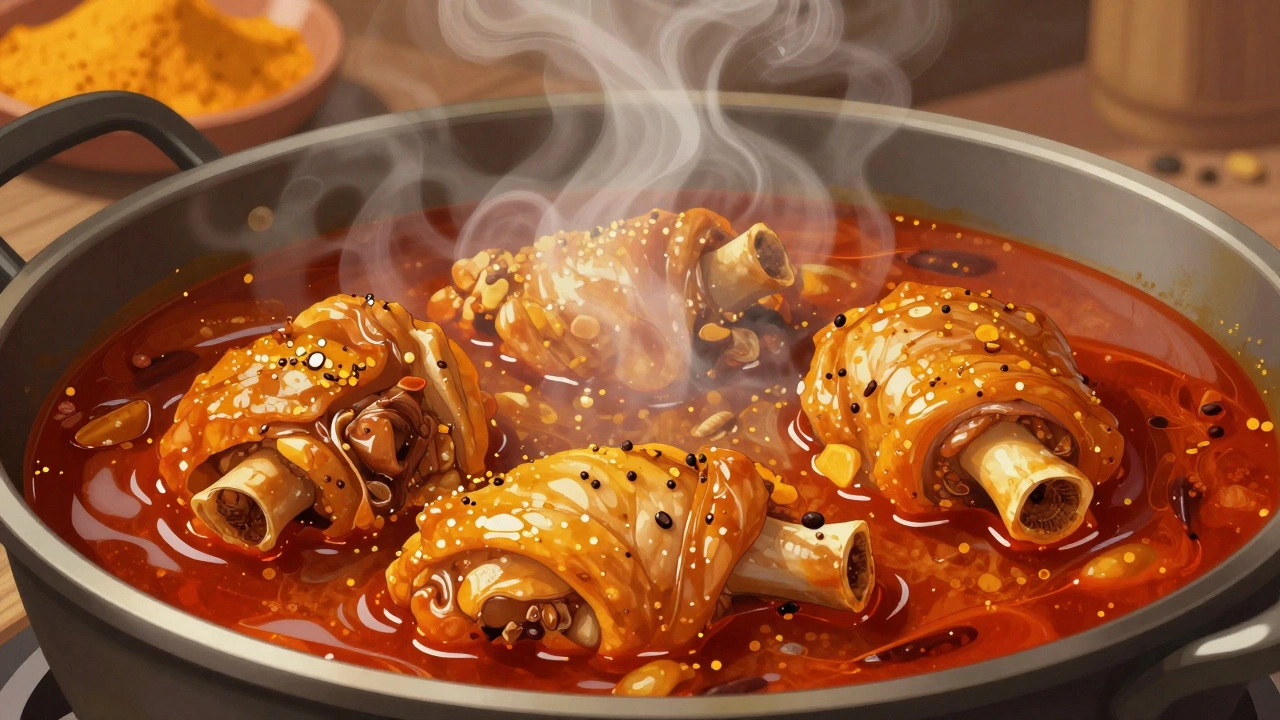
- Keep the curry at a gentle bubble for at least 25-30 minutes. Don’t rush it. If you’re using bone-in pieces, go closer to 40 minutes.
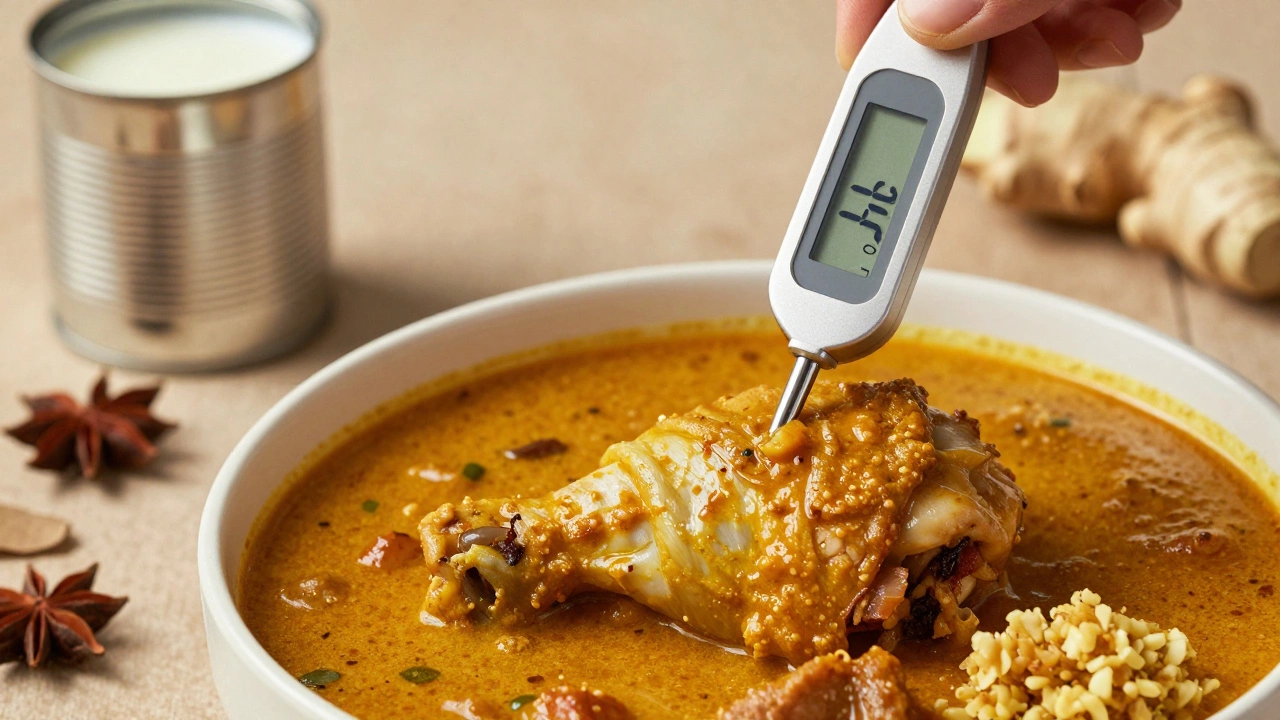
- Use a meat thermometer. Stick it into the thickest part of the chicken. If it reads 74°C, you’re done. If not, keep cooking.
Many people skip the thermometer and guess. That’s risky. Chicken can look cooked on the outside but still be raw inside. I’ve seen people serve curry with pinkish juices - it’s not traditional, it’s dangerous.
Why browning chicken first isn’t always better
You’ve probably heard that you should brown meat before adding it to sauces. That’s true for stews and braises - but curry is different. In a curry, the sauce is thin, spicy, and full of aromatics. Browning chicken first seals in moisture, yes - but it also creates a barrier that stops the spices from penetrating the meat.
When you add raw chicken directly to the simmering sauce, the spices slowly work their way into the fibers. The result? Every bite has flavor, not just the surface. That’s why restaurant curries taste so layered - they cook the chicken in the sauce from the start.
That said, if you want a richer color or deeper crust on the chicken, you can sear it lightly for 3-4 minutes per side before adding liquid. But don’t treat it like a steak. Just get a light golden color - enough to add texture, not enough to lock out flavor.
What happens if you add chicken too early?
Some people add chicken before the oil is hot or before the spices are toasted. That’s a mistake. Cold chicken hitting cold oil makes the spices clump and burn. You end up with bitter, unevenly cooked curry.
Always wait until your spices are fragrant - the moment you smell cumin, coriander, or turmeric blooming in the oil. That’s your cue. Then add the chicken. The heat activates the oils in the spices, and the chicken picks them up immediately.
If you add chicken too early, you’ll get watery sauce, pale meat, and a flat taste. The spices don’t have time to release their full potential.
Chicken cuts that work best in curry
Not all chicken pieces behave the same in curry. Here’s what works:
- Bone-in, skin-on thighs - the gold standard. They stay juicy, add richness, and hold up to long cooking.
- Boneless thighs - quicker to cook, still tender. Good for weeknights.
- Breasts - dry out fast. Only use if you’re cooking under 20 minutes and cut into small cubes.
- Drumsticks - great for slow-cooked curries. Takes longer, but the flavor is worth it.
Avoid ground chicken. It turns mushy and doesn’t hold shape. Stick to whole pieces.
Common mistakes people make with raw chicken in curry
Even experienced cooks mess this up. Here are the top errors:
- Not cooking long enough - thinking the chicken is done because it’s no longer pink. Color isn’t reliable. Use a thermometer.
- Stirring too much - constant stirring breaks the meat apart and makes the sauce cloudy.
- Adding chicken to cold sauce - the temperature drop stops the cooking process and dilutes flavor.
- Using frozen chicken - it releases too much water and turns the curry thin. Always thaw it first.
- Skipping the resting time - let the curry sit for 10 minutes after turning off the heat. The chicken finishes cooking gently, and the flavors meld.
What about pre-cooked or leftover chicken?
You can add cooked chicken to curry - but only at the very end. Add it in the last 5 minutes, just to warm it through. If you cook it longer, it turns rubbery and dry. That’s why many restaurants add pre-cooked chicken to ready-made sauces - they’re reheating, not cooking.
Leftover roasted chicken? Chop it up, toss it in at the end. It works great for a quick curry fix. But don’t expect the same depth of flavor as when you start with raw meat.
Real-world example: My go-to chicken curry
Here’s how I make it in my kitchen in Bristol. I use bone-in thighs because they’re affordable and forgiving. I toast cumin seeds, then add chopped onions. When they’re soft, I throw in ginger-garlic paste, turmeric, chili powder, and ground coriander. I let that sizzle for a minute until the oil separates.
Then I drop in six chicken thighs - raw, no pre-cooking. I let them sit for 3 minutes, then add a can of crushed tomatoes and 200ml of coconut milk. I bring it to a simmer, cover, and walk away for 35 minutes. I check the temperature with my thermometer. When it hits 74°C, I turn it off. I let it rest. I serve it with rice.
It’s not fancy. But it’s safe, flavorful, and smells like my grandmother’s kitchen.
Is it safe to cook raw chicken in a curry?
Yes, as long as the chicken reaches an internal temperature of 74°C (165°F). Cooking it slowly in the sauce ensures it’s safe. Always use a meat thermometer to check - don’t rely on color or texture.
Can you put frozen chicken in curry?
No. Frozen chicken releases too much water, which dilutes the sauce and lowers the cooking temperature. This can lead to uneven cooking and undercooked meat. Always thaw chicken in the fridge overnight before using it in curry.
Should you brown chicken before adding it to curry?
It’s optional. Browning adds color and texture, but it’s not necessary for flavor. Traditional curries often skip this step. If you do brown it, only do it for 3-4 minutes per side - just enough to get a light crust, not to fully cook the meat.
How long does raw chicken take to cook in curry?
Bone-in chicken takes 30-40 minutes on a gentle simmer. Boneless pieces take 20-25 minutes. Always check with a thermometer. The sauce should be thickening, and the chicken should be tender enough to pull apart easily.
Can you reheat chicken curry with raw chicken in it?
You can’t reheat raw chicken - it has to be fully cooked first. Once the chicken is cooked to 74°C, you can safely reheat the curry later. Just make sure it reaches 74°C again when reheating. Never reheat partially cooked chicken.
Final tip: Trust the process, not the shortcut
Curry isn’t about speed. It’s about patience. Adding raw chicken isn’t a hack - it’s the foundation of great flavor. The spices need time. The meat needs time. The sauce needs time. Rushing it doesn’t save you minutes - it ruins the dish.
Next time you make chicken curry, skip the pre-cooking. Just toss that raw chicken in, let it simmer, and wait. You’ll taste the difference - and you’ll know you did it right.