Paneer: How to Make It, Best Acids, and Why It’s a Kitchen Essential
When you think of Indian curries, paneer, a fresh, non-melting cheese made by curdling milk with acid. Also known as Indian cottage cheese, it’s the star of dishes like paneer tikka, palak paneer, and paneer butter masala. Unlike other cheeses, paneer doesn’t melt—it holds its shape, so it’s perfect for grilling, frying, or simmering in rich sauces. You don’t need fancy equipment or a cheese press. All you need is milk, an acid, and a little patience.
What you use to curdle the milk makes a big difference. lemon juice, a natural, widely available acid. Also known as citrus acid, it gives paneer a clean taste and firm texture. Vinegar works too, but it can leave a slight tang if you don’t rinse the curds well. Citric acid powder is the most precise—used by pros for consistent results. The type of acid affects not just flavor, but also how much paneer you get from a gallon of milk. On average, one gallon of whole milk yields about 200 to 250 grams of paneer, depending on fat content and how long you drain it.
Paneer yield, how much cheese you end up with after curdling and draining. Also known as milk to paneer conversion, it’s something every home cook should know. If you’re making paneer often, tracking yield helps you adjust your milk quantity. Full-fat milk gives you more cheese. Skim milk? You’ll get less, and it’ll be crumbly. And yes, the temperature matters—heat the milk to just below boiling before adding acid. Too cold, and the curds won’t form right. Too hot, and you risk scorching.
Paneer isn’t just for curries. It’s in snacks, salads, even desserts. It’s vegetarian protein you can hold in your hand, fry until golden, or soak in spiced gravy. It’s the reason why many Indian households keep milk on hand—not just for tea, but for making fresh cheese every few days. And if you’ve ever tried making paneer and ended up with a mushy mess, it’s usually because the milk wasn’t hot enough, or you used too little acid. The fix? Heat it right, add acid slowly, and let it sit.
Below, you’ll find real answers to real questions: which acid gives the firmest paneer, how much cheese you can actually get from a gallon of milk, and why some recipes fail while others turn out perfect. No fluff. Just what works.
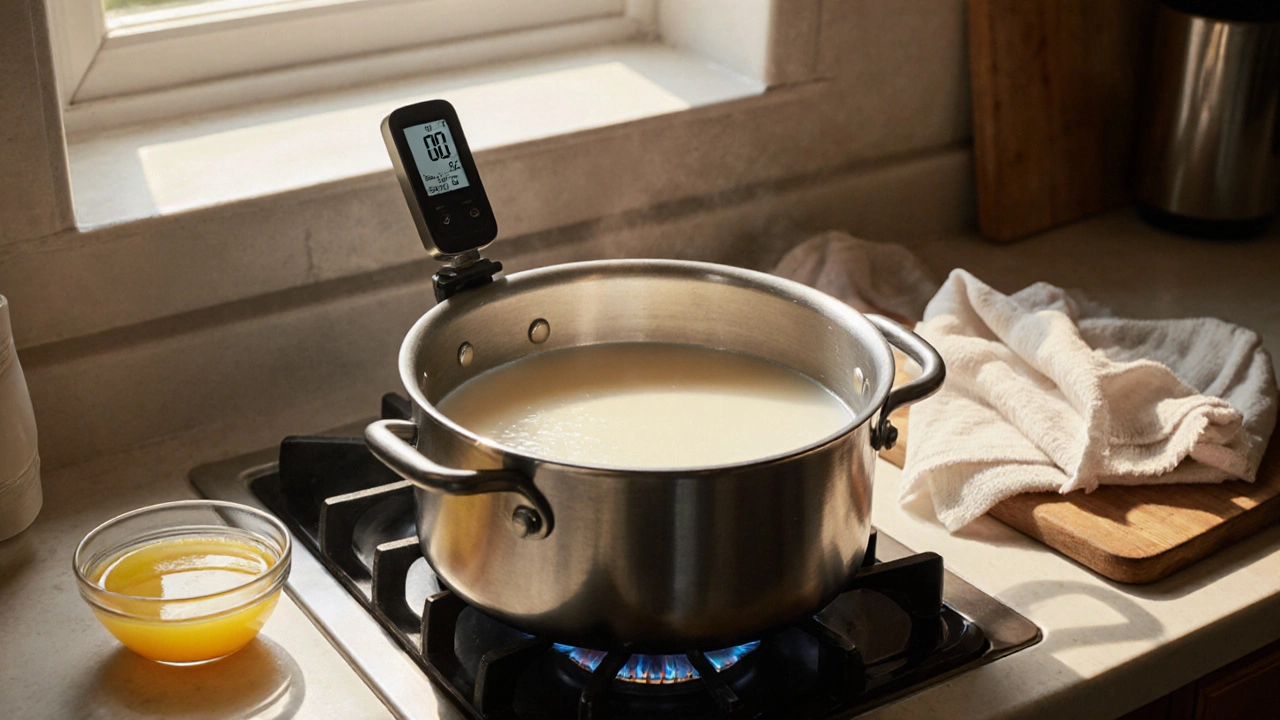
How to Make Paneer from Broken Milk - Safe DIY Guide
Learn how to safely turn mildly sour or "broken" milk into fresh paneer at home, with step‑by‑step instructions, safety tips, and storage advice.
Read More
When to Skip Homemade Paneer
Sometimes delicious paneer isn't the best choice, especially if you're lactose intolerant or counting calories. Homemade paneer can be a bit heavy and might not suit everyone's diet. It’s crucial to know when to steer clear to keep your health on track. This article explores situations and health conditions where avoiding paneer is a smart move. With practical tips and simple explanations, it aims to help you make informed food choices.
Read More
Can Ricotta Be Used as a Substitute for Paneer?
Swapping ricotta for paneer is a common question among home cooks aiming to experiment with flavors. While both cheeses appear similar, they differ in texture and taste. The article explores whether ricotta can replace paneer effectively in dishes, offering insights into how to make this substitution work. Learn practical tips and interesting facts to make your culinary creations delicious and authentic.
Read More