How to Keep Roti Soft: Tips, Tricks, and Common Mistakes
When you roll out a roti, you want it to puff up like a cloud and stay soft for hours—not turn into a dry, crackly disk by lunchtime. Roti, a traditional Indian flatbread made from whole wheat flour, water, and salt. Also known as chapati, it’s the backbone of countless meals across India, served with dal, curry, or just ghee. But no matter how well you cook it, if you don’t know how to keep roti soft, it’s useless. The problem isn’t the recipe—it’s what happens after it comes off the tawa.
Soft roti isn’t luck. It’s control. It’s about heat, timing, and what you do right after cooking. Many people skip the most important step: wrapping the roti while it’s still hot. Steam is your secret weapon. When you stack fresh rotis in a clean cloth or wrap them in a towel, the trapped moisture keeps the surface pliable. No towel? No soft roti. That’s it. Some use a sealed container, others a steel box lined with cloth. The method doesn’t matter—what matters is trapping that steam before it escapes. And don’t leave them uncovered on the counter. Air dries them out fast.
Flour quality matters too. Whole wheat flour, the primary ingredient in traditional roti, affects texture, moisture retention, and elasticity. If your flour is too coarse or old, your roti won’t puff or stay soft. Use fresh, finely ground atta. Water temperature helps too—lukewarm water makes the dough more forgiving. Knead it well, not just for 2 minutes, but for at least 8–10 minutes. A smooth, elastic dough holds moisture better. And don’t skip resting. Let the dough sit for 30 minutes. That’s when the gluten relaxes and the starches absorb water fully.
Heat is another silent killer. If your tawa is too hot, the roti cooks too fast on the outside and stays raw inside. Too cool? It absorbs oil and turns greasy. The sweet spot is medium heat. Cook each side just until you see bubbles and light brown spots. Then press gently with a cloth—this helps it puff. A puffing roti is a moist roti. If it doesn’t puff, it’s already on its way to becoming hard.
And then there’s storage. If you’re making rotis ahead, don’t refrigerate them. Cold kills moisture. Freeze them instead—stack them with parchment paper between each one, wrap tight, and thaw at room temperature. Reheat on a dry tawa for 10 seconds per side. That’s better than microwaving, which turns them rubbery. If you must microwave, wrap in a damp cloth first.
Some swear by adding a pinch of oil or ghee to the dough. It helps. Others brush the cooked roti with ghee right after flipping. That’s the real pro trick. The fat seals in moisture and adds flavor. You don’t need much—just a light swipe. But do it every time.
What you’ll find below are real solutions from Indian kitchens—not theory, not food blogs. These are the fixes used by grandmothers, home cooks, and street vendors who serve hundreds of rotis a day. You’ll learn why your roti goes hard, what to do when it’s already dry, and how to make a batch last from breakfast to dinner without tasting like cardboard. No fancy gadgets. No complicated steps. Just the way it’s done in homes across India.
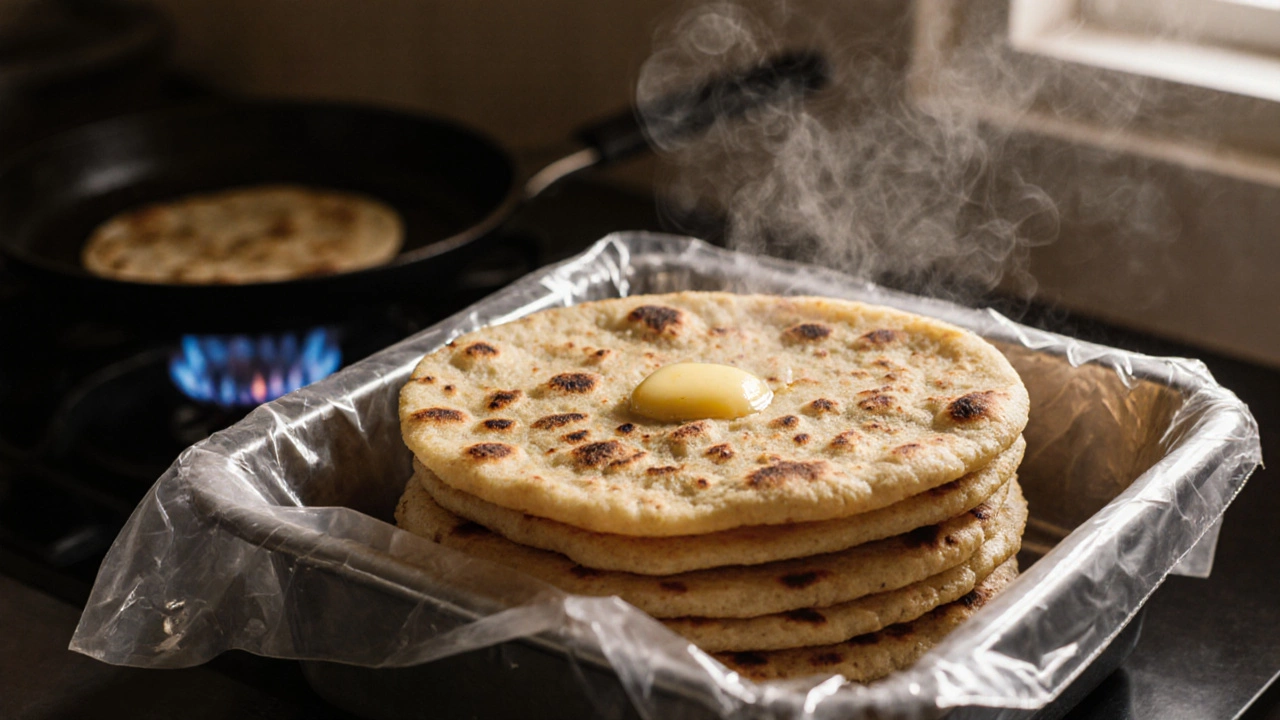
How to Keep Roti Soft for Hours - Proven Tips and Tricks
Learn the exact steps, ingredients and storage tricks to keep roti soft for hours, with easy reheating tips and common mistakes to avoid.
Read More