Fermented Dosa Batter: How to Get It Right Every Time
When you think of fermented dosa batter, a living mixture of rice and lentils transformed by natural bacteria to create light, tangy, and crisp pancakes. Also known as dosa batter, it’s the foundation of one of India’s most loved breakfasts—and the difference between a soggy mess and a golden, crackling dosa comes down to just a few key things. This isn’t just mixing rice and dal and leaving it out. It’s a biological process that turns simple ingredients into something alive, flavorful, and digestible. The right fermentation gives your dosa that signature tang, airy texture, and crisp edges. Skip it, and you’re just making flat rice cakes.
The magic happens because of lactic acid bacteria, naturally present in the environment and on the rice and urad dal. These microbes feed on starches and sugars, producing lactic acid and carbon dioxide. That acid is what gives the batter its tang, and the gas bubbles are what make the dosa light. If your batter doesn’t rise, it’s not because you didn’t wait long enough—it’s likely because the temperature was too cold, the rice-to-dal ratio was off, or you used old dal. Most people fail because they rush it. You can’t force fermentation. It needs 8 to 12 hours in a warm spot, ideally around 80–85°F. In winter, place the bowl near your oven with the light on, or wrap it in a towel and put it by a radiator. Don’t add yeast to speed it up. Yeast kills the good bacteria and ruins the flavor. You want the slow, natural kind. And don’t forget the urad dal, the white lentil that gives dosa batter its fluffiness and structure. It’s not just an add-in—it’s the backbone. Use whole, unsplit urad dal, soaked separately, and grind it to a smooth, fluffy paste. Too much rice? Your dosa will be hard. Too little dal? It’ll fall apart. The classic ratio is 4:1 rice to dal, but many home cooks find 3.5:1 works better for crispiness. Water matters too. Use filtered or cooled boiled water. Chlorine in tap water can kill the good bacteria. And never add salt before fermentation—it slows down the process. Add it right before you start cooking.
Once your batter is ready, you’ll know by the smell—slightly sour, like yogurt—and the bubbles rising to the top. Give it a gentle stir, no need to whip it. Pour it on a hot griddle, and the batter should spread easily. If it’s too thick, add a splash of water. If it’s too thin, let it rest a bit longer. The real test? When it hits the griddle, it should sizzle and start forming those tiny holes. That’s the sign of good fermentation. If it doesn’t, you’ll end up with a chewy, flat disc instead of a crispy, golden dosa.
Below, you’ll find real fixes from people who’ve been there—why their batter didn’t crisp up, what they did wrong, and how they got it right. No theory. No fluff. Just what works in a real kitchen, with real ingredients, on a real stove.
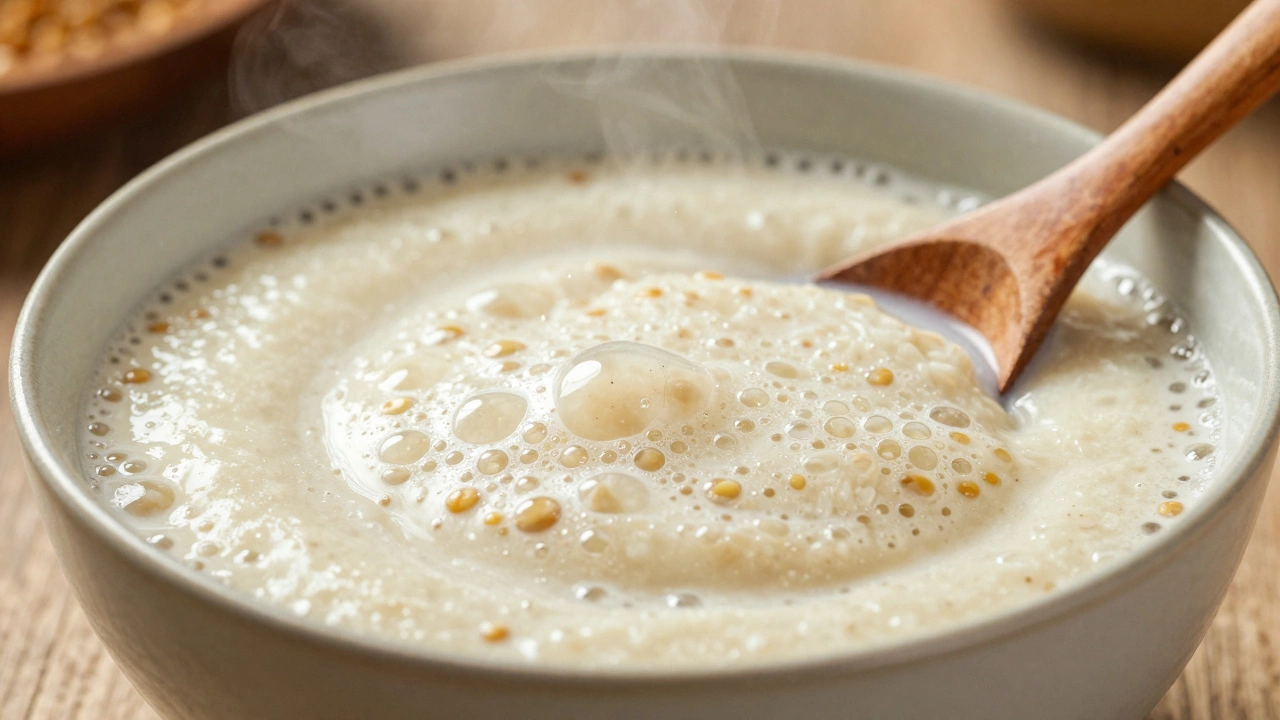
Why Dosa Batter Becomes Sour: The Science Behind Fermentation
Dosa batter becomes sour due to natural fermentation by lactic acid bacteria, which improves flavor, texture, and digestion. Learn why this happens, how to control it, and how to fix common problems.
Read More