Beginner Sweet Maker
Find Your Perfect First Sweet
Discover which traditional Indian dessert is easiest for you to make based on your cooking experience.
Beginner (No experience)
For complete beginners - quick, simple, and forgiving
Intermediate (Some experience)
For home cooks who've made basic recipes
Advanced (Experienced)
For those who want to master traditional techniques
Select your skill level to get started
Choose one to see which sweet is right for you
When you think of Indian desserts, you don’t just think of sugar. You think of cardamom-dusted milk fudge, syrup-soaked fried dough balls, and rice pudding slow-cooked for hours with saffron and nuts. Indian sweets aren’t just after-dinner treats-they’re part of celebrations, rituals, and daily comfort. From village homes to city bakeries, these desserts carry generations of flavor in every bite.
What Makes Indian Sweets Different?
Unlike Western desserts that often rely on butter and eggs, Indian sweets are built on milk, sugar, and spices. Many are made with khoya (reduced milk solids), ghee, and jaggery instead of refined sugar. They’re rarely baked-they’re fried, steamed, or simmered slowly. That’s why a piece of rasgulla stays soft for days, while a barfi hardens into a dense, melt-in-your-mouth square.
There’s no single Indian dessert. Each region has its own signature. In the north, you’ll find rich, nut-heavy sweets like peda and kalakand. In the south, rice and coconut dominate with payasam and adhirasam. The east loves milk-based treats like sandesh and rosogolla. And in the west, you’ll get jalebi and modak. The diversity is as vast as the country itself.
1. Gulab Jamun: The National Favorite
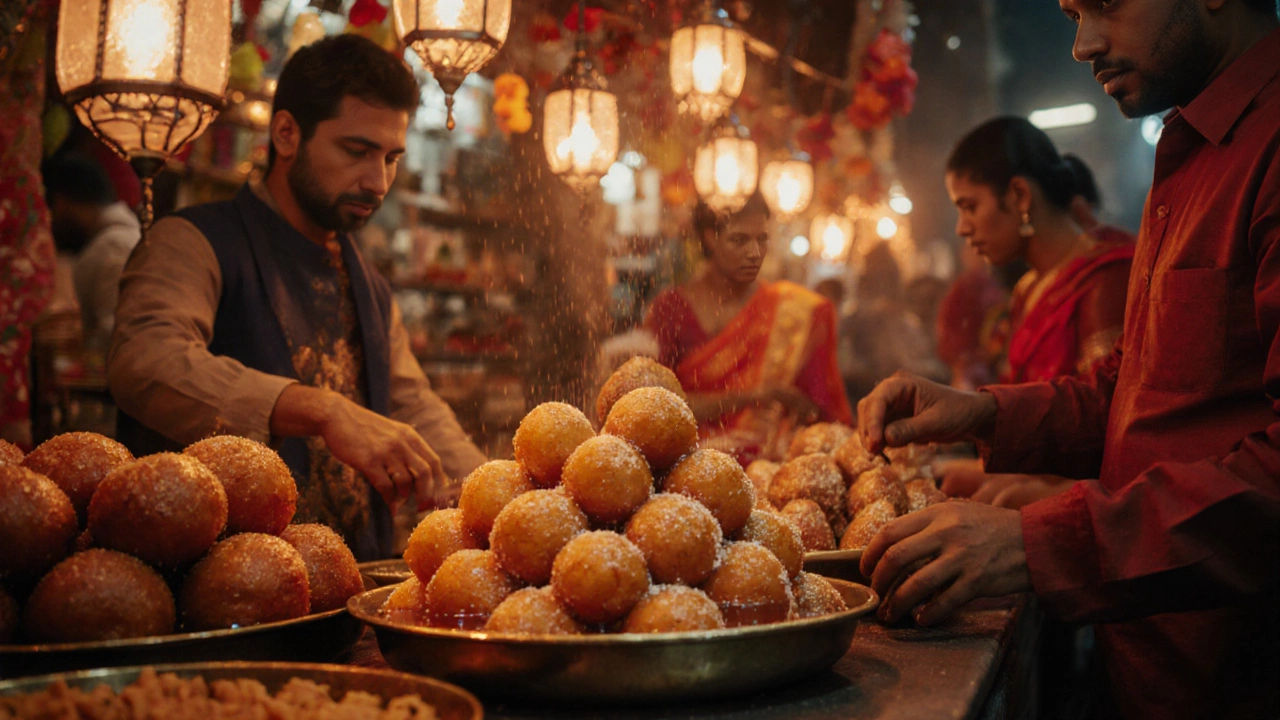
Ask any Indian what their favorite sweet is, and gulab jamun will come up first. These deep-fried milk dough balls soak in warm sugar syrup flavored with cardamom and rosewater. They’re served hot at weddings, festivals, and even casual family dinners.
The trick? The dough is made from khoya and a little flour, kneaded just enough to hold shape. Over-kneading makes them tough. Fry them on low heat until golden-too hot and they’ll burn outside while staying raw inside. Then dunk them in syrup that’s been simmered with a cinnamon stick and a few green cardamoms. The syrup should be thin, not thick. A good gulab jamun absorbs the syrup like a sponge and stays soft for hours.
2. Rasgulla: The Bengali Classic
Originating in West Bengal, rasgulla is a soft, spongy cheese ball cooked in light sugar syrup. It’s often served chilled. Unlike gulab jamun, it’s not fried. Instead, chhena (fresh cottage cheese) is shaped into balls and gently boiled in syrup until they puff up like little clouds.
The secret to perfect rasgulla is the texture of the chhena. It must be drained well-too wet and the balls fall apart. Too dry and they turn hard. Many home cooks squeeze the chhena by hand in a clean cloth for 10-15 minutes. The syrup? Just sugar and water, boiled once, then cooled slightly before adding the balls. No spices. No coloring. Just pure, sweet, springy goodness.
3. Jalebi: The Crunchy, Spiral Treat
Jalebi looks like orange candy swirls dipped in syrup. It’s crispy on the outside, chewy inside, and often eaten warm with a dollop of thick yogurt. You’ll find it at street corners from Delhi to Mumbai, especially in the mornings.
The batter is made from fermented urad dal flour and all-purpose flour, left to rise overnight. That fermentation gives it the tangy depth that balances the sweetness. The batter is piped into hot oil in tight spirals, then immediately soaked in syrup. The syrup must be hot enough to set the jalebi quickly but not so hot it burns. A good jalebi should snap when you bite it, then soften as the syrup melts.
4. Barfi: The Dense, Nutty Square
Barfi is like Indian fudge. Made from khoya, sugar, and often ground nuts like almonds or pistachios, it’s pressed into a tray and cut into squares. Coconut barfi, besan barfi (made with chickpea flour), and chocolate barfi are all popular variations.
What makes barfi special is how it’s cooked. The mixture is stirred constantly over low heat until it pulls away from the pan. That’s the sign it’s ready. If you stop stirring too soon, it’ll be sticky. Too long, and it turns hard as a rock. The best barfi is smooth, slightly chewy, and melts slowly on the tongue. A sprinkle of edible silver leaf (vark) on top isn’t just for looks-it’s tradition.
5. Kheer: India’s Rice Pudding
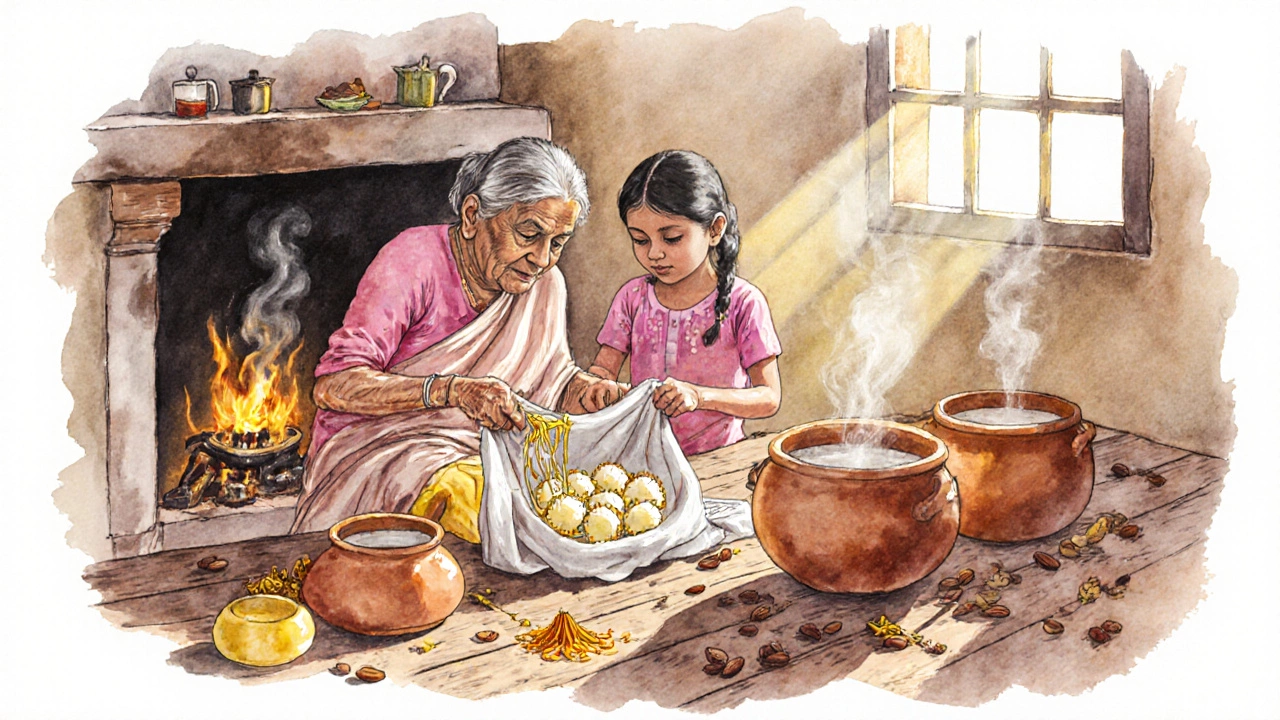
Kheer is the dessert you make for temple offerings, baby showers, and monsoon evenings. It’s rice cooked slowly in milk until creamy, sweetened with sugar or jaggery, and flavored with cardamom, saffron, and nuts. In South India, it’s called payasam and often uses jaggery and coconut milk.
The key is patience. Rushing it with high heat turns the milk grainy. Use full-fat milk and stir occasionally for 45-60 minutes. Add the saffron strands only at the end-they lose their color and aroma if boiled too long. Some families add vermicelli instead of rice for a different texture. Either way, it’s comfort in a bowl.
6. Ladoo: The Bite-Sized Ball of Joy
Ladoo comes in dozens of versions, but the two most loved are besan ladoo and motichoor ladoo. Besan ladoo is made from roasted chickpea flour, ghee, and sugar. Motichoor ladoo uses tiny fried pearls of gram flour dough, bound together with syrup.
Besan ladoo is quick to make-just roast the flour until it smells nutty, mix in melted ghee and sugar, and roll into balls while warm. Motichoor ladoo takes longer. The pearls must be fried to perfect golden beads, then soaked in syrup until they stick together. Both are served at Diwali and weddings. They keep for weeks if stored in an airtight container.
7. Sandesh: The Bengali Milk Delicacy
Sandesh is like a softer, more delicate barfi. Made from chhena and sugar, it’s molded into shapes-flowers, hearts, or simple rounds. It’s not fried or boiled. Instead, the chhena is gently heated with sugar until it becomes smooth and pliable.
What sets sandesh apart is how little sugar it uses. It’s subtle, not cloying. Some versions include poppy seeds or cardamom. The best sandesh has a slight melt at room temperature and a faint milky aroma. It’s often served in small portions because it’s rich. In Kolkata, you’ll find shops that have made the same recipe for over a century.
8. Payasam: South India’s Creamy Comfort
Payasam is the southern cousin of kheer, but it’s often richer and more complex. In Tamil Nadu, it’s made with vermicelli, coconut milk, and jaggery. In Kerala, it’s made with ripe plantains and coconut. In Andhra, it’s made with broken wheat and milk.
What’s consistent? The slow cooking. Payasam isn’t rushed. The milk is simmered until it reduces by half. The jaggery is added last so it doesn’t burn. Nuts are fried in ghee first to bring out their flavor. It’s served warm or at room temperature, never chilled. Many families make it every Sunday as a ritual.
9. Modak: The Ganesh Festival Favorite
Modak is a steamed dumpling filled with sweet coconut and jaggery. It’s the favorite offering to Lord Ganesha during Ganesh Chaturthi. The outer shell is made from rice flour or wheat flour, rolled thin, and sealed around the filling.
There are two types: ukadiche modak (steamed) and fried modak. Steamed is softer and more traditional. The filling is cooked with coconut, jaggery, cardamom, and a pinch of nutmeg. The dough must be just right-too thick and it’s doughy; too thin and it tears. Making modak is a family affair in Maharashtra, with everyone rolling and steaming together.
10. Rabri: The Layered Milk Dessert
Rabri is thickened milk, slowly boiled for hours until creamy layers form on top. It’s sweetened with sugar, flavored with cardamom, and topped with nuts. It’s served chilled in small bowls, often during summer festivals.
What makes rabri special is the patience it demands. The milk is boiled on low heat for 3-4 hours, stirred occasionally. As the water evaporates, the milk fat rises and forms golden layers. Some people add a splash of rosewater at the end. It’s not just dessert-it’s a labor of love.
Why These Sweets Still Matter Today
Even with global desserts like ice cream and chocolate cakes everywhere, Indian sweets haven’t faded. They’re still made in homes, sold in local sweet shops, and passed down through recipes written on old paper. They’re tied to identity. Eating a piece of rasgulla isn’t just about taste-it’s about remembering your grandmother’s kitchen, Diwali lights, or the smell of cardamom in the air during a wedding.
Modern twists exist-rasgulla cheesecake, jalebi waffles-but the originals still rule. Why? Because they’re made with care. Not speed. Not machines. Hands. Time. And tradition.
Where to Find the Best Indian Sweets Outside India
If you’re in the UK, the UK, look for Indian sweet shops in cities like London, Birmingham, or Manchester. Many still import khoya and ghee from India. Ask for fresh barfi or hot jalebi-most shops make them daily. Avoid pre-packaged sweets in supermarkets; they’re often too sweet and lack texture.
Online, some small businesses ship fresh sweets with overnight delivery. But nothing beats walking into a sweet shop, watching them fry gulab jamun right in front of you, and smelling the cardamom in the air.
Are Indian sweets unhealthy?
Indian sweets are high in sugar and fat, especially those made with ghee and khoya. But they’re not eaten daily by most families-they’re reserved for celebrations. Many traditional recipes use jaggery instead of white sugar, which has trace minerals. Portion control matters. A small piece of barfi or a few rasgullas as an occasional treat is fine.
Can I make Indian sweets at home without special ingredients?
Yes, you can substitute some ingredients. Khoya can be made by simmering whole milk for 2-3 hours until it reduces by 75%. Ghee can be replaced with butter, though the flavor changes. Jaggery can be swapped for brown sugar. But for authentic taste, try to find Indian grocery stores for things like rosewater, cardamom pods, and vermicelli.
Which Indian sweet is the easiest to make for beginners?
Besan ladoo is the easiest. You only need roasted chickpea flour, ghee, sugar, and a pinch of cardamom. Mix, roll, and done. No frying, no boiling, no timing pressure. It’s forgiving and quick-perfect for first-timers.
Do Indian sweets need to be refrigerated?
Most dry sweets like barfi, ladoo, and peda can be stored at room temperature for 5-7 days in an airtight container. Wet sweets like rasgulla, rabri, and kheer need refrigeration and should be eaten within 3 days. Always use clean, dry spoons to serve them.
What’s the most popular Indian sweet during Diwali?
Ladoo, especially besan ladoo and motichoor ladoo, is the most popular during Diwali. They’re easy to make in large batches, travel well, and are often gifted in decorative boxes. Jalebi and barfi are also common.
Next Steps: Try One This Weekend
Start with besan ladoo. It’s quick, requires no special tools, and tastes like home. Buy 1 cup of besan (chickpea flour), ½ cup ghee, and ¾ cup sugar. Roast the flour in a pan over low heat until it turns golden and smells nutty-about 10 minutes. Turn off the heat, add ghee and sugar, stir until combined. Let it cool slightly, then roll into small balls. Sprinkle with crushed cardamom. That’s it. You’ve made a taste of India.