Eat Dal Evening: Best Ways to Serve Lentils for Dinner
When you think of eat dal evening, a simple, nourishing Indian meal centered around cooked lentils, often served with rice or flatbread. Also known as dal dinner, it’s one of the most consistent meals across Indian homes — not because it’s fancy, but because it’s reliable, affordable, and deeply comforting. Dal isn’t just a side dish. It’s the backbone of dinner for millions. Whether it’s yellow toor dal, red masoor dal, or thick chana dal, the way it’s served turns a humble pot of lentils into a complete meal.
What you pair with dal matters just as much as how you cook it. You don’t just eat dal — you eat it with something. rice, steamed white or jeera rice, the classic base for most Indian dals soaks up the gravy and balances the spice. roti, freshly made whole wheat flatbread, perfect for scooping and wrapping gives you texture and heartiness. Then there’s the supporting cast: a spoonful of tangy pickle, made from mango, lime, or mixed vegetables, adding sharpness that cuts through the richness, or a cool raita, yogurt mixed with cucumber or onion, cooling the palate after spicy dal. These aren’t optional extras — they’re the reason dal feels complete.
People don’t eat dal in the evening because it’s trendy. They eat it because it’s practical. It’s cheap, easy to make in bulk, digests well, and keeps you full without weighing you down. It’s the meal your grandmother made after a long day, the one you crave when you’re tired, and the one your kids will ask for again tomorrow. The posts below show you exactly how to get the most out of your dal — from the right rice-to-dal ratio to the best side dishes that turn dinner into something unforgettable. You’ll find out why some dals need soaking, how to fix watery dal, and which pairings actually work. No fluff. Just what works.
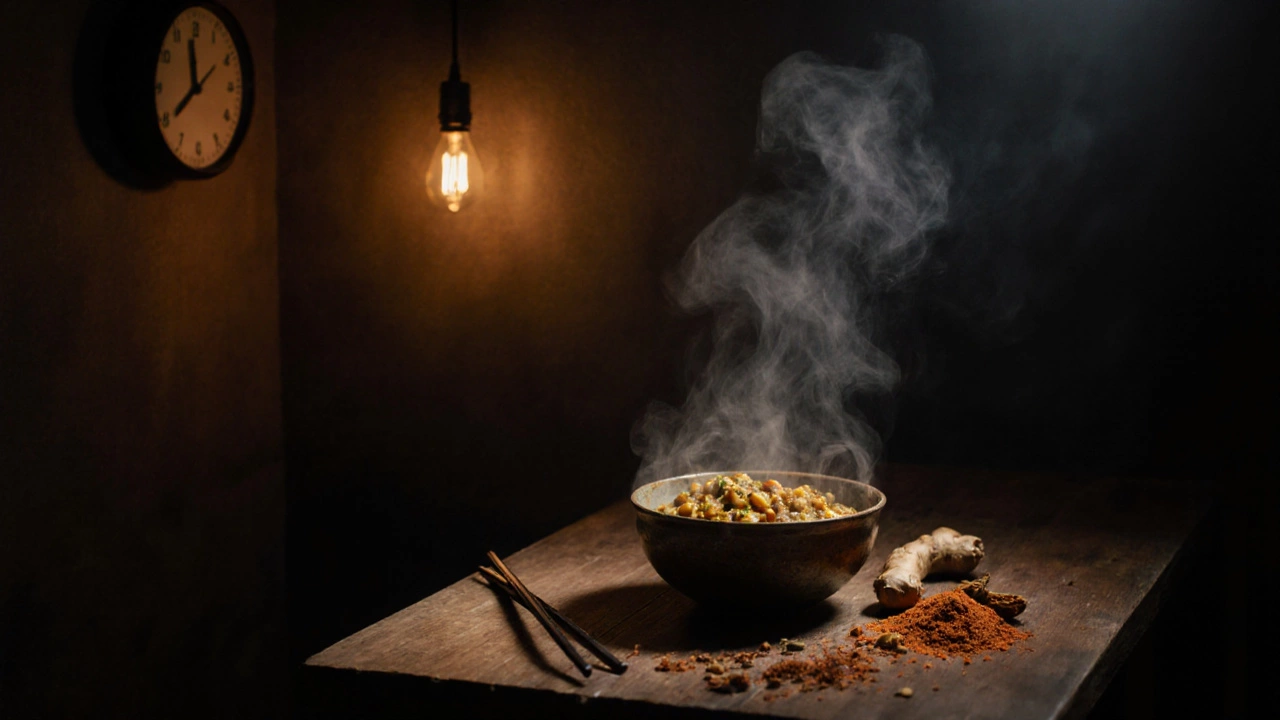
Why You Should Avoid Eating Dal at Night
Eating dal at night can cause bloating, poor sleep, and slow digestion. Learn why certain dals are harder to digest after sunset and what lighter alternatives work better for evening meals.
Read More