Cooking Dal: Simple Ways to Make Lentils Taste Better Every Time
When you think of cooking dal, a foundational lentil dish in Indian households made from split pulses like masoor, toor, or chana. Also known as lentil curry, it’s not just food—it’s comfort, tradition, and nutrition wrapped into one pot. Most people think dal is just boiled lentils with turmeric, but that’s like calling pizza just bread and cheese. The real magic happens in the tempering—when mustard seeds pop in hot ghee, cumin sizzles, and dried red chilies release their smoky heat. That’s what turns plain dal into something you can’t stop eating.
Dal pairings, the side dishes that complete a dal meal. Also known as dal accompaniments, they’re what make the dish feel complete. Rice? Sure. Roti? Absolutely. But don’t forget the tangy pickle, the cooling raita, or even a simple fried onion garnish. These aren’t extras—they’re essential. People in India don’t eat dal alone. They eat it with context. And that’s why your dal might taste flat if you’re just serving it with plain white rice. The flavor doesn’t live in the lentils alone—it lives in the balance.
Indian dal, the regional variations of lentil dishes across the country. Also known as lentil curries, each state has its own version. In the north, you’ll find creamy dal makhani with butter and cream. In the south, it’s tamarind-spiked sambar with lentils and vegetables. In the west, it’s simple, spicy toor dal with garlic and curry leaves. And in the east, it’s mustard oil and panch phoron bringing earthy depth. These aren’t just recipes—they’re cultural fingerprints. And that’s why you can’t treat all dals the same. Cooking dal isn’t about following one rule. It’s about understanding the flavor profile you’re going for.
And yes, you can mess it up. Overcook it until it’s mushy. Skip the tadka entirely. Use water instead of stock. Don’t rinse the lentils. But you don’t need to be a chef to fix it. The fixes are simple: use the right lentil for the dish, don’t rush the tempering, and taste as you go. A pinch of sugar can balance sourness. A splash of lemon brightens it up. A spoon of ghee at the end? That’s the secret no one talks about.
There’s a reason people eat dal every day. It’s cheap. It’s filling. It’s packed with protein and fiber. And when done right, it’s the kind of food that sticks with you—not just in your stomach, but in your memory. The posts below show you exactly how to get there. From fixing watery dal to pairing it with the perfect side, you’ll find real fixes, real tips, and real results—not theory, not fluff. Just what works.
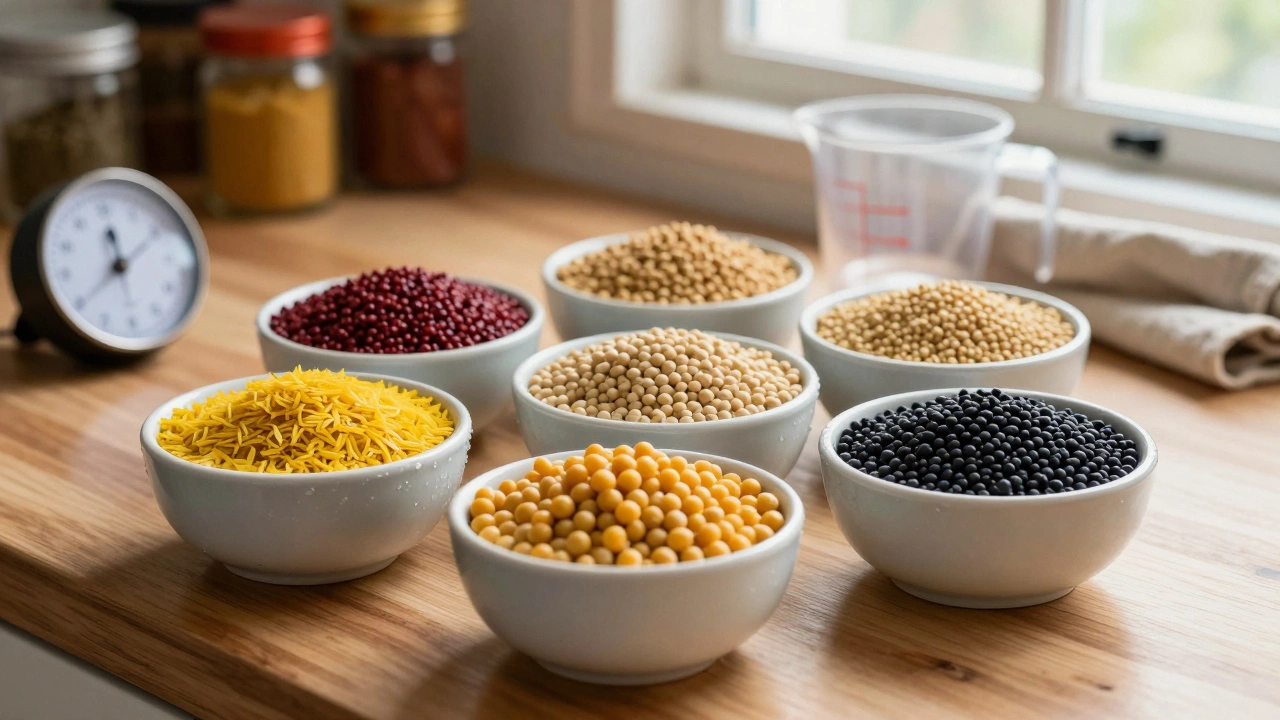
How Long to Soak Dal for Perfect Texture Every Time
Learn the right soaking times for different types of dal to get perfect texture every time. Save time, improve digestion, and make your dal tastier with these simple, proven tips.
Read More