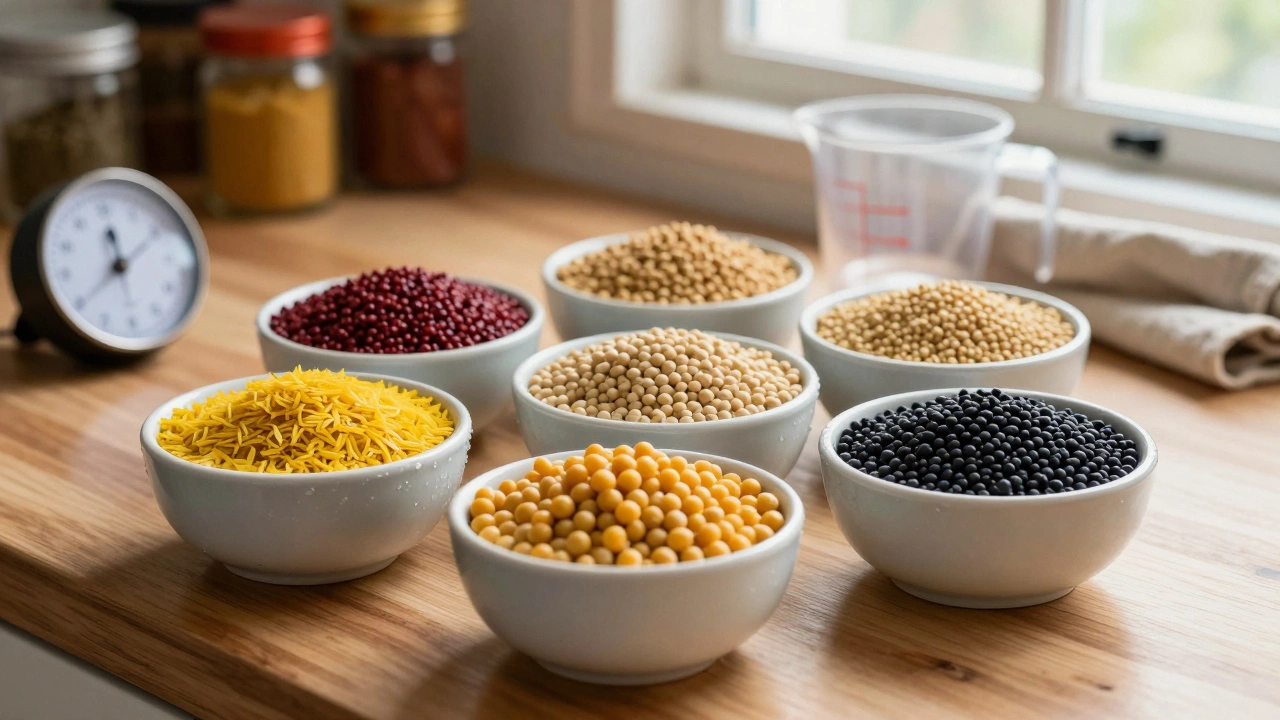
Dal Soaking Time Calculator
Calculate the perfect soaking time for your dal based on type and water temperature. This tool helps you avoid undercooked or mushy dal.
Soaking dal isn’t just a step you skip because you’re in a hurry. It’s the difference between mushy, undercooked lentils and tender, flavorful dal that falls apart just right. If you’ve ever bitten into a hard dal grain or ended up with a pot of gluey mush, you’re not alone. Most people don’t realize how much soaking affects the final dish.
Why Soak Dal at All?
Dal isn’t a single thing-it’s a group of dried legumes like masoor, chana, toor, urad, and moong. These are hard, dense seeds. When you cook them dry, they take forever to soften, and even then, they often stay gritty. Soaking breaks down the outer layer, making them easier to digest and faster to cook. It also helps reduce phytic acid, which can block nutrient absorption. You’re not just saving time-you’re making your dal healthier.
How Long Should You Soak Different Types of Dal?
Not all dals soak the same. The time depends on the size, thickness, and natural hardness of the lentil. Here’s what works in real kitchens:
- Moong dal (yellow split mung beans): 30 minutes to 1 hour. These are small and thin. Soak longer than 2 hours and they start to sprout-fine if you want sprouted dal, but not ideal for regular curry.
- Masoor dal (red lentils): 20 to 30 minutes. They cook fast even without soaking, but soaking gives them a smoother texture. Skip soaking if you’re making a quick dal for kids or a soup.
- Toor dal (pigeon pea): 2 to 3 hours. This is the most common dal in sambar. It’s thick and needs time to soften. If you’re in a rush, boiling it for 10 minutes before soaking helps cut time.
- Chana dal (split chickpeas): 4 to 6 hours. These are the toughest. They’re used in dal fry or dal tadka. If you forget to soak them overnight, use a pressure cooker with extra water and 15 minutes of cooking time.
- Urad dal (black gram): 6 to 8 hours, or overnight. This is the one you absolutely don’t skip. Urad is dense and takes ages to cook. If you’re making idli or dosa batter, soak it overnight with a pinch of salt to help fermentation.
Water Temperature Matters
Hot water speeds things up. If you’re short on time, use warm water-around 40°C (105°F)-instead of cold. It softens the outer skin faster without cooking the dal. Cold water works fine if you have time, but it takes longer. Never use boiling water; it’ll start cooking the dal unevenly and make it grainy.
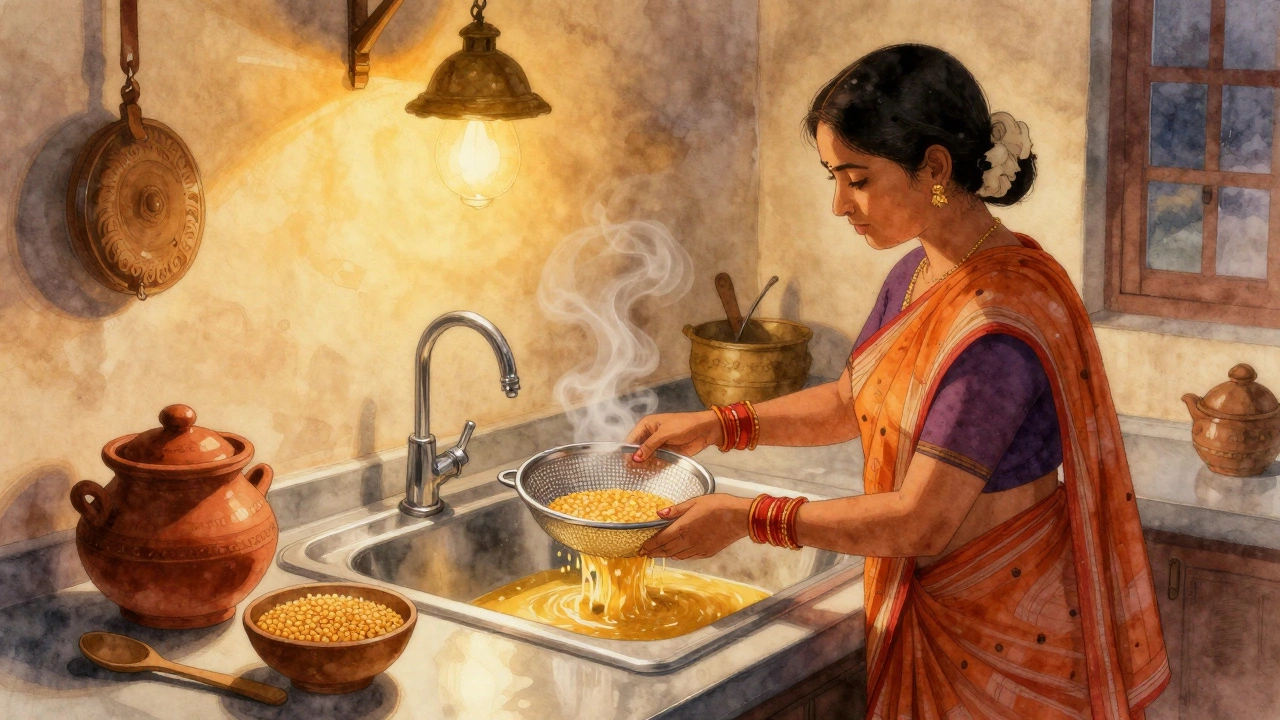
Use enough water. Three times the volume of dal is the sweet spot. Too little, and the dal sticks together. Too much, and you waste water and dilute flavor later. Drain and rinse well after soaking. That removes the slimy surface that can make your dal taste off.
What Happens If You Skip Soaking?
You can cook dal without soaking. But you’ll pay for it. Cooking time jumps from 20 minutes to 45 minutes or more. You’ll need more water, more energy, and more attention. The texture suffers too-some pieces stay hard, others turn to paste. And digestion? That’s where the real cost shows up. Unsoaked dal can cause bloating and gas for many people. It’s not just about taste-it’s about comfort.
A 2023 study from the Indian Institute of Food Processing Technology found that soaking toor dal for 3 hours reduced cooking time by 40% and lowered anti-nutrients by 65%. That’s not a myth. That’s science.
Pro Tips for Perfect Soaked Dal
- Always rinse before soaking. Dust and debris settle on dried dal. A quick rinse removes it.
- Add a pinch of salt to soaking water. It helps soften the skins faster and improves flavor penetration later.
- Soak in a covered bowl. Not a sealed jar. You need air circulation to prevent fermentation before you’re ready.
- If soaking overnight, put the bowl in the fridge. This stops over-fermentation and keeps it fresh.
- Don’t soak for more than 12 hours unless you’re making batter. After that, the dal starts to break down and loses structure.
What to Do If You Forgot to Soak?
You’re making dal for dinner and just realized you didn’t soak it? No panic. Here’s the fix:
- Put the dal in a pot and cover with boiling water.
- Let it sit for 30 minutes. This is called a “hot soak.”
- Drain and rinse.
- Now cook as normal. It won’t be perfect, but it’ll be close.
Or, use a pressure cooker. For unsoaked chana dal or urad dal, cook on high pressure for 20 minutes with plenty of water. Let the pressure release naturally. That’s how many home cooks in Delhi and Mumbai do it on busy weeknights.
Soaking vs. Pre-Cooking: Which Is Better?
Some people skip soaking and just boil dal for 10 minutes, then drain and cook again. That’s pre-cooking. It works, but it’s wasteful. You lose nutrients in the water. Soaking keeps everything inside the lentil. It’s more efficient, more traditional, and more nutritious.
Soaking is the smart, old-school way. Pre-cooking is a shortcut that works in emergencies. Choose soaking when you can. Use pre-cooking when you’re stuck.
Final Rule of Thumb
When in doubt, soak for 2 hours. That covers most dals-moong, masoor, toor-and gives you a safe, reliable result. If you’re cooking urad or chana dal, plan ahead. If you’re in a rush, use the hot soak trick. But never skip it entirely. Soaking isn’t optional if you want dal that’s tender, digestible, and full of flavor.
Dal is comfort food. It’s the kind of dish that gets passed down through generations. The way you soak it? That’s part of the tradition. Get it right, and you’re not just cooking-you’re honoring the recipe.
Can I soak dal overnight?
Yes, you can soak dal overnight, especially urad dal or chana dal. For best results, keep the soaked dal in the fridge to prevent fermentation. If you’re making batter for idli or dosa, overnight soaking is ideal. For regular dal curry, 6-8 hours is enough. Soaking longer than 12 hours can make the dal too soft and mushy.
Should I soak dal in hot or cold water?
Cold water works fine if you have time. But if you’re in a hurry, use warm water-around 40°C (105°F). It softens the outer skin faster without cooking the dal. Never use boiling water-it can cause uneven cooking and make the dal grainy. Always drain and rinse after soaking, no matter the water temperature.
Do I need to soak red lentils (masoor dal)?
Not strictly, but it helps. Masoor dal cooks quickly even unsoaked-usually in 15-20 minutes. Soaking for 20-30 minutes gives it a smoother texture and reduces cooking time slightly. If you’re making a quick dal for kids or a soup, you can skip it. For restaurant-style dal, soak it for better results.
Why does my dal still feel gritty after cooking?
Grittiness usually means the dal wasn’t soaked long enough or wasn’t rinsed properly. Soaking removes surface starch and helps the dal absorb water evenly. If you skip soaking or rinse too lightly, the outer layer stays tough. Always rinse well before soaking and again after soaking. Also, check your cooking time-undercooked dal feels gritty, even if it looks soft.
Can I soak different types of dal together?
It’s not recommended. Different dals soak and cook at different rates. Mixing urad and moong, for example, will result in some being mushy and others still hard. If you want a mixed dal, soak them separately, then combine before cooking. That’s how traditional recipes do it.
Next Steps
If you’re new to cooking dal, start with moong dal. It’s forgiving, quick, and mild. Soak it for an hour, cook it with turmeric and cumin, and top it with ghee. That’s the simplest, most satisfying dal you can make. Once you get comfortable, try toor dal for sambar or chana dal for dal fry. Keep a soaking chart taped to your fridge. You’ll thank yourself later.