Indian Sweets Finder
Find Your Perfect After-Dinner Sweet
Why Sweets After Dinner?
In India, sweet treats after dinner aren't just dessert—they're a cultural ritual that aids digestion, completes the meal, and brings family together. Traditional sweets use natural ingredients like jaggery, milk, and spices to create balanced, nourishing endings to your meal.
Cultural Significance
The Ayurvedic belief that sweet taste balances digestion after spicy or salty foods guides this tradition. A single small piece of sweet symbolizes closure, gratitude, and the warmth of family traditions.
Select Options to See Your Sweet
Discover the perfect sweet based on your preferences.
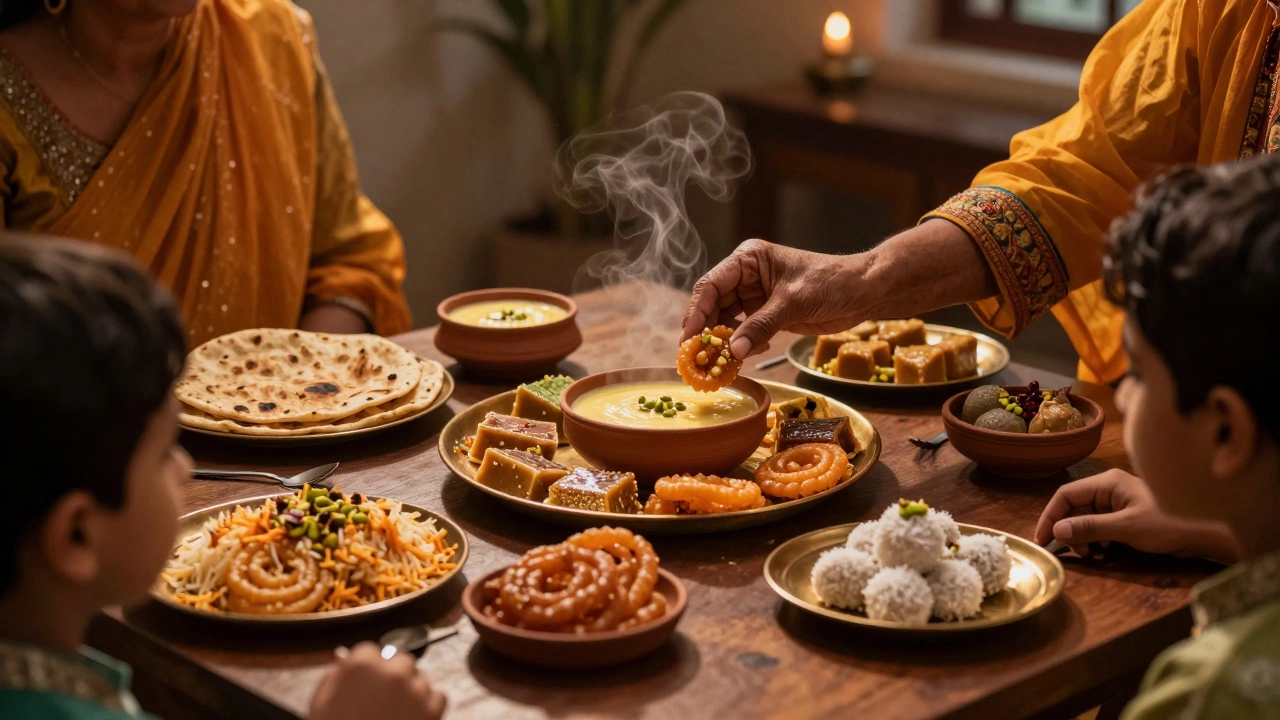
After a rich meal of biryani, dal, and roti, there’s one moment in every Indian home that feels like a quiet hug: the plate of sweet candy placed right at the end. It’s not just dessert. It’s tradition. It’s ritual. And it’s not just one thing-it’s a whole world of flavors meant to soothe, satisfy, and seal the meal.
The Why Behind the Sweet
In India, eating something sweet after dinner isn’t optional-it’s expected. It comes from an ancient Ayurvedic belief: sweet taste balances the digestive system after a meal heavy with spices, salt, and oil. A bite of jalebi, a piece of gur ki barfi, or a spoon of kheer doesn’t just taste good-it helps your body transition from digestion to rest.This isn’t about indulgence. It’s about closure. In many households, especially in North and West India, skipping the after-dinner sweet feels like leaving a door open. Even if you’re full, you take one small bite. Not because you’re hungry, but because it’s how the meal ends-with warmth, not emptiness.
Most Common Indian Candies After Dinner
There’s no single candy that rules the end of every Indian meal. What you get depends on where you are, the season, and what’s fresh in the kitchen. But here are the top five you’ll find in homes across the country:- Barfi - A dense, fudge-like square made from condensed milk, sugar, and often flavored with cardamom, pistachio, or coconut. It’s firm but melts slowly on the tongue. In Gujarat and Rajasthan, it’s often made with khoya (reduced milk) and shaped into diamond pieces.
- Kheer - A creamy rice pudding cooked slowly with milk, sugar, and a pinch of saffron. Sometimes it includes nuts, raisins, or even vermicelli. Served warm in winter, chilled in summer. It’s the most common sweet in South Indian homes after lunch and dinner.
- Jalebi - Bright orange, spiral-shaped fried batter soaked in sugar syrup. Crispy on the outside, soft inside. Often eaten fresh from the fryer, but in many homes, leftover jalebi from a festival is saved for after dinner.
- Gulab Jamun - Soft, deep-fried milk dumplings soaked in rose-scented syrup. They’re sticky, sweet, and melt in your mouth. Common during Diwali and weddings, but many families keep a batch in the fridge for daily endings.
- Coconut Ladoo - Made from grated coconut, sugar, and ghee, rolled into small balls. Simple, no baking needed, and lasts for days. Popular in Tamil Nadu and Kerala as a daily after-dinner treat.
Some families also serve paan-betel leaf wrapped with fennel seeds, cardamom, and sugar-as a digestive. It’s not candy, but it’s the same role: a sweet, herbal finish to clean the palate.
Regional Differences
If you travel across India, the after-dinner sweet changes like the weather.In Maharashtra, you’ll often find shrikhand-strained yogurt sweetened with sugar and flavored with saffron and cardamom. Served chilled with papad on the side.
In Bengal, it’s mishti doi-sweetened yogurt set in clay pots. The clay gives it a faint earthy taste that makes the sweetness feel deeper.
In South India, especially Tamil Nadu, pongal (a sweet rice and lentil dish) is served after dinner during festivals. In Kerala, unniyappam-fried rice flour balls with jaggery and coconut-is common.
In North India, gur ki barfi (jaggery fudge) is popular in winter. It’s less sweet than sugar-based barfi and has a molasses-like depth.
There’s no one-size-fits-all. But the pattern is always the same: sweet, simple, and made with love.
What Makes These Candies Different From Western Desserts?
Western desserts often aim for richness-chocolate, buttercream, whipped cream. Indian after-dinner sweets are different. They’re not about excess. They’re about balance.Most traditional Indian sweets use:
- Milk-based ingredients like khoya, paneer, or condensed milk-slowly reduced to concentrate flavor.
- Natural sweeteners like jaggery (unrefined cane sugar), honey, or date syrup instead of white sugar.
- Spices like cardamom, saffron, nutmeg, or fennel-not just for flavor, but for digestion.
- No cream or eggs-most are dairy-based but not custard-like.
They’re also made without preservatives. That’s why you rarely see them in supermarkets. They’re best eaten fresh, made at home, or bought from local sweet shops the same day.
Modern Twists and What to Avoid
These days, you’ll find “healthy” versions-sugar-free gulab jamun, vegan kheer made with almond milk, or jalebi made with air fryers. But the real tradition doesn’t need to be fixed.What you should avoid is replacing the ritual with something that misses the point. A slice of cake after biryani doesn’t carry the same weight. Neither does a spoonful of ice cream. They’re cold. They’re foreign. They don’t settle the stomach the way warm kheer or soft barfi does.
Even if you’re eating Western food, try ending with a small piece of Indian sweet. It’s not about being traditional-it’s about finishing the meal the way it was meant to be: with something that feels like home.
How to Make a Simple After-Dinner Sweet at Home
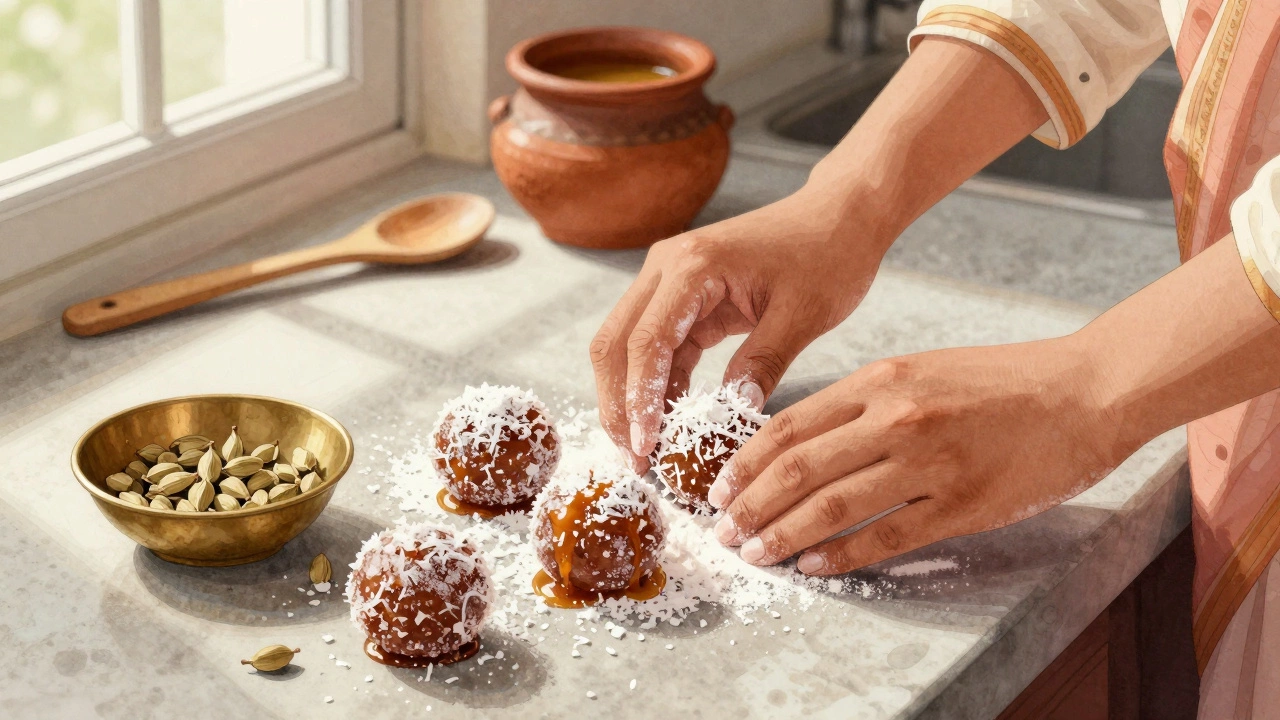
You don’t need a fancy kitchen. Here’s how to make coconut ladoo in under 20 minutes:- Heat 2 tablespoons of ghee in a pan on low flame.
- Add 1 cup of fresh grated coconut and roast for 5 minutes until lightly golden.
- Add 1/2 cup of powdered jaggery (or sugar) and stir until it melts and combines with the coconut.
- Remove from heat, add a pinch of cardamom powder.
- Let it cool slightly, then roll into small balls.
- Store in an airtight container. Lasts 5 days at room temperature.
That’s it. No oven. No mixer. Just coconut, sugar, and time. And that’s the beauty of it.
When and How to Serve
There’s no set time, but tradition says: after the last bite of rice or roti, before the dishes are cleared. The sweet plate is always placed at the center of the table. Everyone takes one piece. No one takes two. It’s not about eating-it’s about sharing.In many homes, the youngest child is given the first piece. It’s a sign of blessing. The elders might say, “Mitha kha, zindagi bhar sukh rahe” - Eat something sweet, may you live a life of joy.
It’s not a dessert. It’s a wish.
Why This Tradition Still Matters Today
In a world of fast food and instant gratification, the Indian after-dinner sweet is a quiet act of resistance. It asks you to slow down. To taste. To remember.It’s the last thing you eat before brushing your teeth. The final flavor on your tongue before sleep. It’s not sugar-it’s memory. It’s your grandmother’s hands rolling ladoos. It’s the smell of cardamom in the kitchen. It’s the way your uncle always took one bite and said, “Yeh toh accha hai.”
That’s why it still exists. Not because it’s trendy. Not because it’s Instagrammable. But because it works. It brings peace. It closes the day. And no cupcake ever could.
What is the most popular Indian candy after dinner?
Barfi and kheer are the most common across India. Barfi is popular in North and West India, while kheer dominates in the South. Both are simple, made with milk and sugar, and served warm or chilled depending on the season. Gulab jamun is also widely loved, especially during festivals.
Can I eat Indian sweets after dinner if I’m on a diet?
Yes, but in small portions. Traditional Indian sweets are made with milk, jaggery, and nuts-nutrient-dense ingredients. A single small ladoo or a few tablespoons of kheer can satisfy your sweet tooth without overloading on sugar. Avoid store-bought versions with artificial flavors or hydrogenated oils. Homemade is always better.
Are Indian after-dinner sweets vegetarian?
Almost always. Traditional Indian sweets are vegetarian and often vegan-friendly if made without ghee. Most use milk, sugar, coconut, nuts, and spices. Always check if ghee (clarified butter) is used, as it’s common in North Indian recipes. You can substitute it with coconut oil for a vegan version.
Why do Indians eat sweets after meals?
According to Ayurveda, sweet taste aids digestion and balances the body after spicy or salty food. It’s also a cultural ritual-ending a meal on a positive note. The sweetness symbolizes happiness and completion. It’s not just about taste; it’s about closing the day with warmth and gratitude.
What’s the difference between Indian candy and Western dessert?
Indian sweets focus on milk, jaggery, and spices-slow-cooked and dense. Western desserts often use cream, butter, eggs, and refined sugar, with a lighter, airy texture. Indian sweets are meant to be eaten in small amounts after a heavy meal, while Western desserts are often the main event. They’re also less processed and rarely contain preservatives.