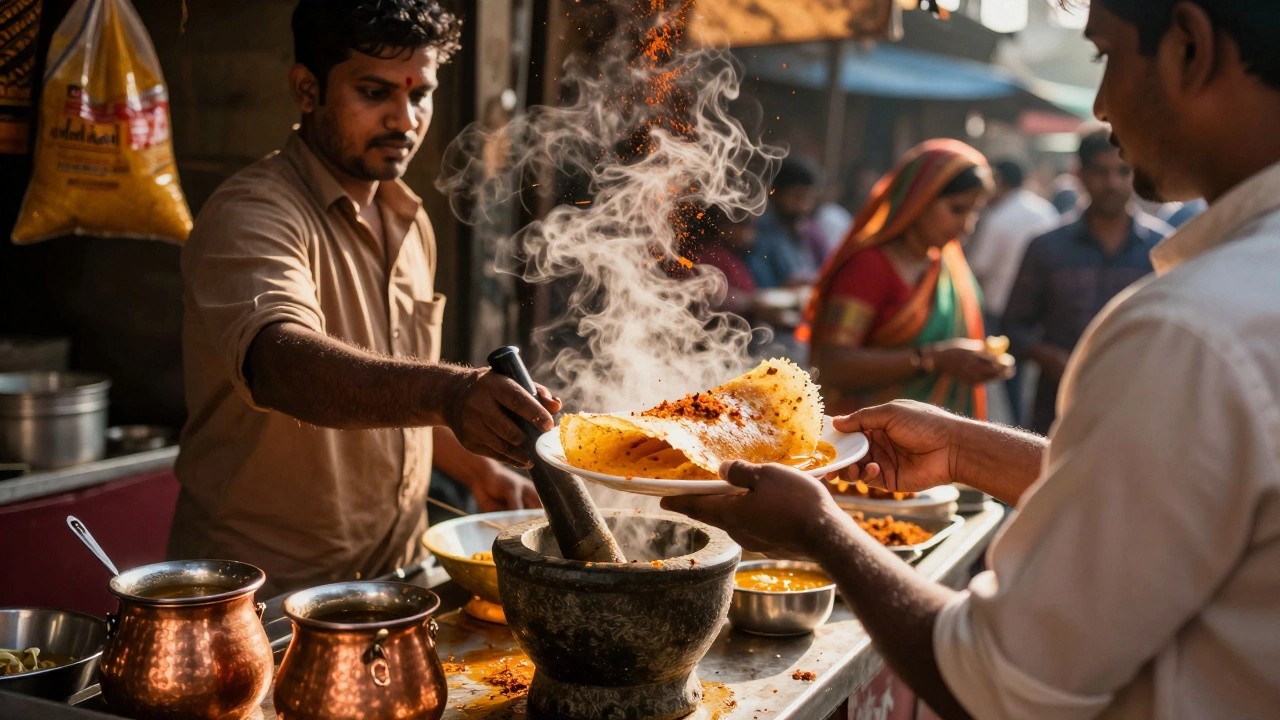
Indian Street Food Slang Quiz
Question 1: What is the origin of the word "curry"?
This is a trick question about the colonial history of Indian food terminology
Question 2: What does "masala" actually mean in Indian cooking?
This is the key concept discussed in the article
Question 3: Why do Indian street vendors say "gravy"?
This refers to the article's discussion about sauce terminology
Question 4: What does "desi" mean in Indian street food context?
This concept relates to cultural authenticity
Question 5: Why is "curry powder" not used in authentic Indian cooking?
This addresses a key misconception
Ask anyone who’s eaten Indian food on the streets of Mumbai, Delhi, or even Bristol, and they’ll tell you: no one says "curry" out loud. Not really. Not in the way you think. The word "curry"? It’s a British invention. A lazy catch-all from colonial times that got stuck like gum on a shoe. Real people in India don’t call their food "curry." And if you’re trying to sound like you know what you’re talking about - especially when you’re standing in line at a roadside stall - you need to know the real slang.
"Masala" Is the Real Word
You’ll hear it everywhere: "Masala chai," "masala dosa," "masala fries." But what does "masala" actually mean? It’s not just "spice blend." It’s the soul of the dish. In India, "masala" refers to the mix of ground spices - cumin, coriander, turmeric, chili, cardamom - that gives food its depth. When someone says "this is masala," they mean it’s got flavor, heat, and character. Street vendors don’t say "curry" when they hand you a bowl of stewed lentils or goat meat. They say, "Masala daal," or "Masala chicken."
That’s the key difference. "Curry" as a noun? It’s a foreign label. "Masala"? It’s the local term. If you’re ordering from a street cart in Jaipur and you ask for "curry," you’ll get a blank stare. Ask for "masala," and you’re already halfway to being treated like family.
"Gravy" Isn’t Just for Turkey
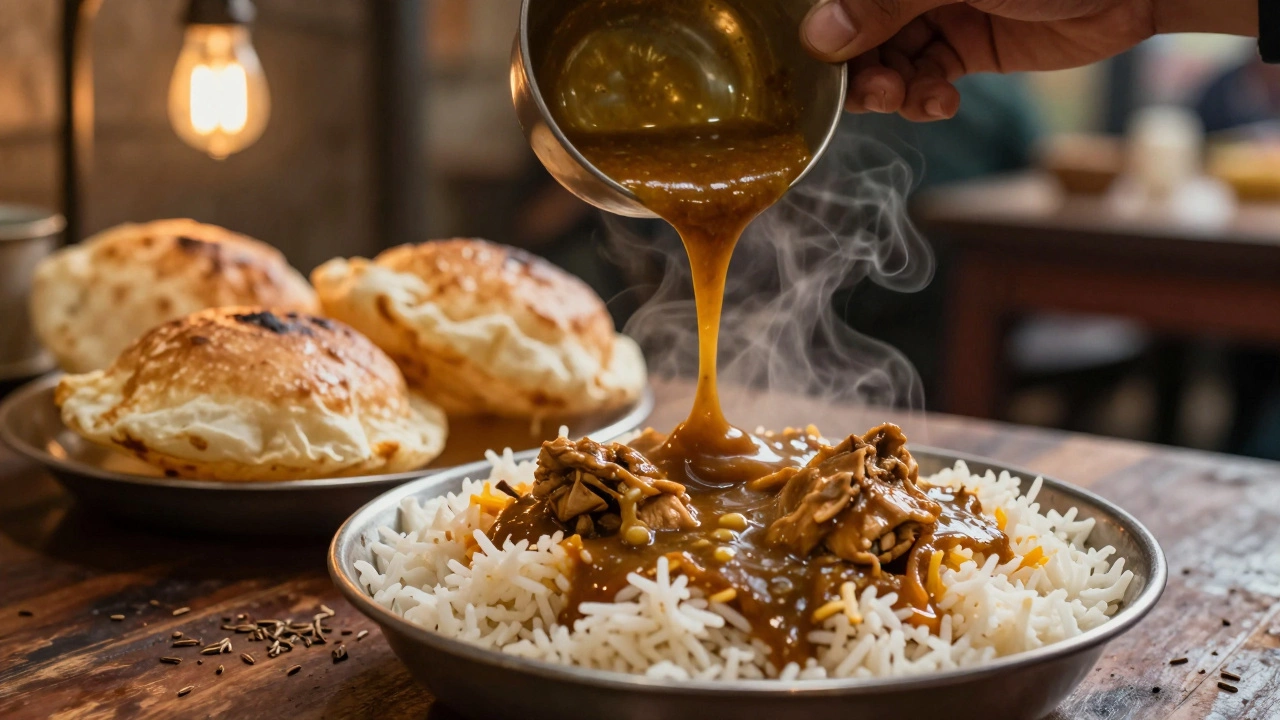
Another word you’ll hear constantly on the streets of India: "gravy." Not the kind you pour over mashed potatoes. In India, "gravy" means the thick, rich sauce that clings to rice, bread, or fried snacks. It’s not watery. It’s not thin. It’s the kind of sauce that sticks to your spoon and leaves a faint red or golden trail on your plate. Vendors will ask: "Extra gravy?" as if you’re ordering a side of ketchup.
Think of it this way: if "masala" is the spice, "gravy" is the vehicle. You don’t eat "curry" - you eat "gravy" with roti, or rice, or puri. A plate of "chicken gravy" in Chennai might be a slow-cooked stew with tomatoes, onions, and a whisper of fenugreek. In Kolkata, "fish gravy" might be coconut milk-based, mild and sweet. It’s not one thing. It’s hundreds of things. But they all have one thing in common: they’re called "gravy."
"Desi" Is the Cultural Secret Code
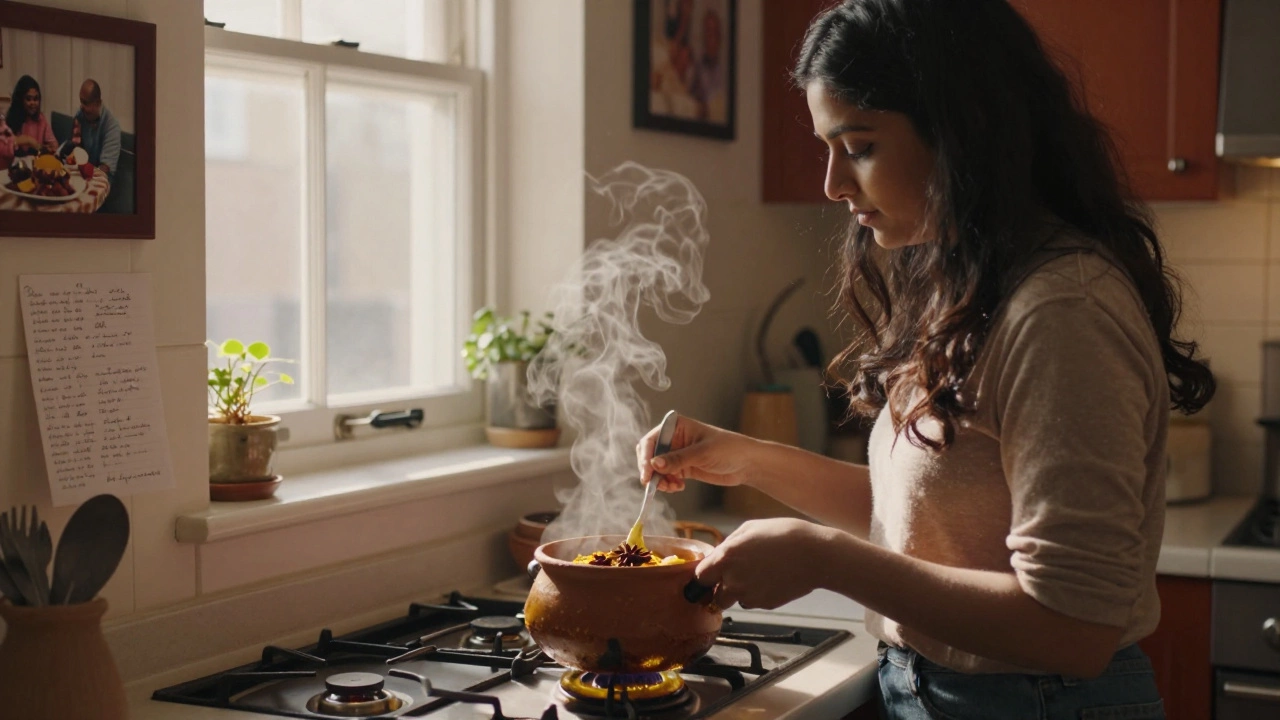
If you’re in a city with a big Indian diaspora - like London, Toronto, or even Bristol - you’ll hear "desi" a lot. It’s short for "desi khana," which literally means "home-style food." But it’s more than that. "Desi" carries weight. It means authentic. It means made with love, not convenience. "Desi curry"? That’s the stuff your auntie makes on Sunday. The one with the whole spices toasted in oil before the onions go in. The one that simmers for three hours.
When someone says "I’m having desi tonight," they’re not just talking about food. They’re talking about memory. About childhood. About the smell of cumin hitting hot oil. Street vendors who say "desi gravy" aren’t just selling a meal. They’re selling a piece of home. And if you’re not from India? Saying "desi" makes you sound like you get it.
"Curry Powder"? Don’t Even Go There
Here’s the truth: no one in India uses "curry powder." That yellow, pre-mixed jar you find in supermarkets? It’s a British creation from the 1700s. It was meant to mimic Indian flavors for people who couldn’t be bothered to grind their own spices. In India, spices are bought whole. Toasted. Ground fresh. Every time.
Try asking for "curry powder" at a spice market in Hyderabad. You’ll get laughed at. Or worse - handed a bag of turmeric and told to "figure it out." The real magic happens in small batches, in clay pots, with a mortar and pestle. That’s why street food tastes different. It’s not from a jar. It’s from a memory.
"Kadhi" and "Jhol" - Regional Variations You Won’t Find on Menus
Not all Indian stews are called "masala" or "gravy." Some have their own names - names you won’t see on tourist menus. In Punjab, "kadhi" is a yogurt-based curry with chickpea flour and fried dumplings. In Odisha, "jhol" is a light, watery stew served with rice. In Assam, "pitha" is a curry with souring agents like tamarind or bamboo shoot.
These aren’t "curries." They’re regional identities. And if you want to eat like a local, you have to stop thinking in terms of "curry" altogether. A street vendor in Kerala won’t call their coconut milk stew "curry." They’ll call it "meen curry" - but even that’s a colonial leftover. Locals? They just say "meen." Fish. The rest is understood.
Why This Matters
Calling everything "curry" isn’t just inaccurate. It erases culture. It flattens 5,000 years of regional cooking into one bland label. When you say "Indian curry," you’re not just misnaming food. You’re ignoring the difference between a Punjabi butter chicken and a Bengali fish curry. Between a Delhi dal makhani and a Tamil Nadu sambar.
Street food isn’t about labels. It’s about texture. Heat. Smell. The way the oil floats on top. The crunch of fried onions. The way the spices bloom in hot ghee. That’s what you’re really tasting. Not "curry."
So next time you’re in a food market in India - or even in a bustling Indian takeaway in the UK - skip the word "curry." Ask for "masala." Ask for "gravy." Ask for "desi." You’ll get a better dish. And a better story.
Is "curry" a real Indian word?
No, "curry" isn’t an Indian word. It comes from the Tamil word "kari," meaning sauce or relish, but British colonists turned it into a blanket term for everything spicy. In India, people use specific names like "masala," "gravy," or regional terms like "jhol" or "kadhi."
What’s the difference between masala and curry powder?
Masala is a fresh blend of whole spices - toasted, ground, and customized for each dish. Curry powder is a pre-mixed, standardized blend made for Western markets. It’s dull, one-note, and rarely used in authentic Indian cooking. Street vendors don’t use it. They grind their own.
Why do Indian street vendors say "gravy"?
"Gravy" in India means the thick, flavorful sauce that coats rice or bread. It’s not watery like soup. It’s rich, oily, and packed with spice. Vendors use "gravy" because it’s a borrowed English word that stuck - and it’s way easier than explaining "tarka" or "korma."
Is "desi" only used outside India?
No. "Desi" is used everywhere - in villages, cities, and diaspora communities. It means "of the land," and it signals authenticity. A "desi" dish is made the way your grandmother made it: slow, layered, with whole spices. It’s not a trend. It’s tradition.
Can I say "curry" and still be respectful?
You can, but you’ll miss the point. Using "curry" isn’t offensive - but it’s lazy. If you want to honor the food, learn the real names. Say "masala" instead. Say "gravy." Ask what’s special about the dish today. That’s how you show respect.