Condiment Differences: Why Indian Sauces and Spreads Aren't the Same
When you think of Indian condiments, flavorful accompaniments that balance, cut, or enhance a meal. Also known as side sauces, they are the quiet heroes of every Indian plate. They aren’t just extras—they’re the difference between a good meal and a great one. A spoonful of chutney, a fresh, tangy paste made from herbs, fruits, or vegetables, often uncooked and served immediately can wake up a bland dal. A dollop of raita, a cooled yogurt-based condiment with cucumber, mint, or onion, used to soothe spice can turn a fiery biryani into something you can actually enjoy without reaching for water. And then there’s pickle, a preserved, fermented mix of vegetables or fruits in oil and spices, meant to last months—a punchy, salty kick that’s not meant to be eaten in large amounts, but just enough to make rice feel alive.
These aren’t interchangeable. You don’t swap raita for pickle. You don’t use mint chutney where you need tamarind sauce. Each has a role. Chutneys are bright and fresh, made daily in many homes, often with raw ingredients. Pickles are slow-cooked, salt-heavy, and shelf-stable—designed to last through monsoons and winters. Raita is cooling, dairy-based, and served cold to balance heat. Then there are spice pastes like garlic-chili chutney or coconut chutney—thicker, more concentrated, sometimes fried, always layered with flavor. They all come from the same kitchen, but they’re not cousins. They’re siblings with very different personalities.
Why does this matter? Because if you treat them like the same thing, you’ll ruin the balance of your meal. A spicy curry needs cooling raita. A plain roti needs a bold chutney. A rich paneer dish needs a tangy pickle to cut through the fat. Getting this right isn’t about tradition for tradition’s sake—it’s about making food that actually tastes like it should. You’ll notice the difference the first time you serve a proper raita with your masala dosa instead of just yogurt. Or when you add a tiny spoon of mango pickle to your dal and realize why your grandma always kept a jar in the corner of the fridge.
The posts below cover exactly these kinds of details—the small choices that make big differences. You’ll find out why dosa batter turns sour, how to make paneer with the right acid, what raita really does with biryani, and why some Indian families never eat dal at night. These aren’t random recipes. They’re the hidden rules of Indian cooking, passed down because they work. Read them. Try them. Taste the difference.
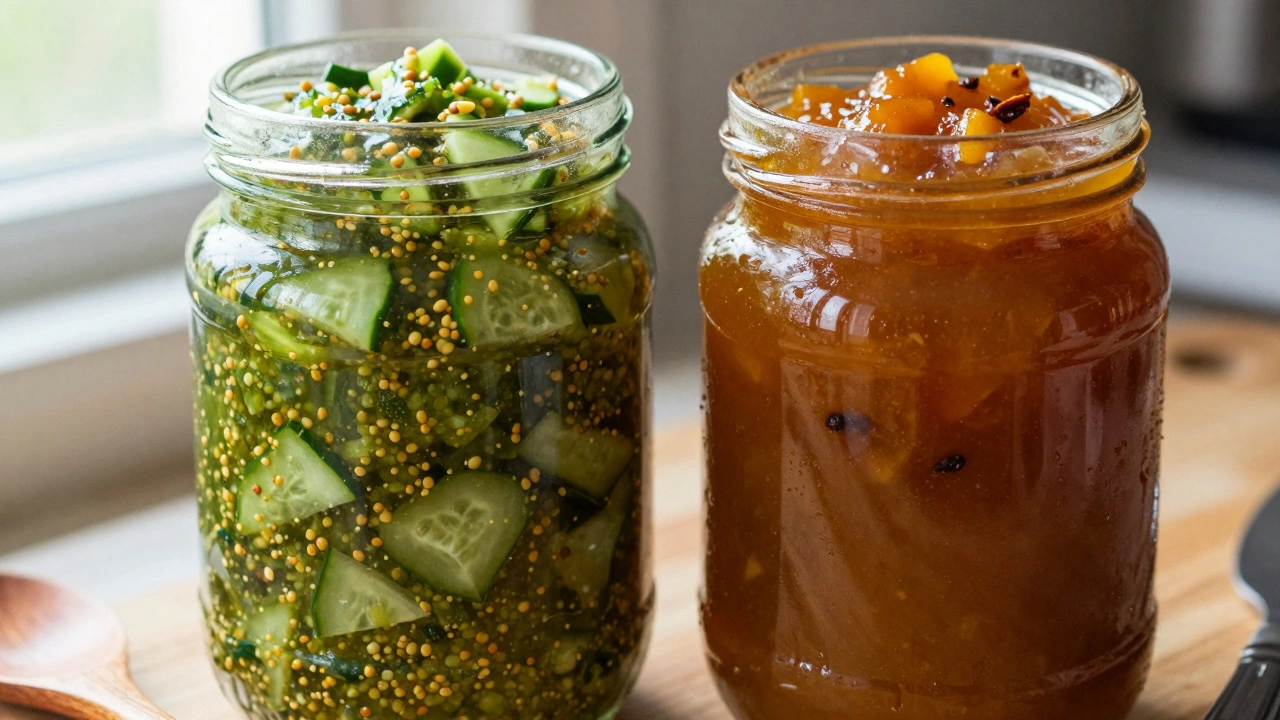
Is Pickle Relish a Chutney? The Real Difference Between Them
Pickle relish and chutney look similar but are worlds apart in flavor, texture, and origin. Learn the real differences and why chutney belongs in your kitchen-not just on the shelf.
Read More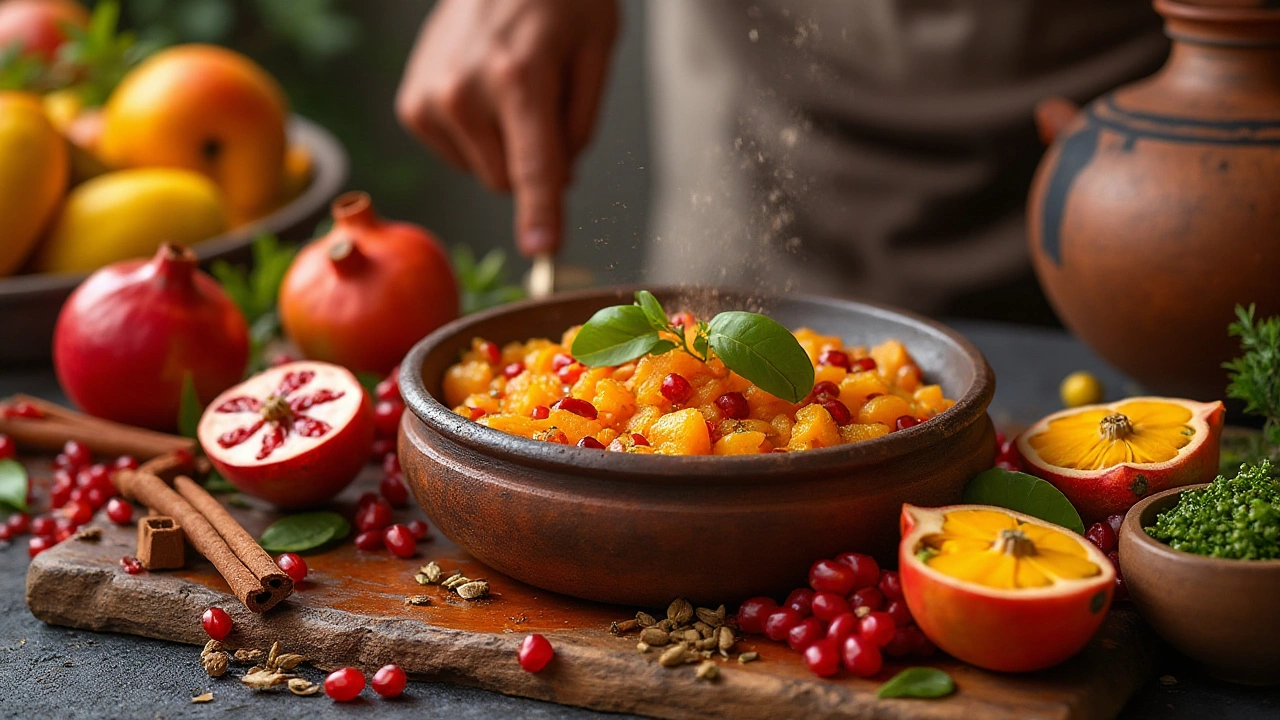
Understanding the Unique Flavors of Chutney vs Relish
Chutneys and relishes both serve as delightful condiments, enhancing meals with their unique flavors. Chutneys often possess a more complex flavor profile, derived from a blend of fruits, spices, and occasionally, a tangy kick. Relishes, however, are typically more straightforward, featuring chopped vegetables, often with vinegar or pickling spices. This article dives into the ingredients, preparation, and the cultural significance of each, helping culinary enthusiasts leverage their unique characteristics in recipes.
Read More