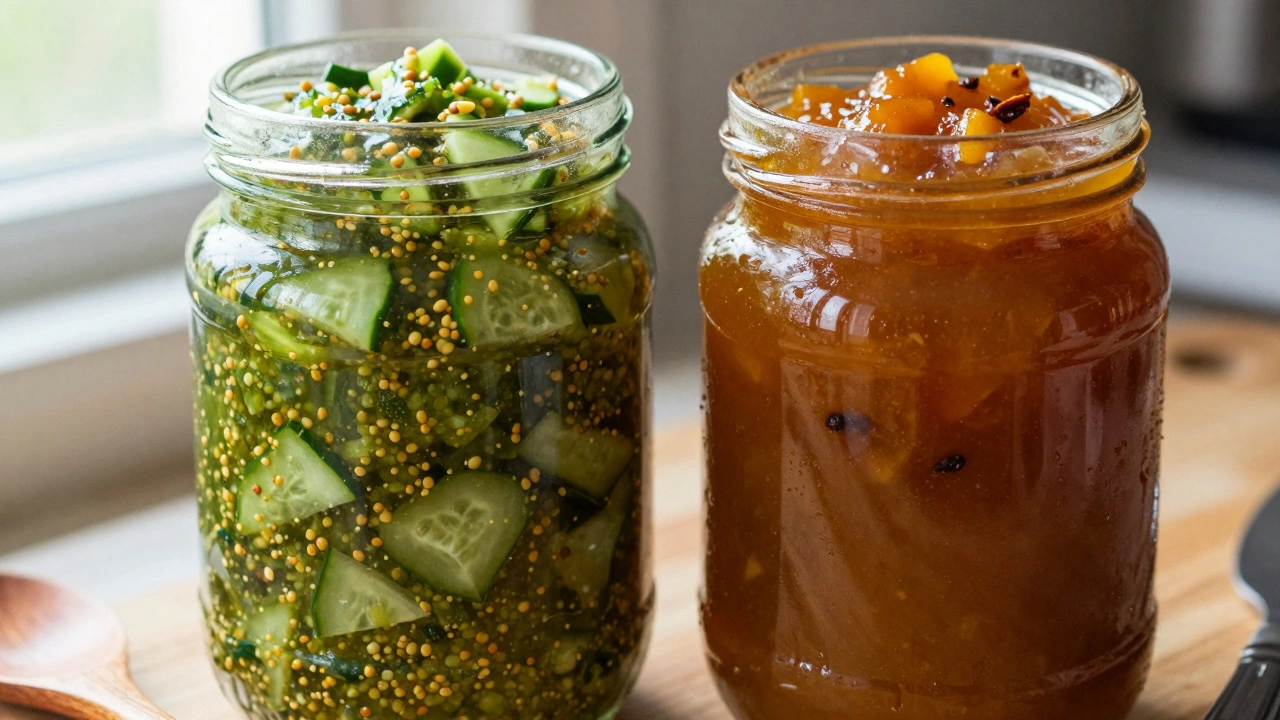
Ever opened your fridge and stared at a jar of pickle relish and a bowl of mango chutney, wondering if they’re the same thing? You’re not alone. Many people treat them interchangeably-sprinkling relish on hot dogs like it’s chutney, or using chutney in sandwiches like it’s just sweet pickle. But they’re not the same. And if you’re cooking Indian food, or even just trying to level up your sandwich game, knowing the difference matters.
What is pickle relish?
Pickle relish is a chopped, pickled vegetable mix, usually made from cucumbers, onions, and bell peppers. It’s soaked in vinegar, sugar, salt, and spices like mustard seed or turmeric. The texture is crunchy. The flavor is sharp, tangy, and slightly sweet. Think of it as the classic green relish you find on a Chicago hot dog or piled high on a burger at a backyard BBQ.
It’s a product of American and European preservation traditions. In the 1800s, people pickled veggies to keep them edible through winter. Relish was born out of necessity-not flavor experimentation. It’s not meant to be complex. It’s meant to cut through fatty meats with acidity and crunch.
Store-bought relish often has high fructose corn syrup, artificial colors, and preservatives. Homemade versions are better, but even then, the goal stays the same: a bright, crunchy condiment that adds zing.
What is chutney?
Chutney comes from India. The word itself comes from the Hindi word chatni, meaning "to lick"-because it’s so flavorful, you can’t help but taste it again and again. Chutney isn’t just one thing. It’s a whole family of condiments made from fruits, vegetables, herbs, spices, and sometimes nuts or yogurt.
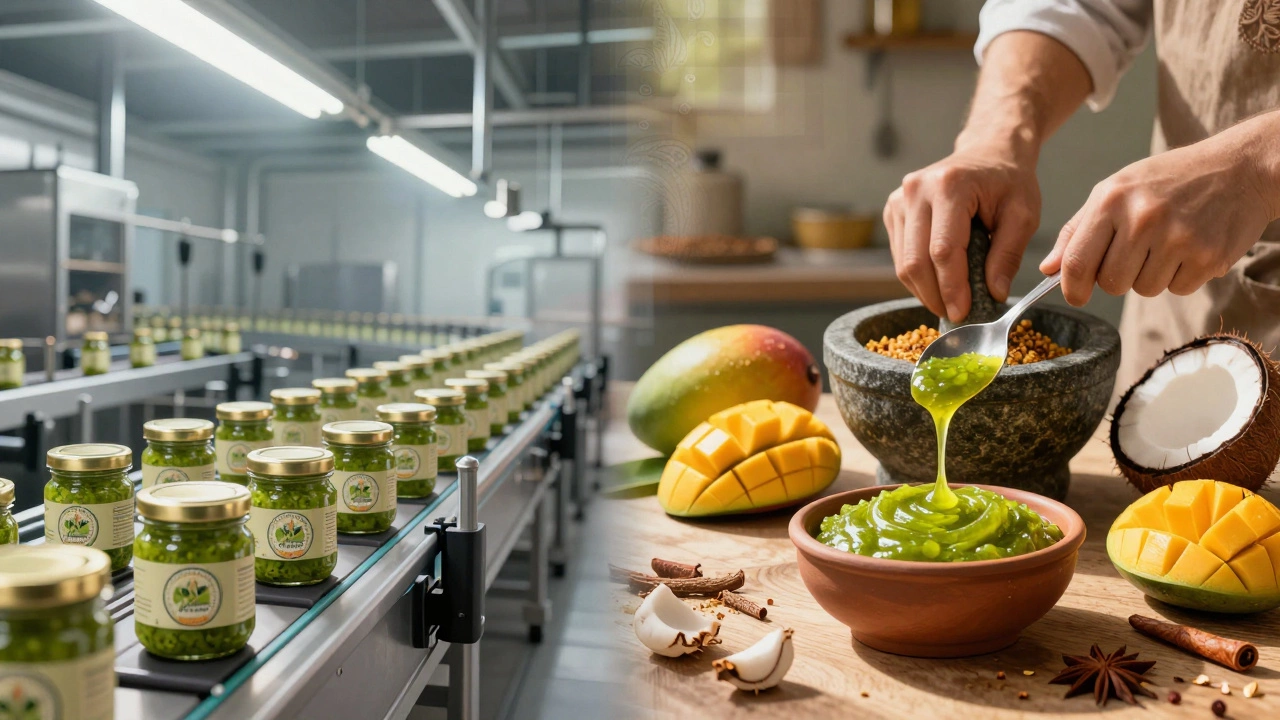
Traditional chutneys are slow-cooked. Think of mango chutney simmered for hours with jaggery, ginger, green chilies, and cumin. Or mint-coriander chutney blended fresh with lemon and garlic. Coconut chutney from South India is ground with roasted lentils and dried red chilies. Each one has a different texture, flavor profile, and purpose.
Unlike relish, chutney is rarely crunchy. It’s soft, thick, and deeply layered. The sweetness isn’t just sugar-it’s from ripe fruit, jaggery, or dates. The heat isn’t just pepper-it’s from toasted spices that bloom in oil. The sourness isn’t just vinegar-it’s from tamarind, lime, or dried mango powder.
Why people confuse them
The confusion starts in supermarkets. You’ll find a jar labeled "Indian-style chutney" that’s just sweetened pickled cucumbers. It’s not wrong-it’s just not traditional. Companies use the word "chutney" because it sounds exotic and sells better. But if you’ve ever had real chutney made by a grandmother in Mumbai or Kolkata, you know this isn’t it.
Also, both are served cold. Both go with cheese, sandwiches, and grilled meats. Both are sweet-sour. That’s where the surface-level similarity ends.
Try this: spread a spoonful of sweet pickle relish on a cracker. Now try a spoonful of tamarind-date chutney. The relish gives you a quick punch. The chutney unfolds-first sweet, then tart, then spicy, then earthy. One is a note. The other is a symphony.
Texture and cooking methods
Relish is raw or lightly cooked. The vegetables are chopped fine, then soaked in brine. It’s a cold process. Even when heated, it doesn’t break down much. That’s why it stays crunchy.
Chutney is cooked. Slowly. Often for hours. Fruits soften. Spices release oils. Sugars caramelize. The result? A thick, spreadable paste that clings to food. Some chutneys, like onion chutney, are even fried in oil with mustard seeds until they melt into a jam-like consistency.
Texture isn’t just about feel-it’s about function. Relish adds crunch to a soft burger. Chutney adds depth to a crispy samosa or a bland dal.

Flavor profiles: sugar, vinegar, and spice
Relish leans heavily on vinegar and sugar. The vinegar is the star. It’s there to preserve and to sharpen. Sugar balances it. Spices? Optional. Often just mustard seed or celery seed.
Chutney uses vinegar only sometimes. More often, it gets its sourness from tamarind, lemon, or raw mango. Sugar? Yes-but it’s jaggery, palm sugar, or honey. The spices are the soul: cumin, coriander, fenugreek, asafoetida, dried red chilies, curry leaves. They’re toasted, ground, or fried to unlock their full flavor.
One bite of authentic coconut chutney will show you why: roasted coconut, toasted urad dal, green chilies, and a splash of lemon. No vinegar. No preservatives. Just ingredients you could name from your garden.
How they’re used in cooking
Relish? It’s a topping. On hot dogs, burgers, eggs, or potato salad. It’s there for texture and brightness. It doesn’t change the dish-it enhances it.
Chutney? It’s a flavor builder. In Indian kitchens, chutney is part of the meal’s structure. Mint chutney with samosas. Tamarind chutney with chaat. Mango chutney with paneer tikka. It’s not an afterthought-it’s a partner. Some chutneys are even cooked into curries to add body and sweetness.
Try this: make a simple grilled cheese sandwich. Add a smear of pickle relish. It’s fine. Now add a spoonful of roasted garlic and tomato chutney. Suddenly, it’s not just cheese-it’s layered, complex, and deeply satisfying. That’s the power of real chutney.
Can you substitute one for the other?
Technically, yes. But you’ll lose something.
If you’re making a classic British ploughman’s lunch and only have relish, it’ll work. The cheese and pickles will still taste good. But you’ll miss the warm, spiced depth that chutney brings.
If you’re making aloo tikki and only have sweet relish, it’ll be too vinegary and not spicy enough. The dish will feel flat.
On the flip side, if you’re making a burger and only have mango chutney, it’ll be too sweet and soft. You’ll lose the crunch that relish gives.
Substitution works in a pinch. But if you care about flavor, don’t swap them. Learn to use both.
How to tell them apart at a glance
- Color: Relish is usually green or yellow. Chutney is often brown, red, or deep orange.
- Texture: Relish is chunky and crunchy. Chutney is smooth, jammy, or pulpy.
- Smell: Relish smells like vinegar and dill. Chutney smells like toasted spices, fruit, and garlic.
- Ingredients: Relish = cucumber, vinegar, sugar, salt. Chutney = fruit, tamarind, jaggery, cumin, chili, garlic, coconut, lentils.
If you see a jar labeled "chutney" with only cucumbers and vinegar? It’s relish pretending to be something else.
Try this: Make your own chutney
Here’s a simple one you can make in 20 minutes: Quick Tomato Chutney
- 2 cups chopped ripe tomatoes
- 1 small onion, finely chopped
- 1 tsp mustard seeds
- 1 tsp cumin seeds
- 2 dried red chilies, broken
- 1 tbsp jaggery or brown sugar
- 1 tsp lemon juice
- 1/2 tsp salt
- 1 tbsp oil
Heat oil in a pan. Add mustard and cumin seeds. Wait until they pop. Add chilies and onions. Sauté until soft. Add tomatoes, jaggery, and salt. Cook on low for 15 minutes, stirring often, until thick. Stir in lemon juice. Cool. Store in the fridge for up to two weeks.
Try it with plain rice, dal, or a grilled cheese sandwich. You’ll never go back to relish for this kind of dish.
Final answer: Is pickle relish a chutney?
No. Pickle relish is not a chutney. They come from different cultures, use different ingredients, and serve different roles on the plate. Relish is about crunch and acidity. Chutney is about depth, spice, and slow-cooked flavor.
Calling relish a chutney is like calling a bag of chips a gourmet meal. They’re both snacks. But one took time. The other was made in a factory.
If you love chutney recipes, don’t settle for the jarred stuff. Make your own. Start with tomatoes, mango, or coconut. Learn how spices bloom in oil. Taste how jaggery softens acidity. You’ll discover a whole world of flavor that relish can’t touch.
Can you use pickle relish instead of chutney in Indian dishes?
You can, but you’ll miss the layered flavors chutney brings. Relish lacks the toasted spices, tamarind sourness, and fruit sweetness that define authentic Indian chutneys. It might work in a pinch for a sandwich, but it won’t elevate a curry or chaat the way real chutney does.
Is store-bought chutney real chutney?
Some are, some aren’t. Look at the ingredients. Real chutney has fruit, spices, jaggery, or tamarind. If it lists vinegar, high-fructose corn syrup, and artificial flavors, it’s likely just sweetened relish labeled as chutney. Brands like Patak’s and Sharwood’s make decent versions, but homemade is always better.
Why does chutney last longer than relish?
Actually, it doesn’t-unless it’s cooked properly. Both can last weeks in the fridge. But traditional chutneys often have more sugar and acid (from tamarind or lemon), which act as natural preservatives. Relish relies on vinegar and additives. Homemade chutney without preservatives may last 2-3 weeks; store-bought relish can last months.
What’s the best chutney for sandwiches?
Mango chutney or tamarind-date chutney work best. They’re sweet, thick, and don’t make bread soggy. Mint chutney is great too, but it’s thinner-use it sparingly. Avoid relish if you want depth; it’s too sharp and crunchy for most sandwich textures.
Can chutney be used as a marinade?
Absolutely. Tamarind-chili chutney makes an excellent marinade for chicken or tofu. The acid tenderizes, the sugar caramelizes, and the spices stick to the surface. Let it sit for 2-4 hours before grilling. Relish won’t work as well-it’s too watery and lacks the spice depth needed to penetrate meat.