Common Indian Meal: What Makes a Traditional Indian Plate Complete
When you think of a common Indian meal, a balanced plate of rice or roti, lentils, vegetables, yogurt, and a sweet finish. Also known as Indian thali, it’s not just about eating—it’s about harmony. Every bite has a purpose. The spice wakes you up, the dal soothes, the raita cools, and the sweet ends it on a high note. This isn’t random. It’s a system passed down through generations, shaped by climate, culture, and digestion.
At the heart of most Indian meals is dal, a simple lentil stew that’s the protein backbone of the plate. Whether it’s toor dal in the south or chana dal in the north, it’s always served with roti or rice, the carb base that holds everything together. You don’t eat dal alone—you eat it with something to scoop, something to soak, something to contrast. That’s why pickles, raita, and fried onions show up on every table. And if you’ve ever wondered why the white liquid beside biryani is raita, it’s not just garnish—it’s digestion insurance. Yogurt balances the heat, the fat, the spices. It’s science wrapped in tradition.
Breakfast? It’s not toast and eggs. It’s idli or poha, fermented or lightly spiced, easy on the stomach, and packed with energy. Lunch? That’s when the full thali appears—dal, rice, sabzi, papad, chutney, and maybe a side of paneer. Dinner? Often lighter, but never without a sweet. Indian sweets, like gulab jamun or kheer, made with milk, sugar, and cardamom. They’re not dessert afterthoughts—they’re cultural punctuation marks. You don’t end a meal without them. Even if you’re full, you take one bite. It’s polite. It’s proper.
There’s no single recipe for a common Indian meal. It changes with the season, the region, the family. But the pattern stays the same: balance. Heat and cool. Crunch and soft. Sweet and salty. Rich and light. That’s why you’ll find posts here about why dosa batter turns sour, how to make paneer with lemon juice, or why eating dal at night might not be the best idea. These aren’t random tips—they’re pieces of the same puzzle. Every fermentation, every soaking time, every pairing has a reason rooted in how the body and the culture work together.
What you’ll find below isn’t just a list of recipes. It’s a map. A map of how Indians actually eat—day in, day out. From street food lingo to why Jains avoid carrots, from biryani mistakes to how to keep roti soft for hours. You’ll learn what to serve with dal, what Americans love most, and why butter chicken became the king of curries. All of it ties back to one thing: the common Indian meal. Not as a stereotype. Not as a fantasy. But as a living, breathing, delicious reality.
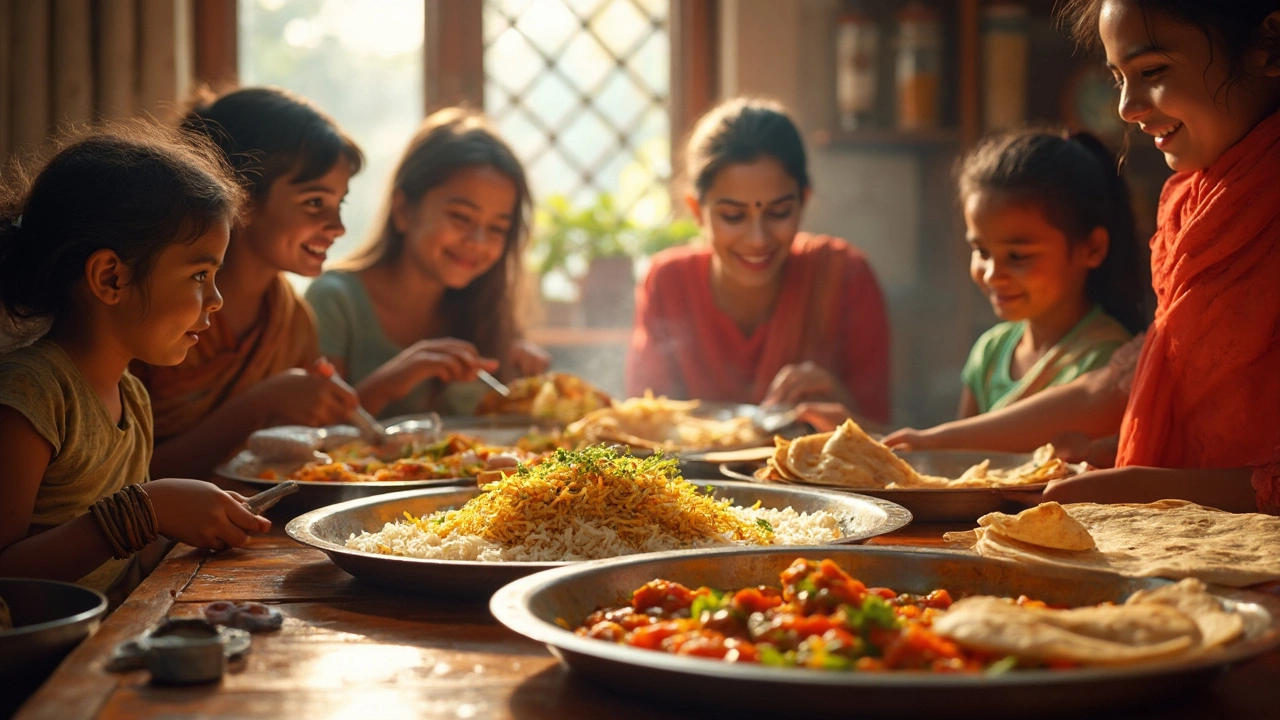
Most Common Indian Meal: What’s Actually On the Table?
Ever wondered what the most common Indian meal really is? This article breaks it down, explains the classic combinations found in Indian homes, and why these dishes are so popular. You'll also learn quick cooking tips and some surprising facts about daily Indian food habits. Simple recipes and smart substitutes will help you bring Indian flavors to your own kitchen. Great for beginners who want to get a true taste of Indian home cooking.
Read More