Chutney Recipes: Authentic Indian Flavors Made Simple
When you think of chutney, a spicy, tangy, or sweet condiment made from fruits, herbs, or vegetables, often ground fresh and served alongside meals. Also known as chatni, it's not just a side—it's the flavor booster that turns a simple plate of rice or dosa into something unforgettable. Every region in India has its own version, from the fiery green chutney at a Mumbai street stall to the sweet coconut one served with idli in Tamil Nadu. These aren't store-bought sauces—they're made fresh, often in minutes, using ingredients you already have in your kitchen.
Chutney recipes rely on three core elements: tamarind, a sour fruit pulp that gives depth and tang to chutneys like the classic South Indian tamarind chutney, coconut, a creamy base that balances heat and adds richness, especially in Kerala and Karnataka, and mint, a fresh herb that cuts through fried foods and pairs perfectly with samosas and pakoras. These aren’t interchangeable—they each bring a distinct character. Tamarind chutney is sweet-sour and thick, perfect for chaat. Coconut chutney is light and cooling, ideal for breakfast. Mint chutney is sharp and bright, the go-to for grilled meats and snacks.
What makes these recipes work isn’t fancy equipment or rare spices. It’s timing, balance, and freshness. A good chutney should taste alive—bright enough to wake up your tongue, but not so sharp it overwhelms. You don’t need a food processor; a mortar and pestle gives better texture. You don’t need sugar to sweeten tamarind—jaggery works better, and it’s traditional. And you never make a big batch. Chutneys are meant to be made daily, or at least within hours of serving. That’s why they’re so good—they’re not stored, they’re created.
Behind every great chutney is a story. In Gujarat, they use roasted sesame seeds. In Andhra, red chilies are dried and fried first. In Bengal, mango chutney is cooked for days with mustard oil and spices. These aren’t just recipes—they’re traditions passed down, tweaked by taste, and perfected by repetition. The chutney you make today might taste different from your grandmother’s, but if it’s made with care, it’s just as real.
Below, you’ll find a collection of real, tested chutney recipes that match what you’ll find in Indian homes—not restaurants. No gimmicks. No shortcuts that ruin flavor. Just honest, simple, delicious condiments that turn everyday meals into something special. Whether you’re dipping a crisp samosa, spooning it over dal, or spreading it on a sandwich, these chutneys will make you wonder why you ever bought the bottled kind.
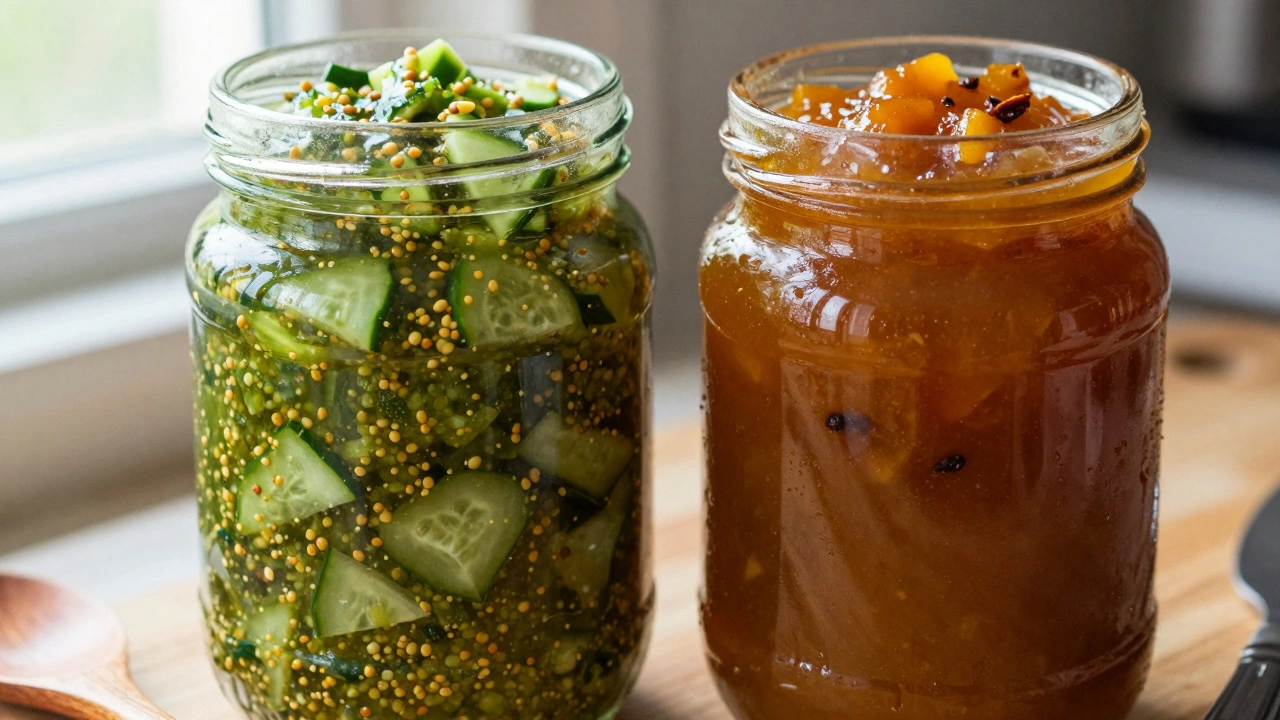
Is Pickle Relish a Chutney? The Real Difference Between Them
Pickle relish and chutney look similar but are worlds apart in flavor, texture, and origin. Learn the real differences and why chutney belongs in your kitchen-not just on the shelf.
Read More
Chutney in America: What Do They Really Call It?
Curious about what chutney is called in America? You’ll find that while chutney has deep Indian roots, Americans use the term differently and sometimes swap it for other names like relish or salsa. This article untangles the naming confusion, explores the differences, and offers tips for using and making chutney in an American kitchen. Simple comparisons and real kitchen hacks included. Perfect for anyone who loves flavor-packed condiments.
Read More
British Chutney: How Did It Get So Popular and What Makes It Unique?
Curious about the tangy jars on British tables? British chutney is a sweet, sour, and spicy condiment made by simmering fruit and vegetables with sugar and vinegar. It boasts bold flavors but is surprisingly easy to make at home. This article breaks down what truly sets British chutney apart, its interesting history, and helpful tips to make your own tasty batch. We’ll also look at classic pairings and answer some quick questions you may have about this staple of UK cuisine.
Read More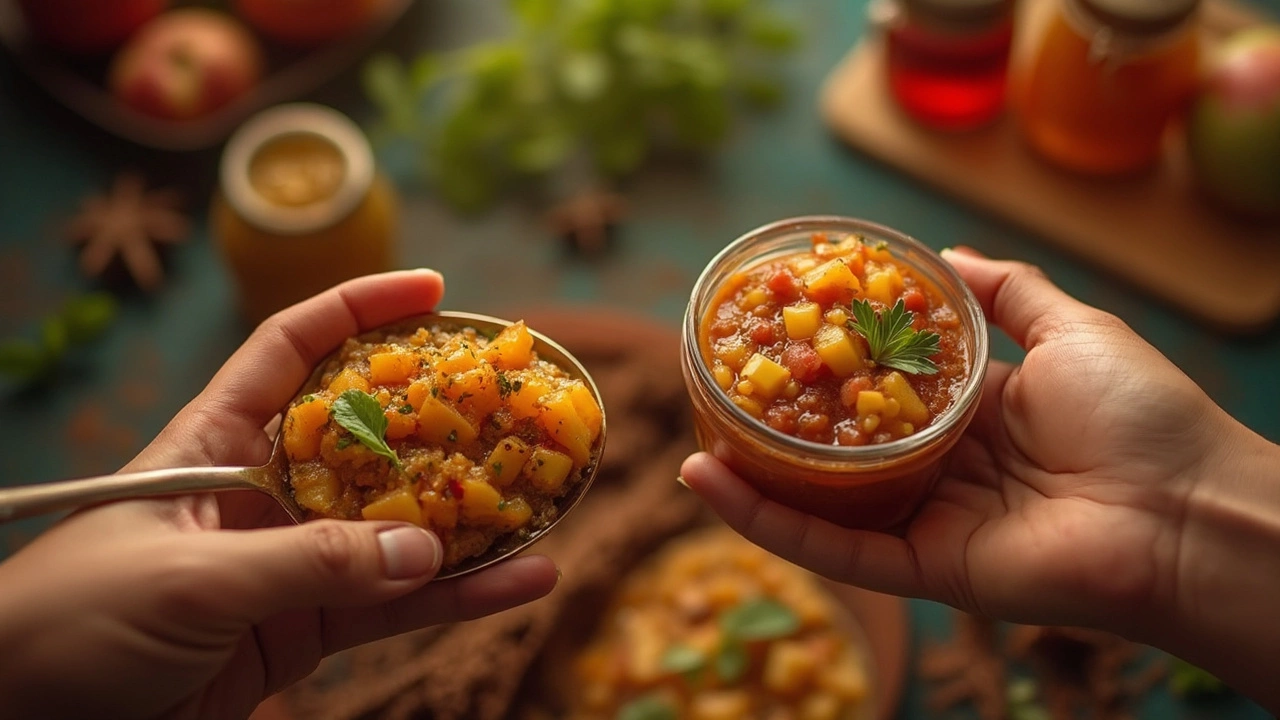
English Chutney: What Sets It Apart?
Ever wondered why English chutney tastes so different from Indian chutney? This article breaks down the story, the key ingredients, and how it became a British classic. If you're curious about how to make or use English chutney, here’s everything you need. Expect surprising facts, smart prep tips, and ideas for enjoying this tangy-sweet spread. Get ready to add some zing to your snack game.
Read More
What is Chutney to English Cooks?
Let's dig into the heart of chutney and why it’s found such a cherished spot in English kitchens. This tangy condiment has an intriguing journey from Indian origins to being a staple in UK homes. We’ll explore how English cooks have embraced and adapted chutney to suit their tastes and preferences. You’ll discover a few handy tips on making your own chutney, and ways to enjoy it with your meals. Whether you're a chutney enthusiast or just curious, we'll uncover some flavorful insights.
Read More
The Most Common Chutney: A Tasty Guide
Chutney, the versatile condiment that elevates Indian cuisine, has a clear favorite: the classic coriander chutney. This chutney's vibrant green color and fresh flavors make it a staple in homes and restaurants alike. From dosas to sandwiches, it brings a zesty touch to many dishes. Crafting your own batch can be easy with a few key ingredients and tips. Dive into the essential world of chutney with insights and tricks to nail the perfect blend.
Read More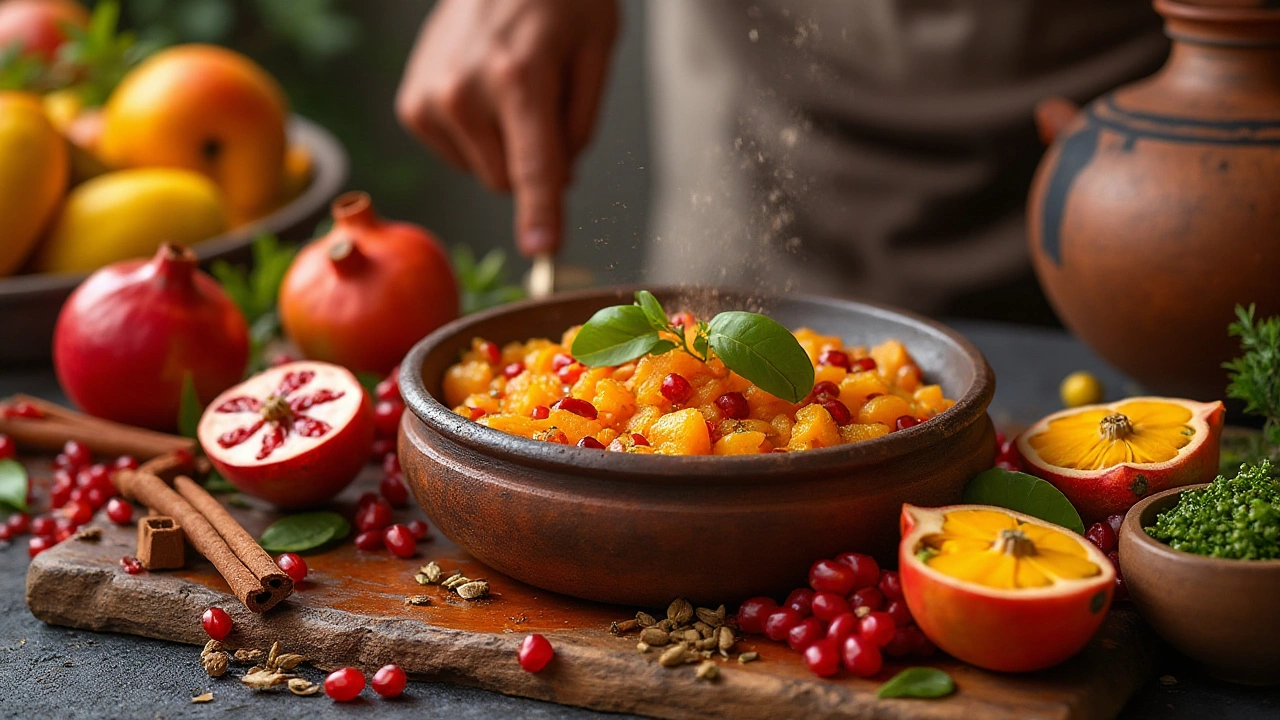
Understanding the Unique Flavors of Chutney vs Relish
Chutneys and relishes both serve as delightful condiments, enhancing meals with their unique flavors. Chutneys often possess a more complex flavor profile, derived from a blend of fruits, spices, and occasionally, a tangy kick. Relishes, however, are typically more straightforward, featuring chopped vegetables, often with vinegar or pickling spices. This article dives into the ingredients, preparation, and the cultural significance of each, helping culinary enthusiasts leverage their unique characteristics in recipes.
Read More