Dosa Batter Ratio Calculator
Perfect Dosa Batter Formula
The golden ratio is 4 parts rice to 1 part urad dal by weight. This is the foundation for crispy, non-rubbery dosas. Calculate your exact measurements below.
Enter Your Batter Quantity
Rice Required
0 g
Urad Dal Required
0 g
For best results:
1. Measure ingredients by weight
2. Use 4:1 rice-to-dal ratio
3. Ferment 14-18 hours at warm temperature
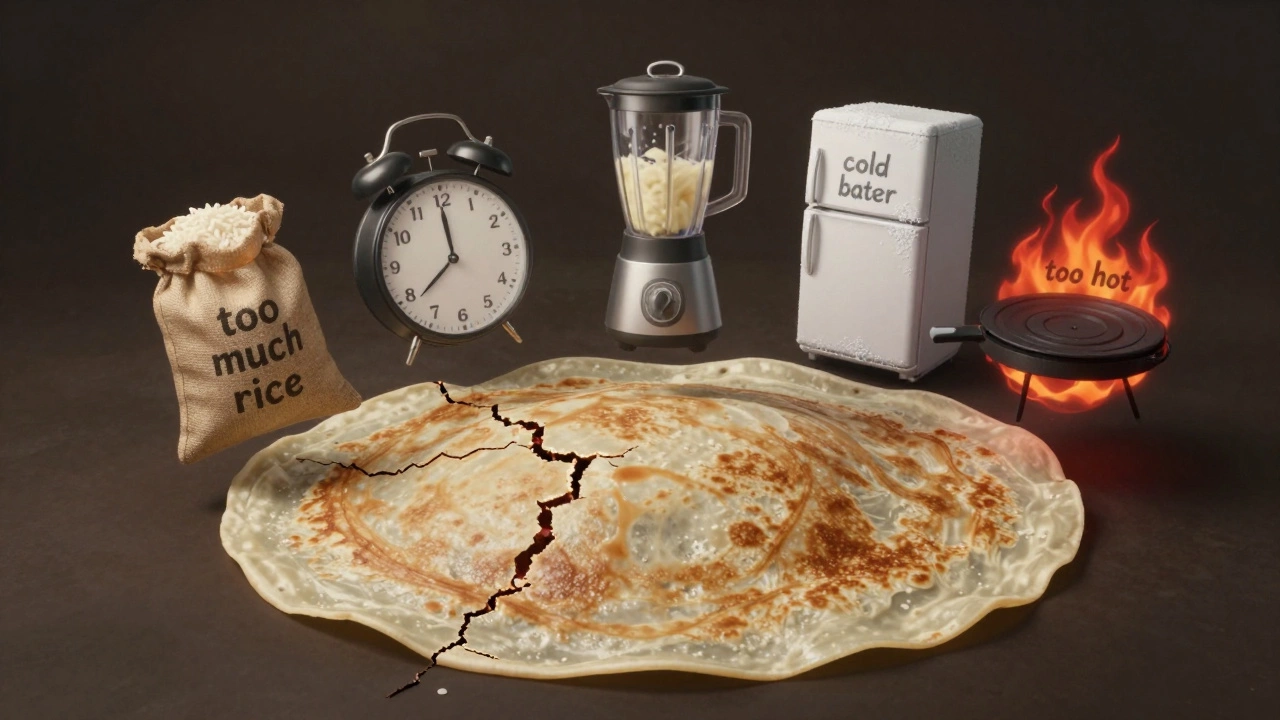
Ever spread out your dosa batter only to have it turn into a chewy, rubbery disc instead of a crisp, lacy pancake? You’re not alone. Many home cooks in Bristol, Mumbai, or anywhere else get frustrated when their dosa batter behaves like chewing gum instead of the delicate, airy batter it should be. The problem isn’t your pan, your stove, or even your skill-it’s almost always one of five simple mistakes in the batter itself. Let’s break down exactly why your dosa batter turns rubbery and how to fix it for good.
Too Much Rice, Not Enough Urad Dal
The classic dosa batter ratio is 4 parts rice to 1 part urad dal. That’s not just tradition-it’s science. Urad dal (split black gram) is what gives dosa its lift and crispness. It ferments well, traps air, and creates a light texture. If you skimp on the dal, or worse, add extra rice to stretch the batter, you’ll end up with dense, heavy batter that turns rubbery when cooked. The rice provides structure, but the urad dal provides the bounce. Without enough of it, your dosa becomes a flat, tough sheet.Try this: Measure your rice and dal by weight, not volume. One cup of rice (200g) should be paired with 50g of urad dal. That’s a 4:1 ratio by weight, which is more accurate than volume measurements. If you’ve been eyeballing it, that’s likely your first mistake.
Under-Fermented Batter
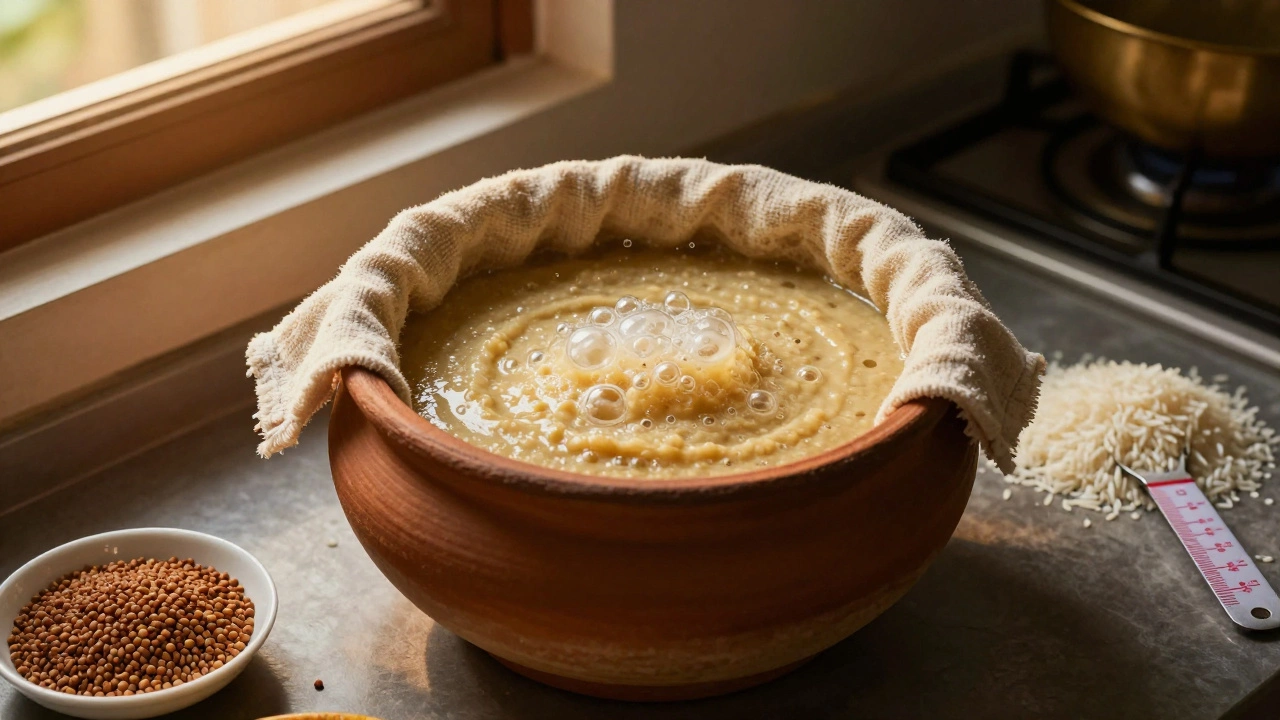
Fermentation isn’t optional-it’s the heart of dosa. During fermentation, the natural yeast and lactic acid bacteria in the batter break down starches and release carbon dioxide. That’s what makes the batter rise and gives dosa its signature air pockets and crispness. If you skip this step, or rush it, your batter will be dense and gummy.Most people ferment for 8-12 hours. But in cooler climates like Bristol, that’s not enough. You need at least 14-18 hours. Keep the batter in a warm spot-near a radiator, inside an oven with the light on, or wrapped in a towel near a kettle. The batter should nearly double in volume, smell slightly sour (like yogurt), and have bubbles all the way through. If you can’t see bubbles when you stir it, it’s not ready.
Pro tip: Add 1/4 tsp fenugreek seeds to the urad dal before grinding. They boost fermentation and improve texture. You’ll notice a difference in crispness within one batch.
Over-Whipping or Over-Processing the Batter
A common mistake? Blending the batter too long. Some people think the smoother the batter, the better. But over-blending breaks down the starches and proteins too much, releasing too much gluten-like structure from the urad dal. That’s what makes it rubbery.When grinding, stop when the batter is smooth but still has a slight grainy texture. It shouldn’t be silky like a smoothie. You want it thick, like heavy cream, with visible flecks of dal. If you’re using a high-powered blender, pulse in short bursts. Don’t let it run for 10 minutes straight. The batter should cling to the spoon but still drip slowly.
Using Cold Batter Straight from the Fridge
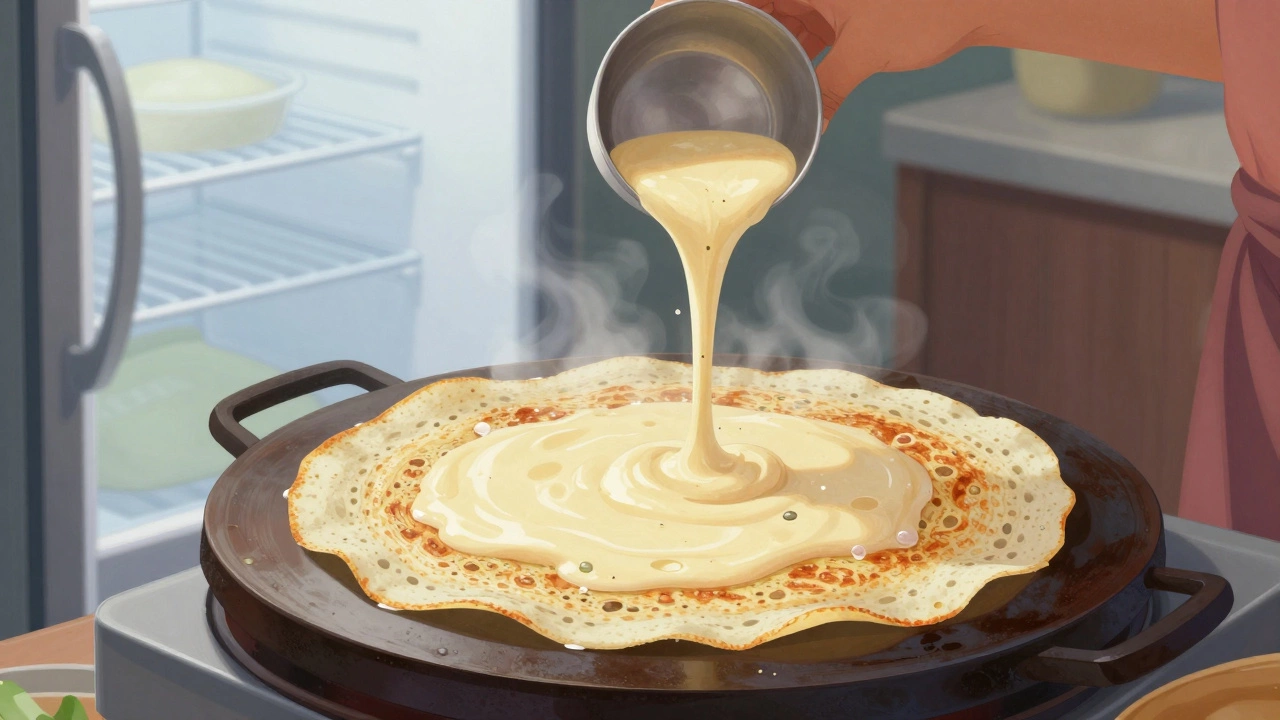
If you made the batter the night before and stored it in the fridge, don’t use it cold. Cold batter doesn’t spread well, and the fermentation slows down. When you pour it onto a hot tawa, the batter sets too quickly on the outside while the inside stays dense. That’s when you get that chewy, rubbery layer.Always take the batter out at least 30 minutes before cooking. Let it sit at room temperature. Stir it gently-don’t beat it-just loosen it up. If it’s too thick after resting, add a splash of cold water (1-2 tbsp), not warm water. Warm water can kill the live cultures still active in the batter.
Wrong Tawa Temperature
A rubbery dosa isn’t always the batter’s fault. If your tawa is too hot, the batter sets instantly before it can spread and crisp up. If it’s too cool, the batter soaks in and turns gummy. The sweet spot is medium heat-when a drop of water sizzles and evaporates in 2-3 seconds.Preheat the tawa for at least 10 minutes. Lightly oil it with a paper towel dipped in sesame or peanut oil. Pour the batter from a height to help it spread naturally. Don’t press it down with the ladle. Let it cook untouched until the edges lift and the surface looks dry and slightly browned. Flip it once, and cook the other side for just 30 seconds. That’s it.
What to Do If Your Batter Is Already Rubberly
If you’ve already mixed the batter and it’s too thick or under-fermented, here’s a quick fix:- Add 1/2 tsp baking soda and stir gently. This will help it rise and soften the texture.
- Let it rest for another 2-3 hours at room temperature.
- Before cooking, thin it out with cold water-1 tablespoon at a time-until it flows like thick cream.
Don’t add more rice or dal at this point. You can’t fix the ratio anymore. But baking soda and time can rescue it.
How to Store Dosa Batter Right
Fermented batter lasts 5-7 days in the fridge. But if you want to keep it longer, freeze it in portions. Thaw overnight in the fridge, then let it come to room temperature before using. Never re-ferment frozen batter. It’s done.Always use a clean, dry spoon to scoop out batter. Moisture or oil can introduce bacteria that spoil the fermentation process. Keep the container covered with a cloth, not a tight lid. Airflow helps maintain the right microbial balance.
Quick Checklist: Your Dosa Batter Fix Guide
- Use 4:1 rice to urad dal by weight
- Ferment for 14-18 hours in a warm spot
- Grind until smooth but slightly grainy-not silky
- Bring batter to room temperature before cooking
- Use medium heat on a well-preheated tawa
- Add a splash of water if batter is too thick
- Never use a cold batter straight from the fridge
Follow these steps, and your dosa will come out golden, crisp, and light-not rubbery. It’s not magic. It’s just chemistry you can control.
Why does my dosa batter smell sour?
A slight sour smell is normal and good. It means the lactic acid bacteria are active during fermentation, which is what gives dosa its flavor and helps it rise. If it smells like vinegar or rotting food, that’s a sign of contamination. In that case, throw it out and start fresh.
Can I use rice flour instead of soaking rice?
No. Rice flour doesn’t work because it lacks the natural starch structure that develops during soaking and grinding. Soaked rice releases enzymes that help fermentation and texture. Rice flour will make your dosa dense and gritty, not crisp.
Why does my dosa stick to the pan even after oiling?
If your batter is under-fermented or too thick, it won’t spread properly and will stick. Also, if the tawa isn’t hot enough, the batter won’t sear quickly. Make sure the batter is bubbly and the pan is properly heated before pouring. A light coat of oil is enough-too much oil can make the dosa greasy instead of crisp.
Can I make dosa batter without fenugreek seeds?
Yes, but you’ll notice a difference. Fenugreek seeds help with fermentation and give dosa its slight bitterness and better texture. If you skip them, the batter might not rise as well, especially in colder climates. Try adding 1/4 tsp next time-it’s a small change with big results.
How long can I keep dosa batter in the freezer?
Dosa batter freezes well for up to 3 months. Portion it into ziplock bags or containers, and thaw overnight in the fridge. Don’t re-ferment it after freezing. Just bring it to room temperature, stir gently, and use. It might be slightly less bubbly, but it’ll still work fine.