Chutney: The Essential Indian Condiment with Regional Flavors
When you think of Indian food, you might picture rich curries or crispy samosas—but the real secret weapon? chutney, a tangy, spicy, or sweet condiment made from fresh ingredients like herbs, fruits, and spices, often ground by hand or blended. Also known as chatni, it’s not just a side—it’s the flavor booster that turns a simple meal into something unforgettable. Whether it’s cooling down a spicy biryani or cutting through the richness of fried snacks, chutney is the quiet hero of every Indian plate.
There’s no single chutney in India—there are dozens, each tied to a region, season, or meal. coconut chutney, a creamy, mildly spicy paste made from grated coconut, green chilies, and lentils, commonly served with dosas and idlis in South India is a breakfast staple. In the north, tamarind chutney, a sweet-and-sour blend of tamarind pulp, jaggery, and spices, often paired with chaat and samosas brings balance to street food. And then there’s mint chutney, a bright, herb-heavy mix of fresh mint, cilantro, green chilies, and lemon, used as a dip for pakoras and kebabs. Each one is made differently, but they all share the same goal: to wake up your taste buds.
What makes chutney so special isn’t just the flavor—it’s how it’s made. Most traditional versions skip preservatives and rely on fresh ingredients, quick grinding, and natural fermentation. You won’t find shelf-stable jars in a home kitchen—chutney is made daily, often in small batches, because it tastes best when it’s fresh. It’s the difference between a good meal and a great one. And while you might think it’s just a dip, it’s actually a whole cooking technique: balancing heat, sourness, sweetness, and texture in one spoonful.
Look through the posts below and you’ll see how chutney shows up in unexpected places—sometimes as a side to dal, sometimes as a flavor anchor in biryani, sometimes even as a hidden ingredient in marinades. You’ll find tips on fixing sour dosa batter that’s too tangy (hint: a dollop of coconut chutney helps), how to pair chutney with paneer, and why certain spices are non-negotiable. This isn’t just about recipes—it’s about understanding how Indian meals are built, one chutney at a time.
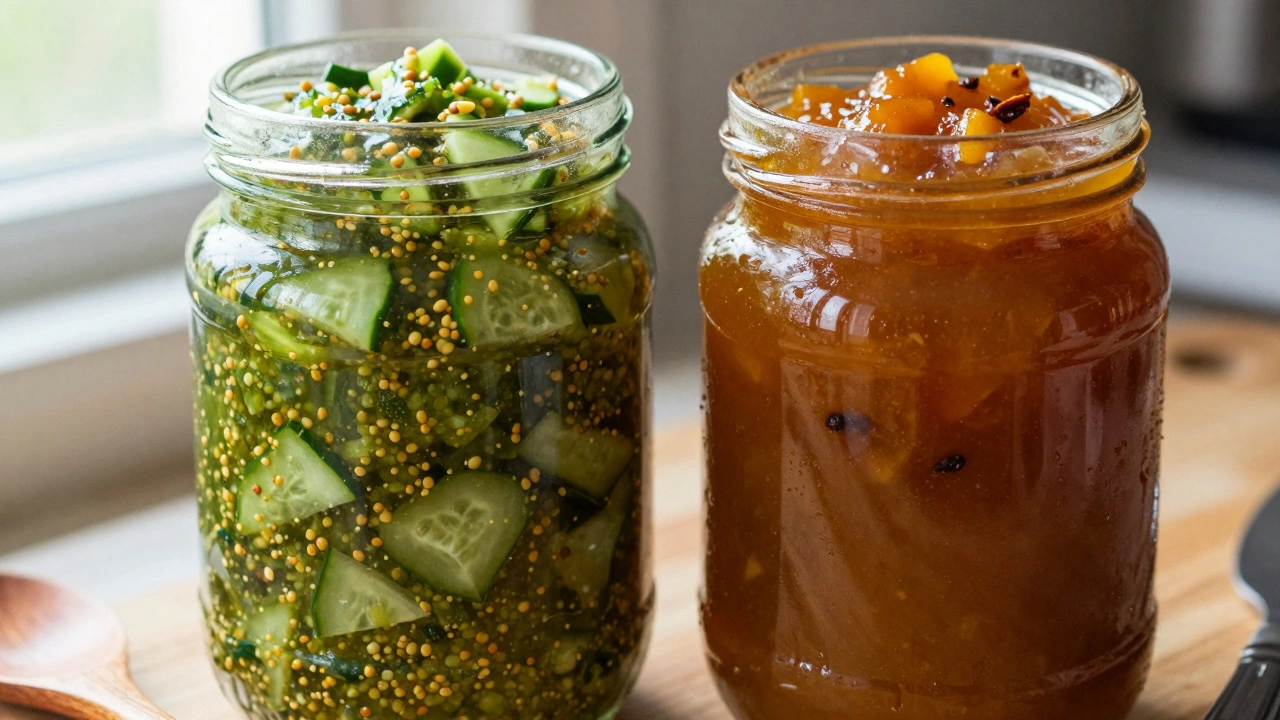
Is Pickle Relish a Chutney? The Real Difference Between Them
Pickle relish and chutney look similar but are worlds apart in flavor, texture, and origin. Learn the real differences and why chutney belongs in your kitchen-not just on the shelf.
Read More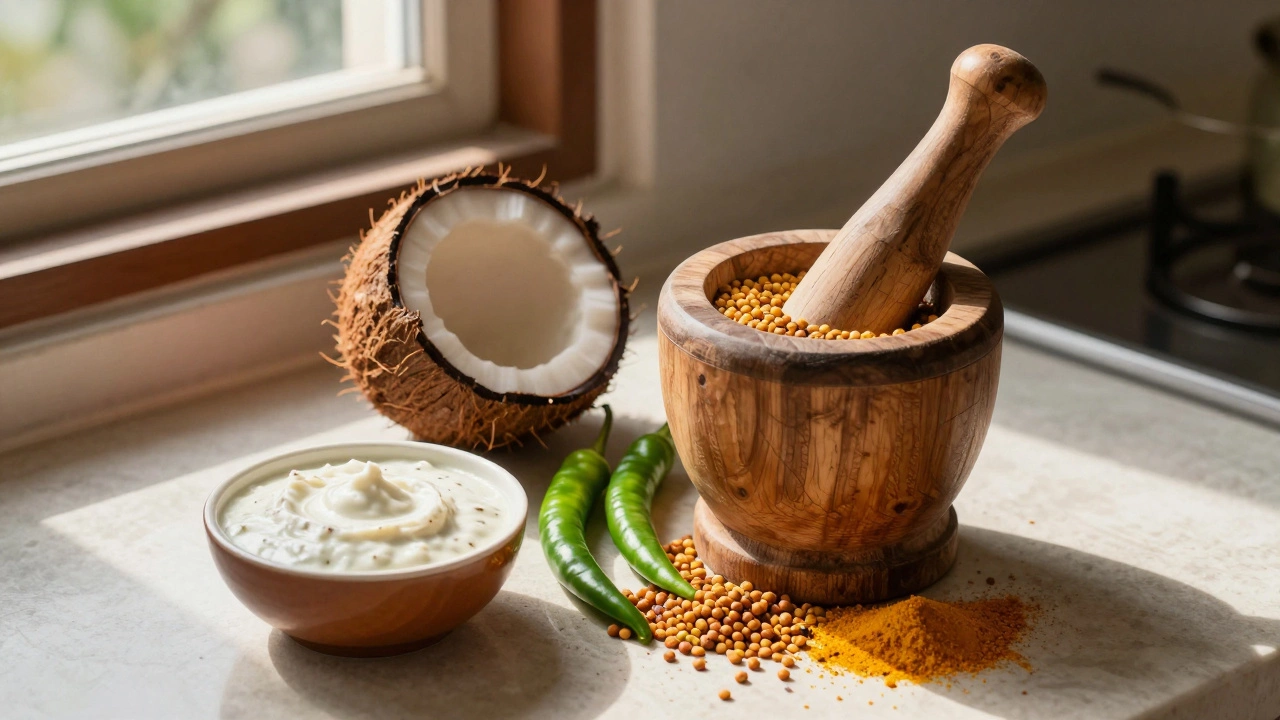
What Is Another Name for Chutney? Common Alternatives and Regional Variants
Chutney has no exact English equivalent, but it's closest to a spiced fruit relish or savory jam. Learn its regional names, substitutes, and why it stands apart from salsa, jam, or relish.
Read More
Chutney in America: What Do They Really Call It?
Curious about what chutney is called in America? You’ll find that while chutney has deep Indian roots, Americans use the term differently and sometimes swap it for other names like relish or salsa. This article untangles the naming confusion, explores the differences, and offers tips for using and making chutney in an American kitchen. Simple comparisons and real kitchen hacks included. Perfect for anyone who loves flavor-packed condiments.
Read More
American Equivalent of Chutney: Where the Flavors Meet
Ever wondered what Americans use instead of chutney? This article breaks down which condiments and sauces in the United States come close to the sweet, tangy kick of classic chutney. From relishes to salsas, you'll get to know not just their tastes but also how to use them. Find tips for swapping, pairing, and making your own. It's not just about swapping jars—it's about transforming meals.
Read More