Broken Milk: Why It Happens and What to Do With It
When milk broken milk, milk that has curdled or separated due to acid, heat, or age. Also known as curdled milk, it’s often seen as a cooking failure—but in many Indian kitchens, it’s the starting point for something delicious. You might panic when your milk turns lumpy after adding lemon juice, but that’s not spoilage—it’s science. This separation is how paneer, chhana, and even some traditional sweets are made. Broken milk isn’t waste; it’s raw material.
The reason milk breaks isn’t always bad. Heat, acid, or time can trigger this. Lemon juice, a natural acid used to curdle milk for paneer is the most common culprit in home kitchens. Vinegar, yogurt, or even leftover tamarind water can do the same. In fact, the best paneer comes from milk that breaks cleanly—not too fast, not too slow. If your milk curdles on its own in the fridge, that’s spoilage. But if it breaks when you add acid to hot milk? That’s your cue to strain, press, and make cheese.
People often confuse broken milk with spoiled milk. Spoiled milk smells sour, looks slimy, and has off-color patches. Broken milk just looks like soft curds floating in watery whey. It’s clean, white, and smells like milk—not rot. This difference matters. You can use broken milk to make paneer, fresh Indian cheese made by curdling milk with acid, or even in desserts like rasgulla where the curds are soaked in syrup. In rural India, broken milk is often dried into chhana and used in sweets like sandesh. It’s not a mistake—it’s tradition.
Some recipes even rely on slightly soured milk. In Bengal, milk is left overnight to naturally ferment before making rasgulla. In Punjab, yogurt is stirred into warm milk to make chhachh, a digestive drink. Even in biryani, raita made from broken milk curds helps balance the spice. So when you see milk separating, ask: did I add acid? Was it hot? Is it fresh? If yes, yes, and yes—don’t throw it out. Strain it, rinse the curds, press it under a weight for an hour, and you’ve got paneer. Done right, you’ll get more cheese from a gallon of milk than you thought possible.
There’s a reason Indian recipes never say "avoid broken milk." They say "use it right." Whether you’re making paneer, trying to fix a curdled kheer, or just wondering why your milk turned lumpy after boiling, the answer is always the same: it’s not broken. It’s becoming something else.
Below, you’ll find real recipes and fixes from home cooks who turned broken milk into something better—paneer with perfect texture, desserts that use curds instead of cream, and even ways to rescue a curdled gravy. No fancy tools. No waste. Just smart, simple cooking.
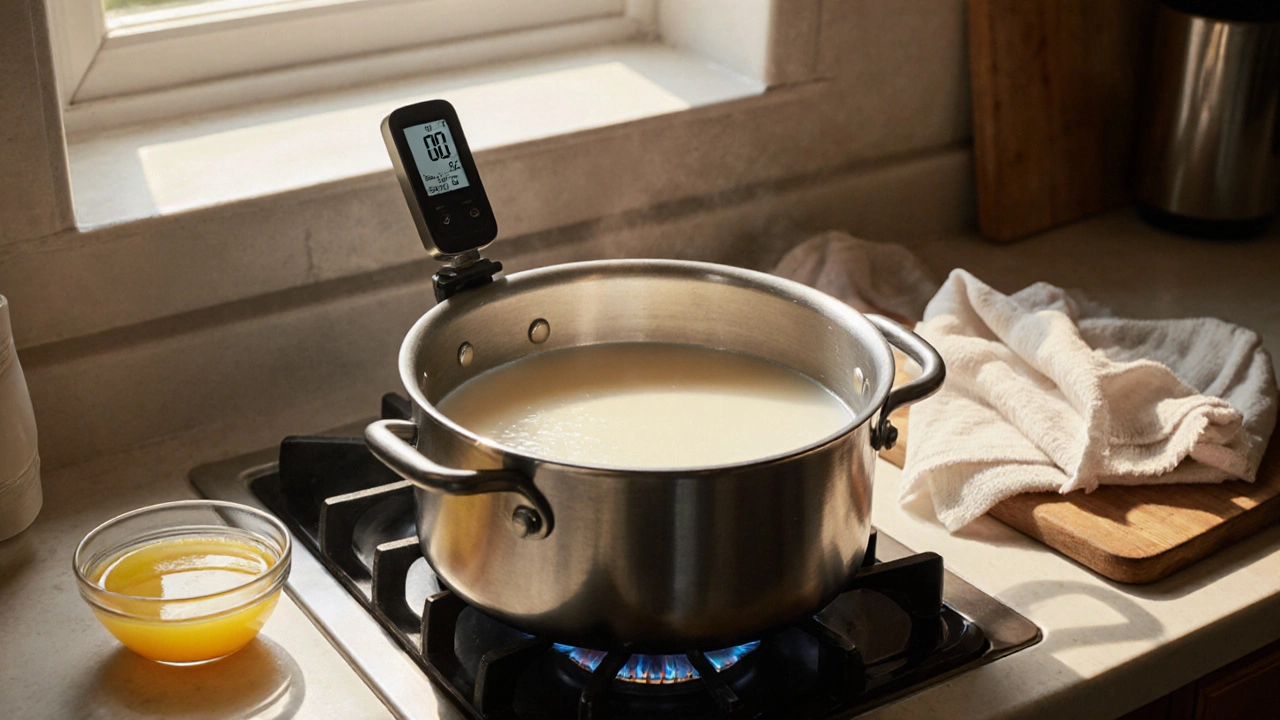
How to Make Paneer from Broken Milk - Safe DIY Guide
Learn how to safely turn mildly sour or "broken" milk into fresh paneer at home, with step‑by‑step instructions, safety tips, and storage advice.
Read More