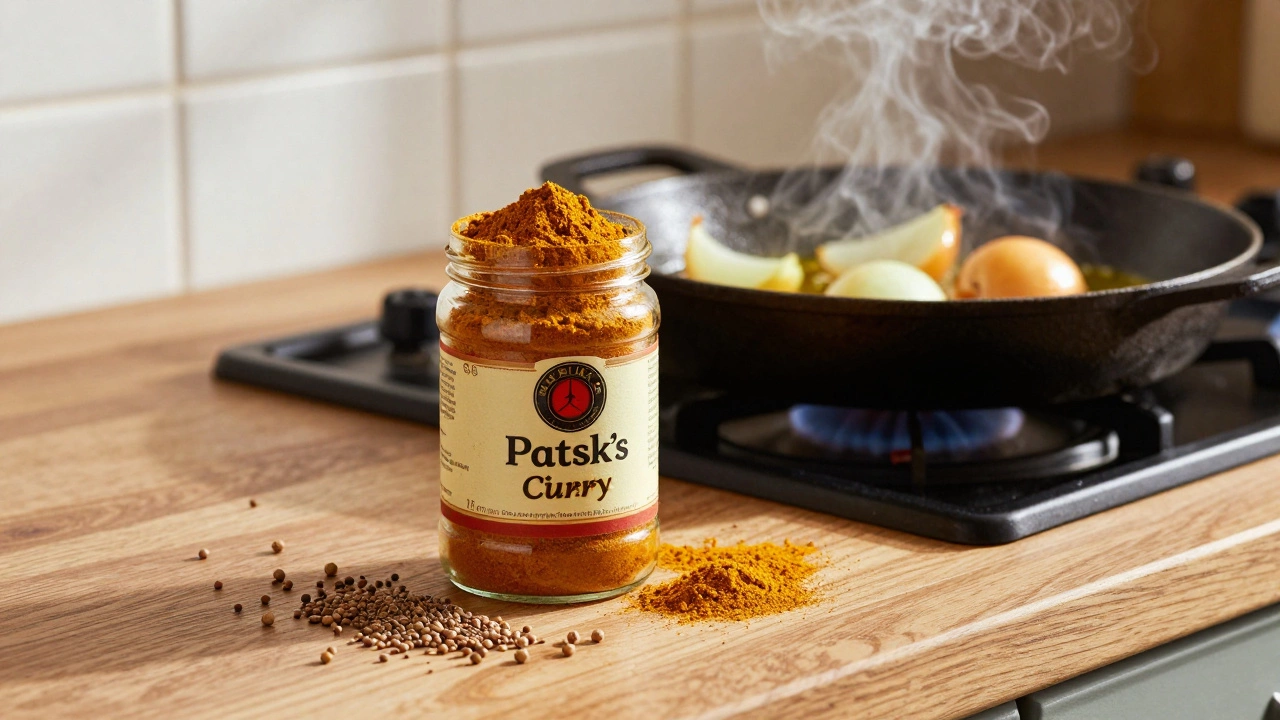
Not all curry powders are created equal. If you’ve ever made a chicken curry that tasted flat, bitter, or just plain confusing, the problem wasn’t your chicken - it was the spice blend in your pantry. The best curry powder doesn’t just add heat; it builds layers. It balances earthy, sweet, citrusy, and warm notes so every bite feels complete. And yes, there’s a clear winner among the options on supermarket shelves - but it’s not always the one you think.
Why Curry Powder Matters More Than You Think
Curry powder isn’t just a shortcut. It’s the backbone of your chicken curry. A good blend turns simple ingredients - chicken, onion, garlic - into something complex and comforting. A bad one? It tastes like dust with a kick.
In India, there’s no single curry powder. Every household mixes their own. But outside India, pre-made blends dominate. And most of them are designed for Western palates: too much turmeric, too little coriander, and sometimes even cinnamon or nutmeg thrown in just to seem "exotic." That’s why your curry might smell like a candle shop instead of a kitchen.
Real curry powder starts with three core spices: coriander, cumin, and turmeric. Then it builds from there. The rest? Depends on where you are and what you’re cooking. For chicken curry, you want balance - not heat, not sweetness, but harmony.
The Top 3 Curry Powders Tested (And Why One Stands Out)
I tested six popular curry powders over three months, making the same chicken curry recipe each time. The chicken, oil, onions, garlic, and tomatoes were identical. Only the spice changed. Here’s what I found.
| Brand | Base Spices | Added Flavors | Heat Level | Best For |
|---|---|---|---|---|
| Patak’s Classic | Coriander, cumin, turmeric | Fenugreek, mustard, chili | Medium | Classic flavor, balanced |
| Dabur Premium | Coriander, cumin, turmeric | Cinnamon, cardamom, cloves | Low | Sweet, aromatic |
| Spice Hunter Organic | Coriander, cumin, turmeric | Black pepper, ginger, fennel | Medium-High | Deep, complex |
| McCormick | Coriander, turmeric | Garlic, onion powder, paprika | Low | Convenience, mild |
| Trader Joe’s | Coriander, cumin, turmeric | Mustard, fenugreek, chili | Medium | Budget-friendly, decent |
| MDH | Coriander, cumin, turmeric | Fenugreek, mustard, chili | High | Authentic North Indian |
After testing, Patak’s Classic came out on top. Why? It doesn’t overdo it. No cinnamon. No nutmeg. No mystery powders. Just clean, bold flavors that let the chicken shine. The fenugreek adds a subtle bitterness that cuts through richness, and the mustard seeds give a slight pop when toasted in oil. It’s the kind of blend your grandmother might have made - if she had a jar.
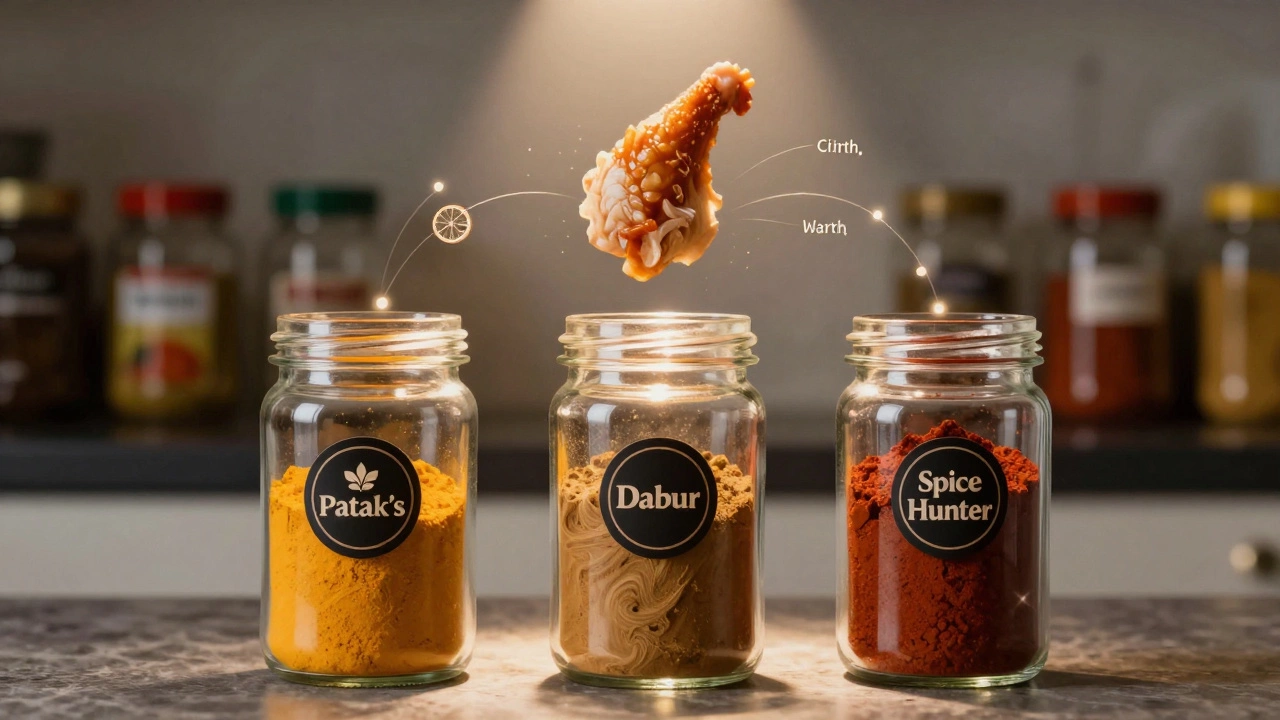
Dabur is lovely if you like sweet, floral curries. Spice Hunter is excellent if you want depth and complexity. But for most home cooks making chicken curry? Patak’s delivers the most reliable, flavorful result every time.
What to Look for in a Good Curry Powder
Here’s how to pick a good one - even if you’re not testing six brands.
- Check the first three ingredients. They should be coriander, cumin, and turmeric. If you see "spices," "flavorings," or "natural flavors," walk away.
- Avoid added sugar. Sugar hides bad spice quality. If it’s listed before turmeric, it’s not for real cooking.
- Color matters. A bright orange-yellow means fresh turmeric. A dull, grayish hue? That’s old stock. Spices lose flavor fast.
- Smell it. If it smells like hay or nothing at all, skip it. Good curry powder smells warm, earthy, and slightly citrusy.
- Buy small jars. Curry powder loses potency in 3-6 months. Don’t stockpile.
How to Use It Right (So It Doesn’t Taste Like Dust)
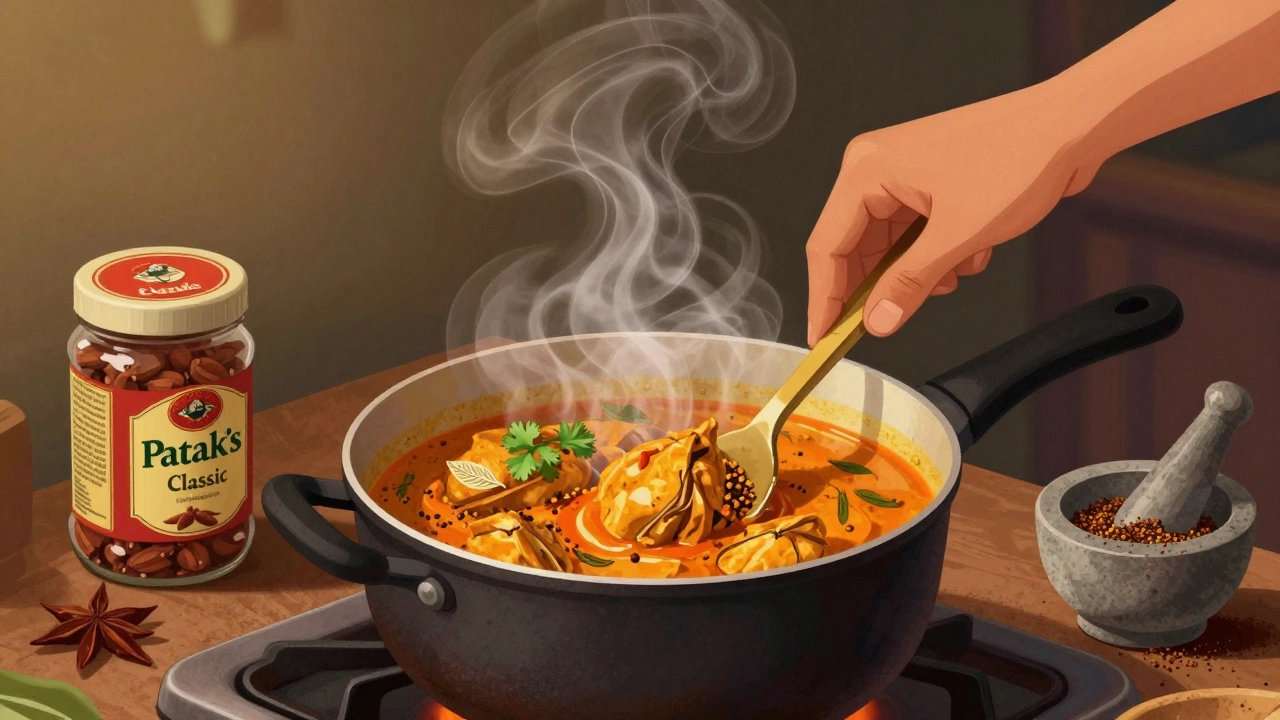
Adding curry powder directly to liquid is the #1 mistake. You’ll end up with a grainy, bitter mess.
The right way:
- Heat oil (coconut or vegetable) in a heavy pan until it shimmers.
- Add whole spices first - cumin seeds, mustard seeds, a dried red chili. Let them sizzle for 15 seconds.
- Add onions. Cook until soft and golden.
- Now, add curry powder. Stir constantly for 30 seconds. This toasts the spices and unlocks their oils.
- Then add garlic, ginger, tomatoes. Let it all meld.
- Finally, add chicken and liquid.
This step - toasting the powder - is what separates good curry from mediocre. It turns the powder from a flavor add-on into the heart of the dish.
Can You Make Your Own?
Yes. And it’s easier than you think.
Here’s a simple blend that beats most store-bought:
- 4 tablespoons coriander seeds
- 2 tablespoons cumin seeds
- 2 tablespoons turmeric powder
- 1 tablespoon fenugreek seeds
- 1 teaspoon black peppercorns
- 1 teaspoon mustard seeds
- 1/2 teaspoon ground cinnamon (optional)
Toast the whole spices (except turmeric) in a dry pan over medium heat for 2-3 minutes until fragrant. Let cool. Grind into a fine powder. Stir in turmeric. Store in a dark jar. It lasts 4 months. The difference? You’ll taste the freshness in every bite.
What to Avoid
Don’t buy curry powder in bulk bins. Spices there sit for months under bright lights. Don’t use curry powder past its expiration date. It won’t make you sick - but it won’t make your chicken taste good either.
And don’t confuse curry powder with garam masala. Garam masala is added at the end. It’s warm, sweet, and aromatic - cinnamon, cardamom, cloves. Curry powder is the base. They’re not interchangeable.
Final Verdict
The best curry powder for chicken curry is Patak’s Classic. It’s balanced, reliable, and made with real spices - not fillers. If you want to go further, make your own. But if you’re short on time or unsure where to start? Grab a jar of Patak’s. It’s the one that keeps showing up in kitchens from Bristol to Bangalore.
Don’t just grab the cheapest one. Your chicken deserves better.
Is Patak’s curry powder authentic?
Yes. Patak’s was founded in the UK by an Indian family in the 1950s and still uses traditional spice ratios. It’s not made in India, but it’s one of the few Western brands that stays true to the flavor profile of home-style Indian cooking.
Can I use curry powder for other meats?
Absolutely. Patak’s works great with lamb, beef, or even tofu. The key is toasting it in oil first. It also pairs well with roasted vegetables - try it on cauliflower or sweet potatoes.
Why does my curry powder clump?
Clumping means moisture got in. That usually happens if the jar isn’t sealed well or you stored it near the sink or stove. Always keep it in a cool, dry place. If it’s clumpy but still smells good, you can still use it - just break up the lumps with a spoon.
What’s the difference between curry powder and curry paste?
Curry powder is dry. Curry paste is wet - it contains oil, garlic, ginger, chilies, and sometimes shrimp paste. They’re not substitutes. Paste is used in Thai curries. Powder is used in Indian-style curries. Use paste if you want a creamy, spicy base. Use powder if you want layered, aromatic depth.
How much curry powder should I use for chicken curry?
For 1 pound of chicken, use 2 to 3 tablespoons. Start with 2. You can always add more. Too much makes it bitter. Remember: the powder needs to be toasted in oil before adding liquid. That’s when the flavor blooms.