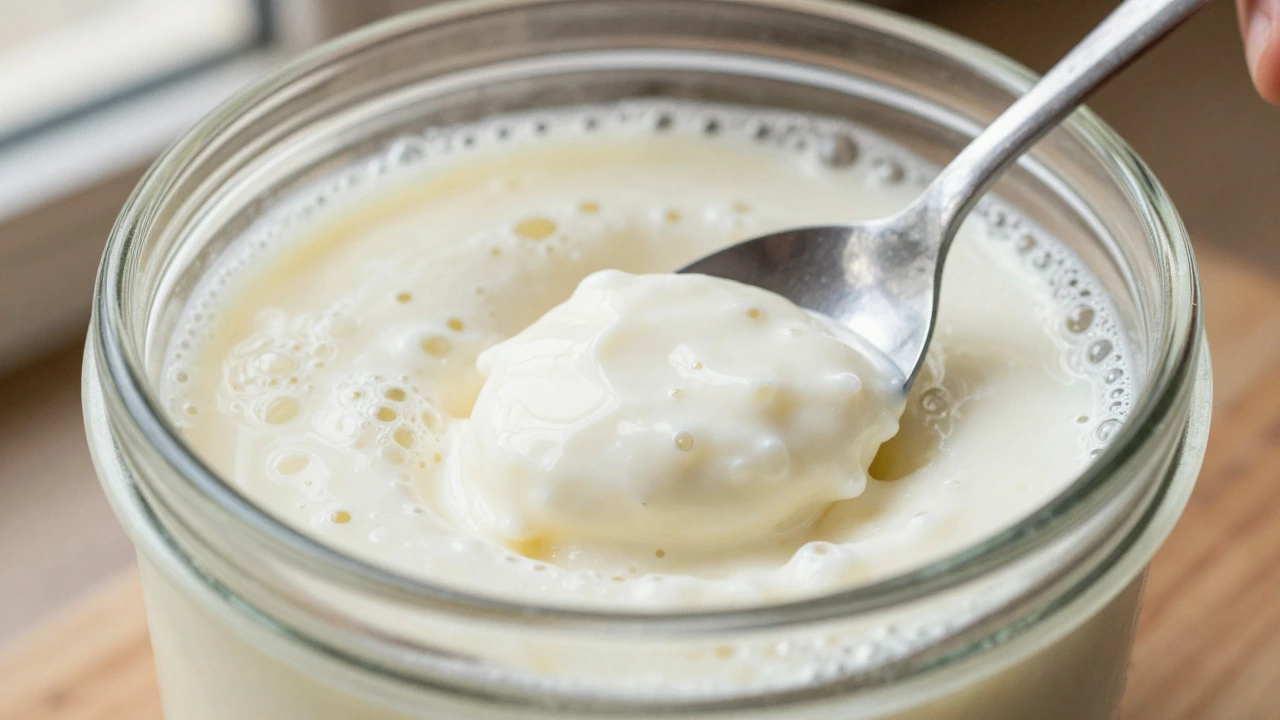
Curd in Dosa Batter Planner
Dial in the perfect balance between a light, puffed interior and those signature shatter-crisp edges.
≈ 4 tablespoons total for 2 cups
Step-by-step method
Ever wondered why your dosa comes out dense instead of crisp? You might be missing a simple tweak: adding curd to the batter. It’s not just about flavor; it changes how the batter ferments, rises, and cooks. If you’ve struggled with flat or thick dosas, this is the fix that often works better than adjusting water or oil.
Adding yogurt (curd) to dosa batter introduces lactic acid bacteria, which speeds up fermentation and creates a lighter, puffier result. But it’s not magic-it depends on how much you add, when you add it, and what kind of curd you use. Let’s break down exactly what happens at each stage so you can decide if it’s right for your kitchen.
How Curd Changes Fermentation
Dosa batter relies on natural fermentation from wild yeasts and bacteria present in the rice and urad dal. When you mix in curd, you’re introducing a concentrated source of *Lactobacillus* and other beneficial microbes. These bacteria produce lactic acid, which lowers the pH of the batter. A lower pH environment favors faster gas production, meaning more carbon dioxide bubbles form during the overnight rest.
The result? The batter rises higher and develops a spongier internal structure. Without curd, fermentation is slower and less predictable, especially in cooler climates like Bristol, where winter temperatures can stall yeast activity. With curd, even in 15°C weather, you’ll notice visible bubbling within 8-10 hours instead of waiting 14-16.
- Faster rise: Batter doubles in volume 30-50% quicker.
- Milder sourness: Lactic acid gives a tangy note without the sharp vinegar-like smell of over-fermented plain batter.
- Consistency control: Curd adds moisture and body, reducing the need for extra water.
Impact on Texture and Crispiness
This is where opinions split. Some home cooks swear curd makes dosas softer and fluffier-great for kids or those who prefer a chewier bite. Others claim it prevents the signature shatter-crisp edge we all love. So, which is true?
It depends on proportion. A small amount (1-2 tablespoons per cup of batter) enhances lift without compromising crispness. Too much (more than ¼ cup per cup of batter) increases moisture content, leading to a thicker, pancake-like texture that steams rather than fries. The key is balance: curd helps the center puff up while still allowing the edges to dry out and crisp on a hot griddle.
| Curd Amount (per 1 cup batter) | Texture Outcome | Best For |
|---|---|---|
| 0 tbsp (none) | Dense, less puffed, harder to achieve crispness in cool weather | Purists, warm climates |
| 1-2 tbsp | Light, airy interior, crisp edges | Most home cooks, year-round |
| 3-4 tbsp | Soft, fluffy, slightly moist | Kids, breakfast bowls |
| 5+ tbsp | Thick, pancake-like, may stick to tawa | Rarely recommended |
Flavor Profile Shifts
Plain dosa batter has a neutral, slightly earthy taste from the fermented rice and dal. Adding curd introduces a subtle tang that complements chutneys and sambar beautifully. It doesn’t make the dosa taste “like yogurt”-it just brightens the overall profile. Think of it as the difference between plain bread and sourdough: same base ingredients, but a more complex, appetizing flavor.
If you’re using sweetened or flavored curd, avoid it. Plain, unsweetened yogurt is essential. Thick Greek-style yogurt works well because it has less whey, meaning less added liquid. If you only have thin curd, strain it first to remove excess water, or adjust your total liquid accordingly.
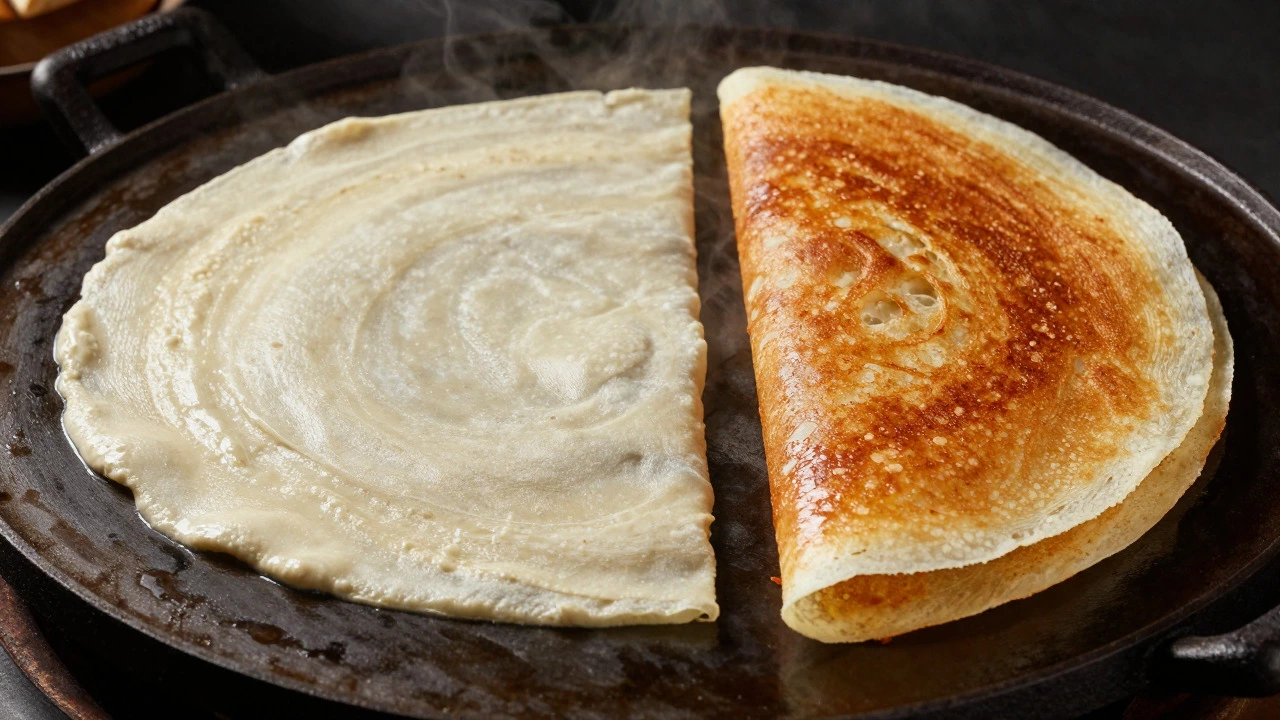
Step-by-Step: How to Add Curd Correctly
Timing matters. Here’s the method that consistently yields light, crisp dosas:
- Soak and grind: Soak 1 cup parboiled rice and ½ cup urad dal separately for 4-6 hours. Grind the dal into a smooth paste first, then add rice and grind to a fine, pourable consistency.
- Initial rest: Let the ground batter sit uncovered for 1 hour at room temperature. This allows wild yeasts to start working.
- Add curd: Stir in 1-2 tablespoons of plain curd per cup of batter. Mix gently until fully incorporated. Don’t overbeat-this deflates early bubbles.
- Ferment: Cover loosely and let ferment for 8-12 hours at 25-30°C. In cooler months, place the bowl in an oven with the light on or near a warm appliance.
- Check readiness: The batter should double in volume, smell pleasantly tangy, and show bubbles on the surface. If it smells sharp or alcoholic, it’s over-fermented.
- Cook: Heat your tawa until smoking hot. Pour batter, spread thin, drizzle oil, and cook until golden brown and crisp at the edges.
Common Mistakes to Avoid
Even with the right ratio, a few errors can ruin the outcome:
- Adding curd too early: If you add it before grinding, the acidity can inhibit enzyme activity needed for proper starch breakdown. Always add after grinding.
- Using flavored or sweetened yogurt: Sugar feeds unwanted bacteria, leading to off-flavors. Stick to plain, unsweetened varieties.
- Over-stirring after adding curd: Gentle folding preserves air bubbles. Vigorous mixing collapses them, resulting in a dense dosa.
- Ignoring temperature: Fermentation stalls below 20°C. Use a warm spot or pre-warm the batter by placing the jar in a bowl of warm water for 15 minutes before cooking.

When to Skip Curd Entirely
Not every dosa needs curd. If you’re making idiyappam or appam, where a soft, porous texture is desired, curd is excellent. But for classic crispy masala dosa, some purists prefer no dairy at all. They rely on longer fermentation (16-18 hours) and precise heat control to achieve crispness. If you live in a humid, warm region like Kerala, natural fermentation is fast enough, and curd may not be necessary. However, in drier or cooler areas, curd becomes a reliable tool for consistent results.
FAQ
Can I use Greek yogurt instead of regular curd?
Yes, Greek yogurt works well because it’s thicker with less whey. Just reduce other liquids slightly since it adds less free moisture. Strain it if it’s too thick to prevent clumping.
Does curd make dosa batter sourer?
It adds a mild tang, not intense sourness. The lactic acid balances the natural fermentation flavors. If you dislike sour notes, use less curd or rinse the batter briefly after fermentation.
What if my batter doesn’t rise even with curd?
Check the temperature. Fermentation needs warmth. Place the batter in a 25-30°C environment. Also ensure your rice and dal are fresh-old grains lose their natural yeast population. Try adding a pinch of baking soda as a backup, though it alters flavor.
Can I add curd to already fermented batter?
Yes, but stir it in gently right before cooking. This boosts freshness and adds a final tang. Don’t add it days ahead, as it may over-acidify the batter.
Does curd affect the shelf life of dosa batter?
Slightly. The added moisture and acidity can shorten fridge storage time to 2-3 days versus 4-5 days for plain batter. Always smell-test before using-if it smells sharp or moldy, discard it.