Indian Dinner Time Estimator
Dinner time in India varies based on location, season, and lifestyle. Select your scenario to see typical timing:
Based on your selections, dinner typically occurs during these hours in India.
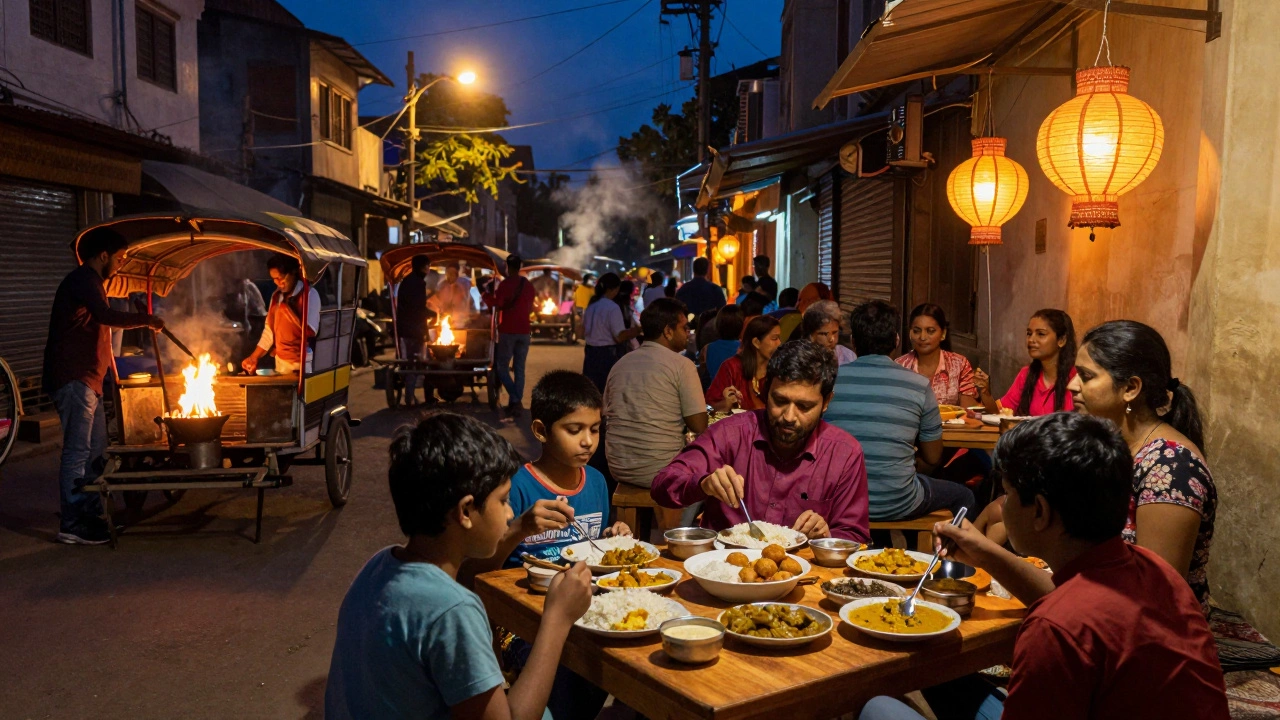
Ever wonder what time the streets of Mumbai, Delhi, or a village in Rajasthan come alive with the smell of spices and sizzling food? It’s not just about what people eat in India-it’s when they eat. Dinner in India doesn’t follow a clock. It follows the sun, the workday, the season, and sometimes, the queue at the street vendor’s cart.
Dinner Starts When the Sun Goes Down
In most parts of India, dinner isn’t a fixed hour. It’s a moment. For urban workers, it’s usually between 8 p.m. and 10 p.m. But in smaller towns and rural areas, dinner often starts as early as 7 p.m. or even 6:30 p.m. Why? Because daylight fades early, and so does energy. Families eat together before it gets too dark to see the plate, and before the kids get too restless.
In cities like Bangalore or Hyderabad, where office hours stretch past 7 p.m., dinner can drift to 9 or 10 p.m. But even then, it’s not unusual to see families eating at 8:30 p.m. and still having street food later. That’s because dinner in India isn’t just one meal-it’s often two. There’s the home-cooked dinner, and then there’s the late-night snack.
Street Food Isn’t a Snack. It’s Part of Dinner.
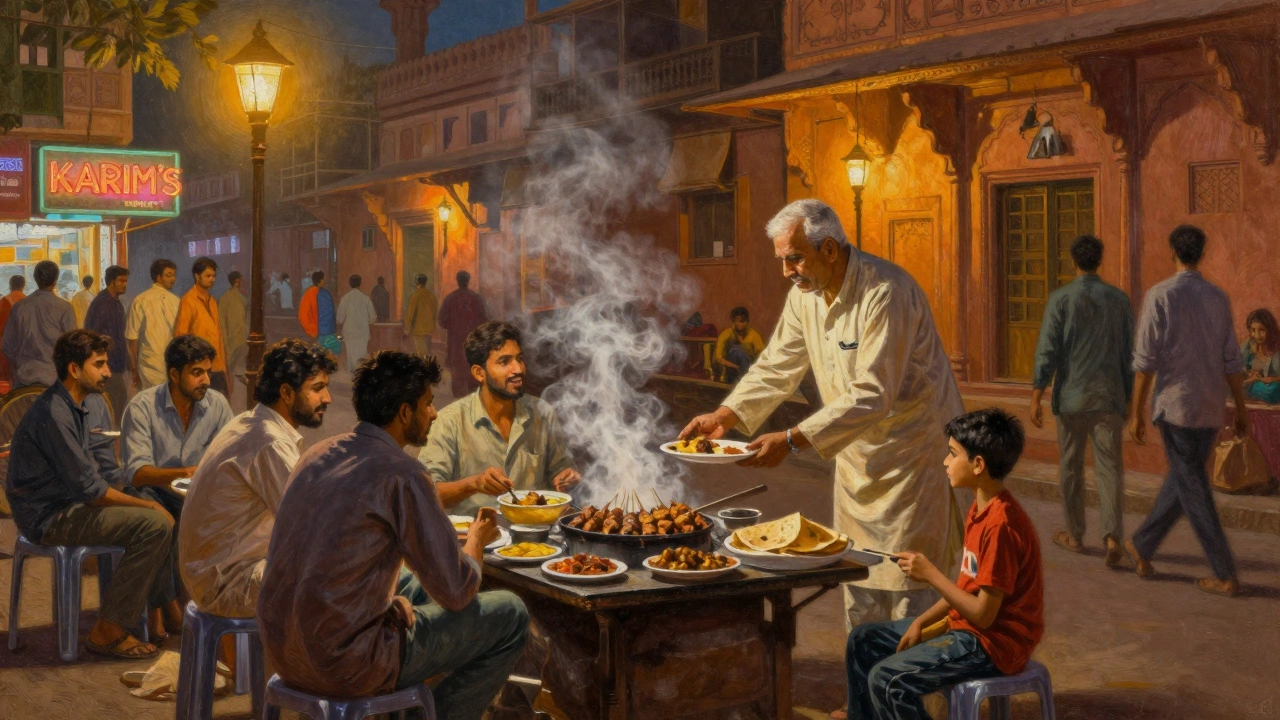
Think of street food in India as the second act of dinner. In Delhi, after a home meal of dal-rice and curd, you’ll see groups of friends heading to Karim’s near Jama Masjid for kebabs at 10:30 p.m. In Mumbai, after a long day at the office, a family might grab vada pav or misal pav from a roadside stall around 9 p.m. It’s not dessert. It’s not a snack. It’s dinner’s cousin-sometimes even its main event.
Street vendors don’t close at 8 p.m. They wait. In Varanasi, the bhel puri wallahs start rolling carts out at 7 p.m. and don’t pack up until after midnight. In Kolkata, puchka (pani puri) sellers set up near colleges and bus stations around 8 p.m., knowing students won’t head home until after their evening classes. These aren’t late-night cravings. They’re scheduled meals.
Seasons Change the Clock
Winter in northern India means dinner moves earlier. In Punjab or Uttar Pradesh, families eat by 7:30 p.m. because nights get cold fast, and the heat from the stove is part of the comfort. In summer, when the sun lingers past 8 p.m., dinner shifts later. In Chennai or Hyderabad, it’s common to eat at 9 p.m. or even 9:30 p.m. because the heat makes eating earlier feel heavy.
During festivals like Diwali or Eid, dinner becomes a celebration that stretches into the night. In Jaipur, families might eat their main meal at 8 p.m., but then gather again at midnight for kebabs and jalebis. In Gujarat, where many people fast during festivals, dinner isn’t eaten until after sunset prayers-sometimes as late as 10 p.m.
Class and Region Shape the Plate
Dinner time isn’t just about the clock. It’s about who you are. In middle-class homes across India, dinner is a family ritual. Everyone eats together, often sitting on the floor or around a low table. The meal is simple: rice, dal, a vegetable curry, and pickles. It’s eaten between 8 and 9:30 p.m.
But in wealthier urban households, dinner can be a lighter affair-salads, grilled chicken, or yogurt bowls-eaten later, around 10 p.m. Some even skip the traditional meal and go straight to a café or rooftop bar. In contrast, in slums and laborer communities, dinner might be eaten at 7 p.m. because they wake up at 4 a.m. to work. For them, eating early means sleeping early. It’s survival, not preference.
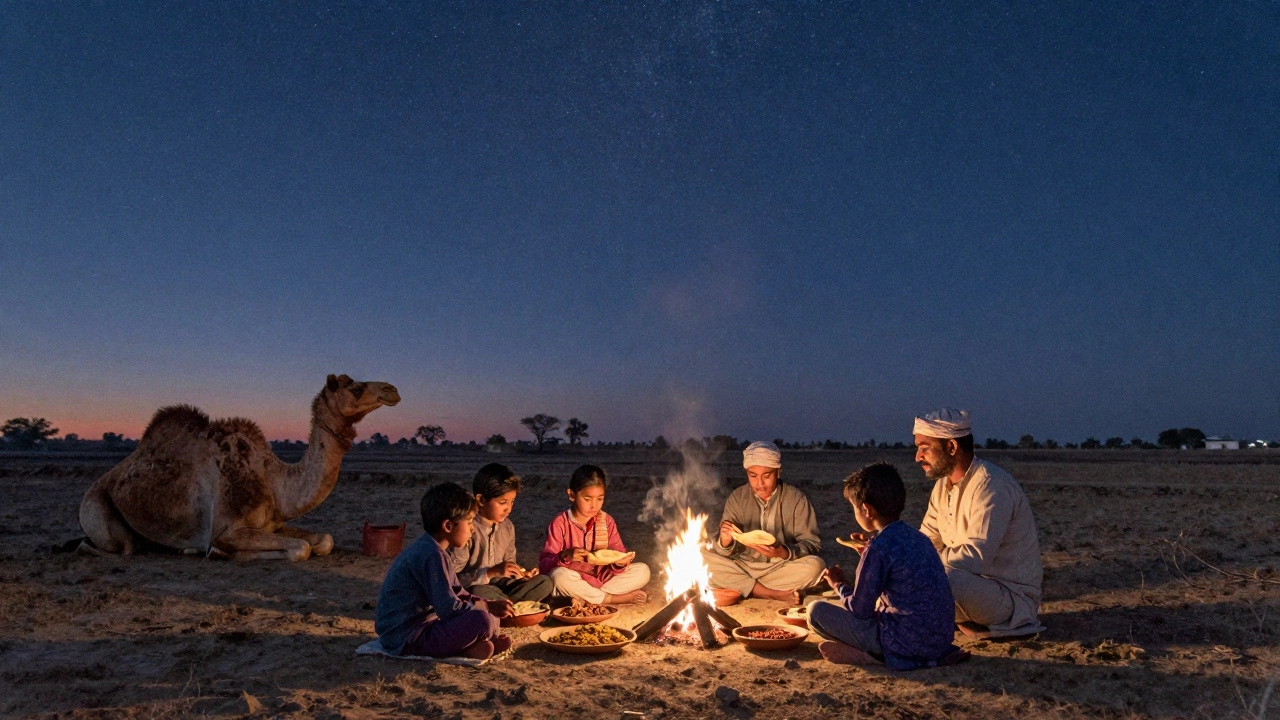
And then there are the nomadic communities. In Rajasthan, the Bishnoi or Rabari tribes eat dinner after sunset, often under the stars, with flatbread and lentils. In the northeast, among the Naga tribes, dinner is eaten after evening rituals and can go past 11 p.m. There’s no universal schedule. Only local rhythm.
Why the Late-Night Street Food Culture?
India’s street food culture thrives because dinner isn’t just about nutrition. It’s about connection. After a long day, people don’t just want food-they want company, noise, and a sense of belonging. That’s why you’ll see three generations sitting on plastic stools, sharing a plate of chaat. Grandparents, parents, kids-all eating together, laughing, arguing over who gets the last pani puri.
It’s also about affordability. A full home-cooked meal with meat, rice, and curry might cost ₹200. A plate of pav bhaji or bhel puri costs ₹50. For students, gig workers, or single parents, street food isn’t a treat-it’s dinner. And it’s eaten when it’s convenient, not when the calendar says so.
What About the Cities? Mumbai vs. Delhi vs. Kolkata
Let’s break it down by city:
- Mumbai: Dinner at 8:30 p.m. is standard. But by 10 p.m., the streets around Chowpatty and Juhu are packed with people eating vada pav, sev puri, and misal pav. Many eat twice.
- Delhi: Home dinner at 8 p.m., street dinner at 10:30 p.m. Karim’s, Paranthe Wali Gali, and Chawri Bazar are alive until 2 a.m.
- Kolkata: Dinner starts at 8 p.m., but puchka stalls don’t shut until 1 a.m. The city treats late-night eating as a cultural norm, not a habit.
- Chennai: People eat later-9 p.m. is common. Seafood and idli sambar dominate, and street vendors set up near temples after evening prayers.
One thing all these cities share? No one eats dinner at 6 p.m. unless they’re a child, a laborer, or a temple priest.
It’s Not About Hunger. It’s About Rhythm.
Indian dinner time isn’t about following a rulebook. It’s about listening to the rhythm of life. In villages, it’s tied to the call of the temple bell or the setting sun. In cities, it’s tied to the end of the commute, the closing of the office, or the last bus home.
And that’s why you’ll never find a single answer to the question, “What time do people eat dinner in India?” There are dozens. Hundreds. Maybe even thousands. But if you want to understand Indian life, don’t look at the clock. Look at the street. When the first vendor lights the stove, that’s when dinner begins.
Do all Indians eat dinner at the same time?
No. Dinner time in India varies widely by region, season, occupation, and income. In rural areas, it’s often between 6:30 p.m. and 8 p.m. In big cities, it’s usually 8 p.m. to 10 p.m. But many people eat a second meal later at street food stalls, sometimes as late as midnight.
Why do so many Indians eat street food for dinner?
Street food is affordable, fast, and deeply woven into daily life. For students, gig workers, and families with long work hours, it’s not a luxury-it’s practical. A plate of bhel puri or pani puri costs less than a full home-cooked meal, and it’s available after work hours when restaurants are closed. It’s also social. Eating at a street stall means sharing space, stories, and laughter.
Is dinner the biggest meal of the day in India?
In most households, lunch is the heaviest meal, especially in rural areas where people work in fields or factories. Dinner is lighter-rice, dal, vegetables. But in cities, dinner is becoming more substantial, especially with the rise of home delivery and fusion cuisine. Still, the real energy of Indian eating happens after dark, at street stalls, where people often eat more than they do at dinner.
Do Indians eat dinner alone or with family?
Most families eat dinner together, especially in smaller towns and villages. In cities, it’s changing. Young professionals or single parents might eat alone or order food. But even then, many still join friends at street stalls for a shared plate. Eating alone at home is common. Eating alone on the street? Rare.
What’s the latest time people eat dinner in India?
In major cities like Delhi, Mumbai, and Kolkata, it’s not unusual for people to eat dinner-or their second dinner-at midnight. Street vendors in areas like Chandni Chowk, Juhu Beach, or Park Street stay open until 2 a.m. or later. For college students, night-shift workers, or late-night partygoers, dinner is whatever’s available when they finally get home.