Indian Snack Nutrition Calculator
This tool helps you compare the nutritional value of popular Indian snacks. Enter the serving size (in grams) for each snack to see which is most nutrient-dense.
| Parameter | Moong Dal | Roasted Chana | Poha | Fruit Chaat |
|---|---|---|---|---|
| Protein (g) | 0.0 | 0.0 | 0.0 | 0.0 |
| Fiber (g) | 0.0 | 0.0 | 0.0 | 0.0 |
| Calories | 0.0 | 0.0 | 0.0 | 0.0 |
| Added Sugar (g) | 0.0 | 0.0 | 0.0 | 0.0 |
Key Findings
Moong dal provides the highest nutrient density with the least added sugar and processing. It offers 14g protein and 15g fiber per 100g cooked, while other snacks typically contain added sugar and have lower fiber content.
When people ask what the number one healthiest food in India is, they’re often looking for a single answer - a magic bullet, a superfood, something you can eat every day and feel like you’ve nailed your health. But the truth? It’s not a trendy smoothie or a rare herb from the Himalayas. The real winner is something simple, humble, and found in almost every Indian kitchen: moong dal.
Why moong dal stands out
Moong dal - split yellow mung beans - isn’t flashy. It doesn’t come in fancy packaging or get featured in influencer reels. But if you look at the science, the tradition, and the way it’s actually eaten across India, it’s the most consistently healthy food there is.
One cup of cooked moong dal gives you 14 grams of plant-based protein, 15 grams of fiber, and under 200 calories. It’s low in fat, has no cholesterol, and is packed with folate, iron, magnesium, and potassium. Unlike many processed snacks marketed as healthy, moong dal doesn’t need additives to be good for you. It’s naturally nutrient-dense.
What makes it even better is how it’s digested. Moong dal is one of the easiest lentils to break down. It doesn’t cause bloating like chickpeas or kidney beans can. That’s why it’s often the first solid food given to babies in India, and why it’s recommended to people recovering from illness or surgery. Ayurveda calls it shamit - calming, balancing, and gentle on the digestive system.
How it’s eaten across India
You’ll find moong dal in dozens of forms, all of them healthy:
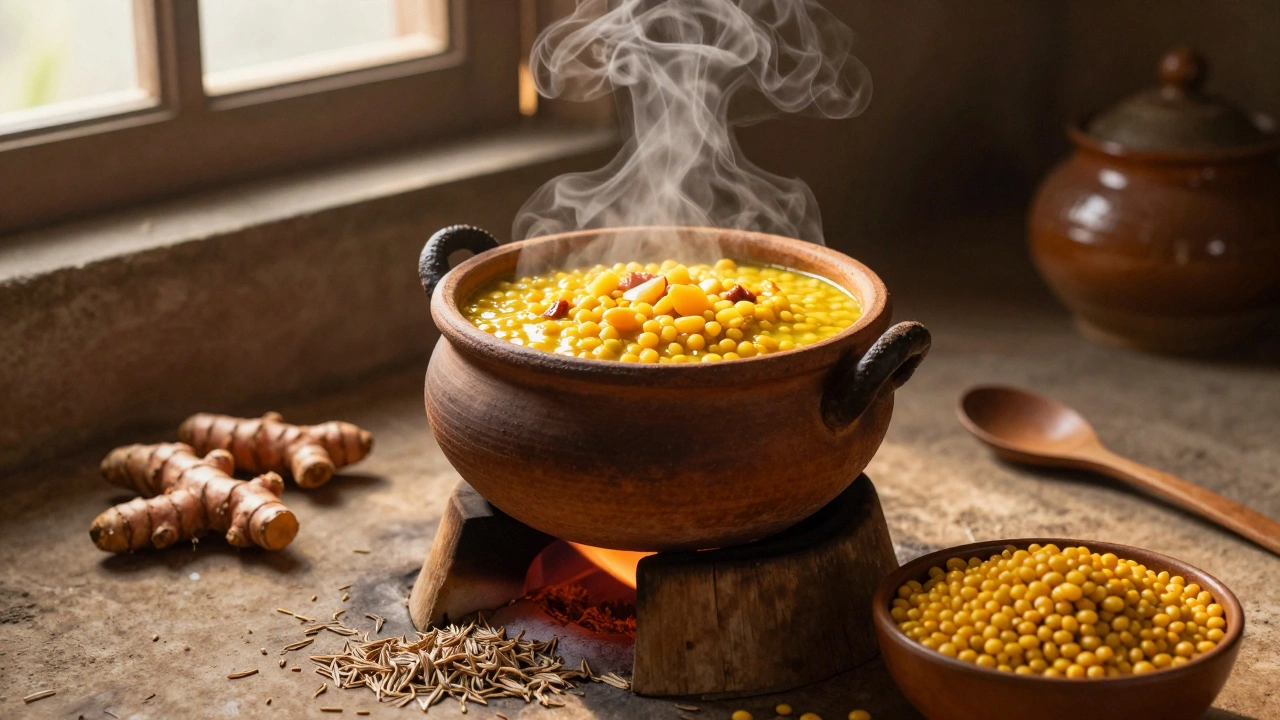
- In the north, it’s made into moong dal khichdi - a one-pot meal with rice, turmeric, and cumin. Simple, soothing, and perfect for gut health.
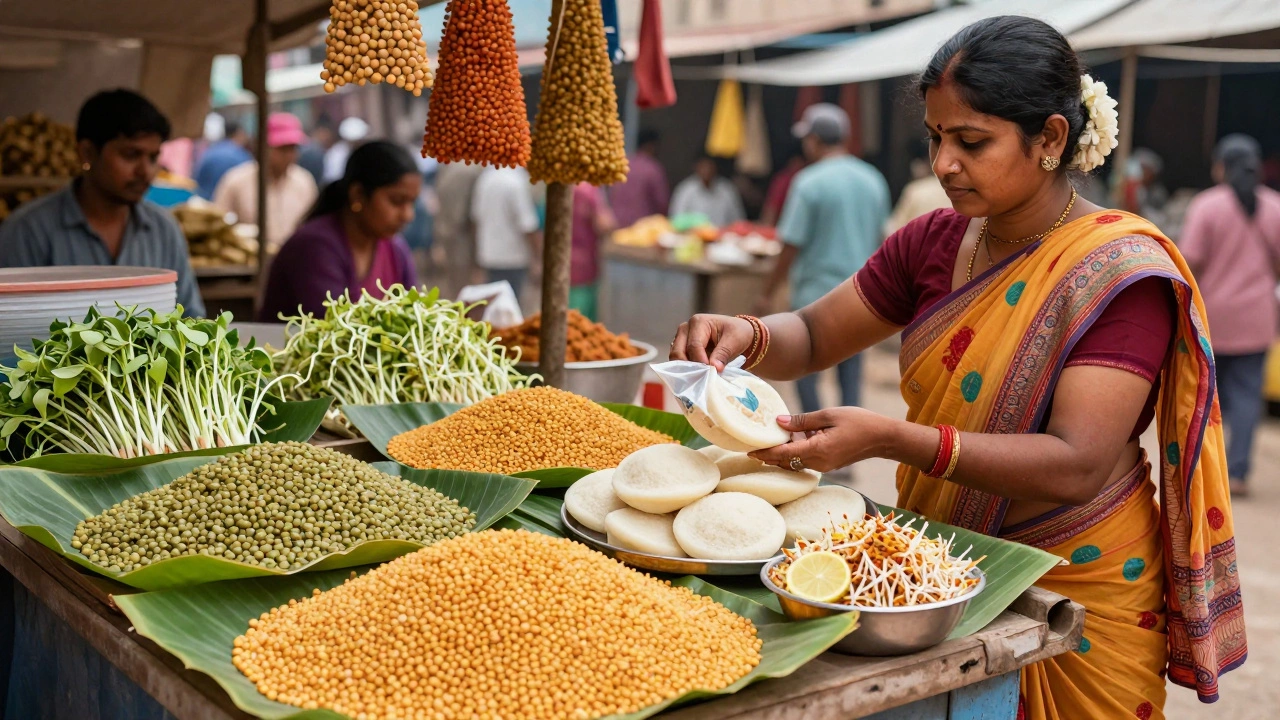
- In Maharashtra, it’s sprouted, lightly fried with mustard seeds, and eaten as a crunchy snack with a squeeze of lemon.
- In Tamil Nadu, it’s ground into batter and steamed into moong dal idlis - soft, protein-rich, and gluten-free.
- In Gujarat, it’s turned into sweet moong dal halwa with jaggery and ghee - still healthier than most store-bought desserts because it’s made with whole ingredients.
Every version uses minimal oil, no refined sugar, and no preservatives. That’s the pattern: traditional Indian cooking doesn’t need to add junk to make food taste good.
How it beats other "healthy" Indian snacks
People often think of roasted chana, poha, or fruit chaat as healthy snacks. And they are - to a point. But here’s how moong dal compares:
| Snack | Protein (per 100g) | Fiber (per 100g) | Added Sugar? | Processing Level |
|---|---|---|---|---|
| Moong dal (cooked) | 14g | 15g | No | Minimal |
| Roasted chana | 19g | 12g | Often yes | Medium |
| Poha (flattened rice) | 2g | 1g | Usually yes | Medium |
| Fruit chaat | 1g | 4g | Often yes | High |
| Store-bought granola bars | 4g | 3g | High | Very high |
Moong dal wins on every key metric: highest fiber, no added sugar, least processed. Even roasted chana - often called a superfood - usually comes with salt, oil, and sometimes sugar coatings. Moong dal doesn’t need them.
It’s not just about nutrients - it’s about sustainability
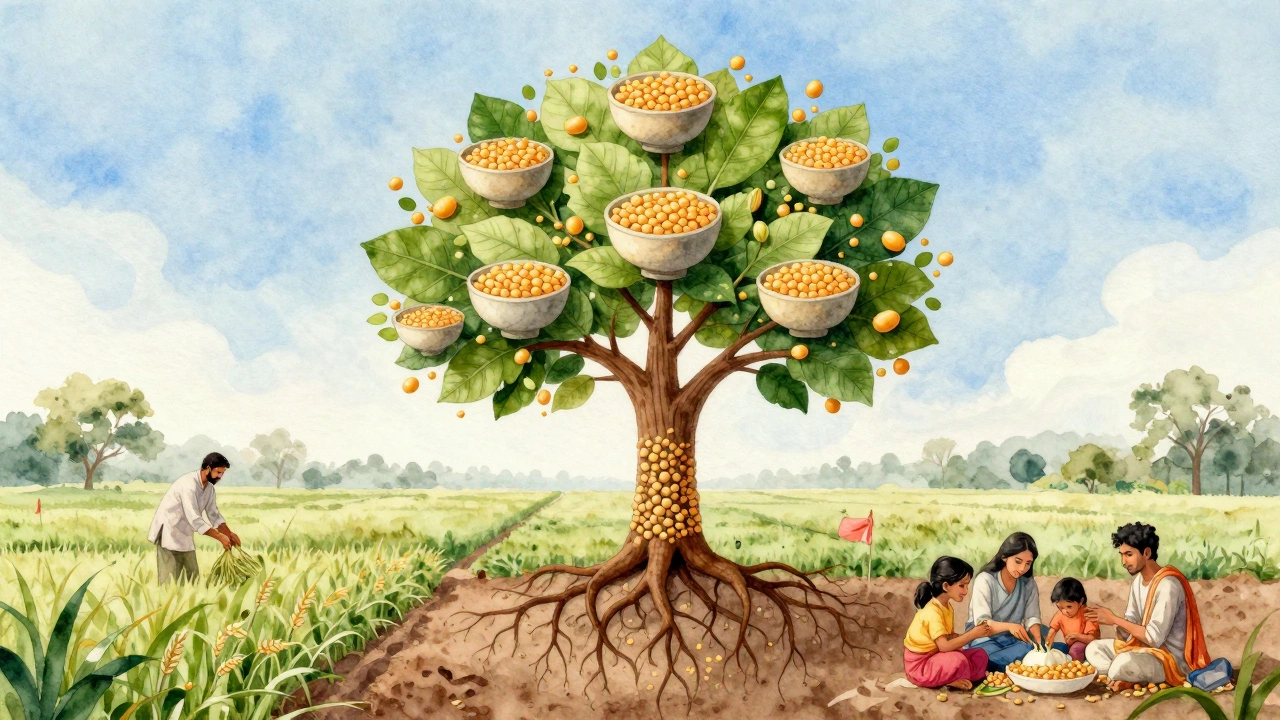
Moong dal is also one of the most sustainable crops in India. It fixes nitrogen in the soil, meaning farmers don’t need chemical fertilizers. It grows quickly, uses less water than rice or wheat, and thrives in dry conditions. That’s why it’s a staple in drought-prone areas like Rajasthan and Madhya Pradesh.
When you eat moong dal, you’re not just feeding your body - you’re supporting a food system that’s low-impact, local, and resilient. That’s something no imported superfood can claim.
How to make it part of your daily routine
You don’t need to overhaul your diet to benefit from moong dal. Start small:
- Swap your morning poha for moong dal khichdi. Add a dash of ginger and a spoon of ghee.
- Soak a handful of moong dal overnight, rinse, and eat it raw as a crunchy snack. Sprinkle chaat masala and lemon.
- Use moong dal flour to make pancakes or dosas instead of white flour.
- Blend cooked moong dal into soups for extra thickness and protein - no cream needed.
- Make a quick salad with sprouted moong dal, cucumber, tomato, and cilantro. Add a pinch of black salt.
These aren’t complicated recipes. They’re everyday habits. And that’s the point. The healthiest food isn’t the one you eat once a week when you’re feeling guilty. It’s the one you eat without thinking - because it’s easy, cheap, and tastes good.
What about other "healthy" Indian foods?
People bring up turmeric, neem, amla, or moringa. These are great. But they’re not daily staples for most Indians. Turmeric is a spice, not a main ingredient. Amla is eaten in pickles or juice - not as a meal. Moong dal is eaten as a meal, multiple times a week, by millions.
And then there’s ghee. Yes, it’s traditional. Yes, it has benefits. But it’s a fat. Moong dal is the foundation. Ghee enhances it. It doesn’t replace it.
The same goes for coconut water, buttermilk, or green tea. They’re healthy additions. Moong dal is the core.
Why the myth of the "number one" food is misleading
There’s no single food that makes you healthy. Health comes from patterns - eating whole foods, minimizing processed stuff, staying active, sleeping well. But if you had to pick one food that best represents the healthiest Indian eating pattern, moong dal is it.
It’s not about being the most powerful nutrient bomb. It’s about being reliable, accessible, and balanced. It’s the food that keeps people well through childhood, adulthood, and old age - without costing much or requiring special skills.
Moong dal doesn’t promise miracles. It just delivers. Day after day. Plate after plate.
Is moong dal better than other lentils like toor dal or masoor dal?
Moong dal is easier to digest than toor dal or masoor dal, especially for people with sensitive stomachs. It has slightly more fiber and fewer antinutrients. But all lentils are healthy. If you can’t find moong dal, toor dal is a fine substitute - just soak it longer and cook it well.
Can I eat moong dal every day?
Yes. In fact, that’s how it’s traditionally eaten. In many parts of India, families have moong dal khichdi or dal rice at least 4-5 times a week. It’s not a fad - it’s routine. Eating it daily supports stable blood sugar, gut health, and muscle maintenance without any side effects.
Is sprouted moong dal healthier than cooked?
Sprouting increases vitamin C and makes the protein slightly more absorbable. But cooked moong dal still has all the fiber, minerals, and protein. Both are excellent. Sprouted is great as a snack or salad. Cooked is better for meals, especially if you’re not used to raw legumes.
Does moong dal help with weight loss?
Yes. Its high fiber and protein content keep you full longer, reducing cravings. Studies show people who eat lentils regularly have lower body fat percentages. But it’s not a magic solution - you still need to watch overall calories and avoid frying it in too much oil.
Where can I buy moong dal outside India?
Look in Indian or Asian grocery stores. It’s often labeled as "split yellow mung beans" or "moong dal". You can also find it online under "organic moong dal". Avoid packages with added salt, sugar, or preservatives. Plain, unprocessed is best.
Next steps
If you want to start eating healthier using Indian foods, begin with moong dal. Buy a bag of plain, unprocessed split yellow mung beans. Cook a batch on Sunday. Eat it with rice, with vegetables, as a snack, or blended into a soup. Don’t overthink it.
After a week, you’ll notice you’re not reaching for chips or biscuits as often. Your digestion will feel lighter. You’ll sleep better. That’s not because of a miracle food - it’s because you replaced processed snacks with something real.
That’s the power of moong dal. It doesn’t shout. It doesn’t need a label. It just works - quietly, consistently, and for everyone.