Find Your Perfect Indian Breakfast
South India
Idli, DosaNorth India
Paratha, RotiWest India
Poha, KhichdiEast India
Luchi, ChiraYour Recommendation
Preparation: -
Time Required: -
Main Ingredients: -
-
Imagine waking up in Mumbai to the sound of a street vendor frying poha, then traveling east to Kolkata for steaming bowls of paratha with potato filling. Now head south to Chennai, where the air smells of fermented rice batter sizzling on a hot griddle. If you ask someone from any of these cities what they had for breakfast, you will get three completely different answers. So, what is the single most common breakfast in India?
The short answer is: there isn't one. India is not a monolith; it is a subcontinent with distinct climates, agricultural zones, and cultural histories. However, if we look at frequency, accessibility, and daily consumption across urban and rural households, a few staples emerge as the true heavyweights. For millions, especially in the southern states, the combination of idli and dosa-steamed rice cakes and crispy crepes made from fermented batter-is the undisputed king. But in the north, wheat-based dishes like parathas rule the morning table.
The Southern Powerhouse: Idli, Dosa, and Vada
In South India, breakfast is serious business. It is not just about filling your stomach; it is about fueling the day with light, easily digestible food that doesn't make you sluggish. The core of this culinary tradition is fermentation. Families often soak rice and urad dal (black gram) overnight, grind them into a smooth batter, and let it ferment for 12 to 24 hours. This process breaks down complex carbohydrates, making the food easier on the gut and boosting nutritional value.
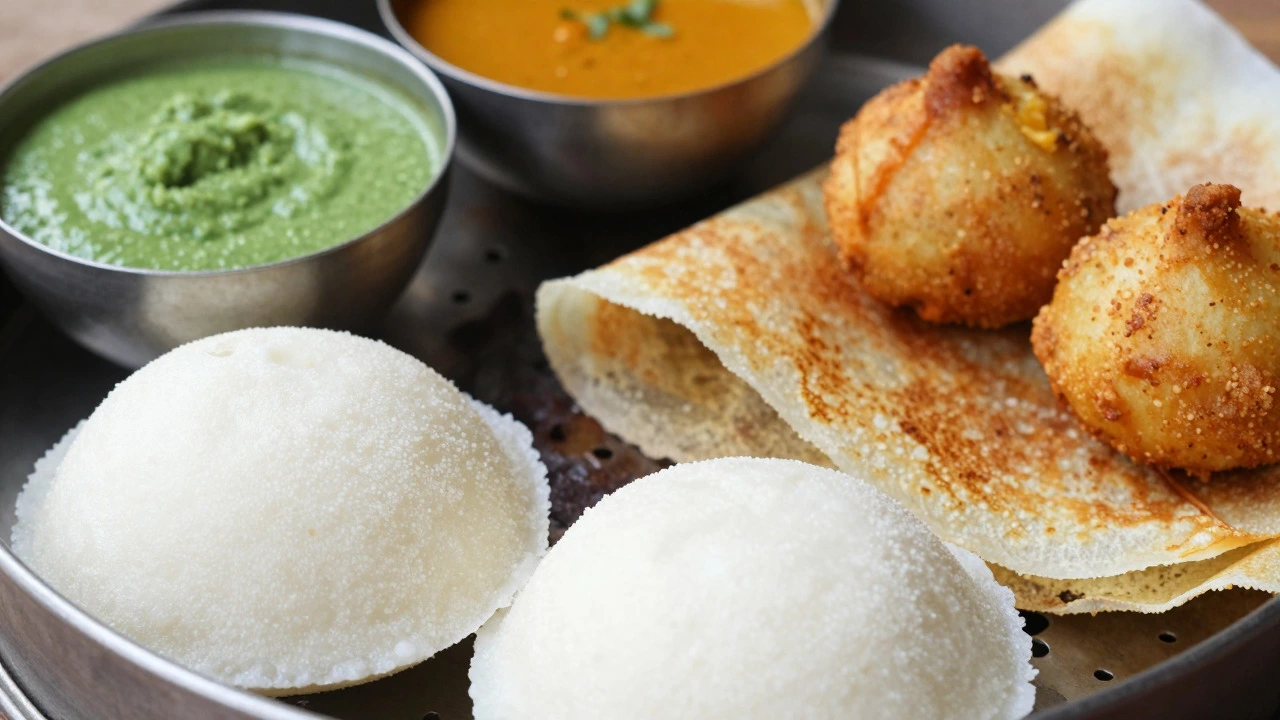
Idli is a soft, fluffy, steamed cake made from fermented rice and lentil batter. It is bland on its own, which is exactly why it works so well. You eat it with chutneys and sambar. Sambar is a tangy, spicy stew made with tamarind, vegetables, and dal. The contrast between the mild idli and the robust flavors of the accompaniments is perfect. Because idlis are steamed, they require no oil, making them a healthier option compared to fried alternatives.
Then there is Dosa is a thin, crispy pancake made from the same fermented batter, spread on a hot griddle. While idlis are soft, dosas offer crunch. A plain masala dosa is stuffed with spiced potatoes, but you can also find variations like set dosa (thicker and softer) or paper dosa (thin as tissue). In Tamil Nadu and Kerala, eating dosa for breakfast is as routine as drinking coffee.
Don't forget Vada is a deep-fried savory donut made from ground urad dal. It provides the necessary crunch and richness to balance the meal. Together, idli, dosa, and vada form the holy trinity of South Indian mornings. They are cheap, filling, and available at every tea stall and hotel from Bangalore to Hyderabad.
The Northern Staple: Parathas and Rotis
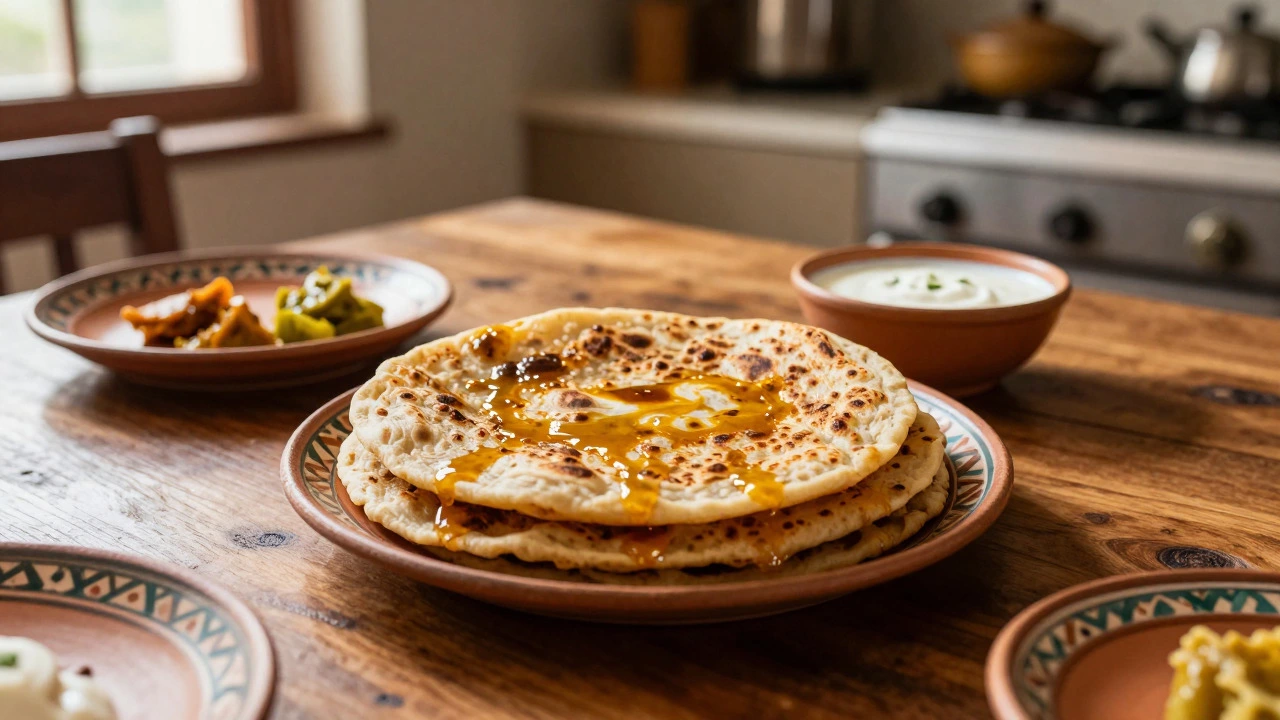
Cross the Vindhyas into North India, and the menu changes drastically. Here, wheat is the dominant grain, not rice. The climate is cooler, and people prefer heartier, warmer meals to start their day. The most common breakfast here is the Paratha is a layered flatbread made from whole wheat flour, often stuffed with vegetables, meat, or cheese.
Aloo paratha (stuffed with spiced mashed potatoes) is the gold standard. It is cooked on a tawa (griddle) with ghee or oil until golden brown and crisp. You serve it with a bowl of dahi (yogurt), pickles, and sometimes a cup of chai. The yogurt helps balance the heaviness of the fried bread and aids digestion. In Punjab and Haryana, you might also see makki di roti (cornmeal flatbread) served with sarson da saag (mustard greens), though this is more of a winter dish.
In urban centers like Delhi and Chandigarh, time is scarce. Many office-goers skip the elaborate paratha for simpler options like butter toast with jam, cornflakes with milk, or even leftover dinner. However, on weekends, the smell of frying parathas fills almost every household. It is a comfort food that connects generations.
Western India: Poha and Khichdi
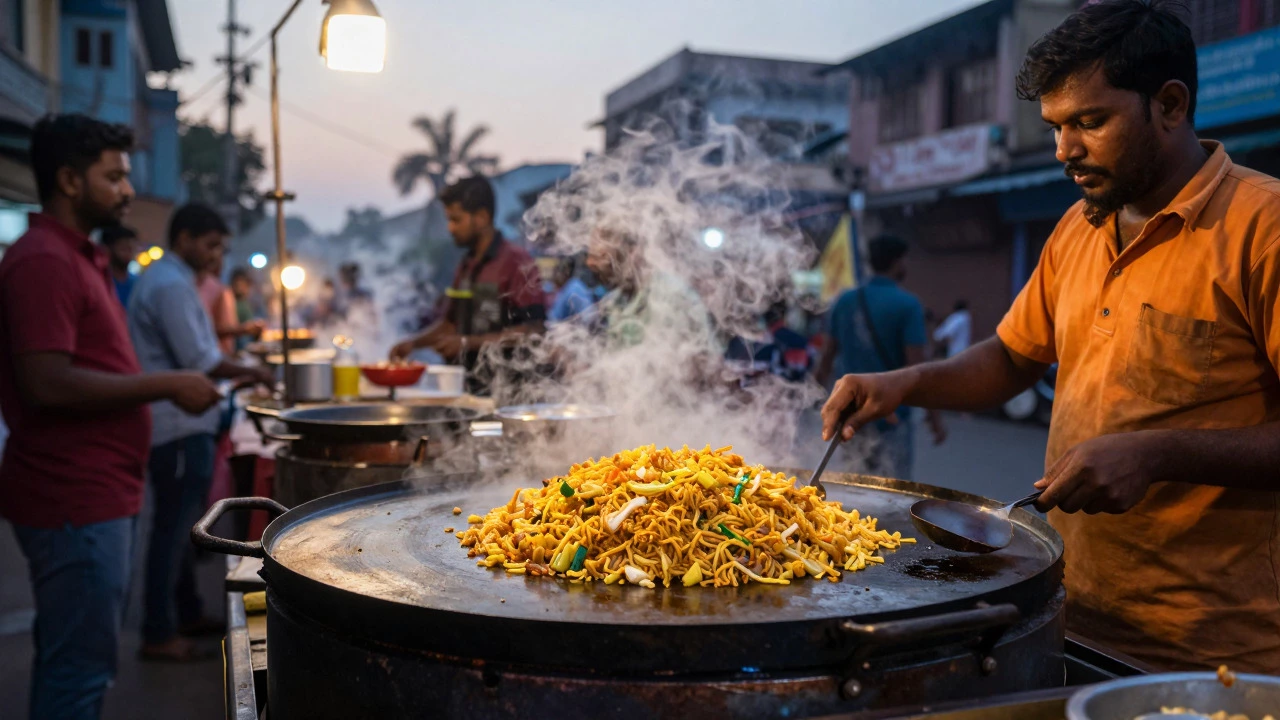
Maharashtra and Gujarat have their own unique take on morning meals. In Maharashtra, particularly in Mumbai and Pune, Poha is a dish made from flattened rice flakes, tempered with mustard seeds, curry leaves, onions, and turmeric. It is incredibly popular because it is quick to prepare, affordable, and widely available on streets. Street vendors sell poha topped with peanuts, sev (crunchy chickpea noodles), and lemon wedges. It is light yet satisfying, perfect for the humid coastal climate.
In Gujarat, the focus shifts slightly towards Khichdi is a comforting porridge-like dish made by cooking rice and lentils together with spices. Unlike the heavy khichdi served during festivals or illness, breakfast khichdi is lighter, often prepared with moong dal (yellow lentils) and a touch of ghee. It is frequently paired with papadum and pickle. Gujarati breakfasts also include uttapam (a thick pancake topped with vegetables) and dhokla (steamed fermented cakes made from gram flour), which share similarities with South Indian idli but have a distinct tangy flavor due to the use of semolina or besan.
Eastern India: Parathas, Luchi, and Chira
In West Bengal and Odisha, breakfast is often sweet and savory combined. Luchi is a deep-fried white flour ball, similar to a puri but softer. It is typically eaten with shukto (a bitter vegetable stew) or aloo dum (spiced potato curry). The texture of luchi is airy and delicate, contrasting with the rich, oily curries.
Another staple is Chira is flattened rice, similar to poha but finer. Bengalis eat chira in two ways: dry, mixed with vegetables and spices (cholar bhaja), or wet, soaked in milk with sugar and fruits (chirer payesh). The choice depends on whether you want a savory kick or a sweet start to the day. In rural areas, you might also find pitha, small rice cakes steamed in banana leaves, especially during the winter months.
Why Fermentation Matters in Indian Breakfasts
You might notice a pattern: many of India's most common breakfasts rely on fermentation. Idli, dosa, dhokla, and even some varieties of bread use this ancient technique. Why? Fermentation serves several purposes:
- Digestibility: Breaking down starches and proteins makes the food easier to digest, preventing bloating and lethargy.
- Nutritional Boost: Fermentation increases the bioavailability of nutrients like B vitamins and minerals.
- Shelf Life: Fermented batter lasts longer than fresh batter, allowing families to prepare large batches that last for days.
- Flavor Complexity: The sourness developed during fermentation adds depth to otherwise mild ingredients like rice and lentils.
This reliance on fermentation reflects a deep understanding of nutrition long before modern science confirmed its benefits. It is a practical solution for tropical climates where refrigeration was once unavailable.
| Dish | Primary Region | Main Ingredients | Preparation Method | Health Profile |
|---|---|---|---|---|
| Idli | South India | Rice, Urad Dal | Fermented, Steamed | Low fat, high protein, easy digestion |
| Dosa | South India | Rice, Urad Dal | Fermented, Pan-fried | Crunchy, moderate fat depending on oil used |
| Poha | West/Central India | Flattened Rice | Sautéed/Tempered | Light, low calorie, quick energy |
| Paratha | North India | Whole Wheat Flour | Kneaded, Pan-fried with Ghee/Oil | High carb, hearty, filling |
| Luchi | East India | White Maida Flour | Deep Fried | High fat, indulgent, best in moderation |
Modern Trends: The Rise of Quick Breakfasts
As Indian cities grow faster and work hours extend, traditional breakfast habits are evolving. Young professionals in metros like Bangalore, Mumbai, and Delhi often lack the time to ferment batter or knead dough. This has led to a surge in convenience foods.
Oats, muesli, and protein shakes are becoming common in gyms and corporate cafeterias. Instant oatmeal packets are sold alongside traditional idli mixes. However, home cooks are adapting too. Pressure cookers have revolutionized idli preparation, reducing cooking time significantly. Ready-made dosa batters are available in supermarkets nationwide, eliminating the need for overnight soaking and grinding.
Despite these changes, the core preference remains rooted in local traditions. Even when busy, many Indians still crave the taste of home-cooked poha or a simple paratha. The convenience factor is changing *how* we prepare these foods, but not necessarily *what* we choose to eat.
How to Choose Your Indian Breakfast
If you are looking to incorporate Indian breakfast ideas into your routine, consider your health goals and taste preferences:
- For Weight Loss: Stick to idli with sambar and coconut chutney. Avoid adding extra oil to dosa. Poha is also a great low-calorie option.
- For High Energy: Go for parathas with curd or khichdi with ghee. These provide sustained energy for physically demanding days.
- For Digestive Health: Fermented foods like idli, dosa, and dhokla are excellent choices. They promote gut health and reduce acidity.
- For Speed: Poha and instant oats are the quickest. You can prepare poha in under 10 minutes if you have pre-chopped vegetables ready.
Remember, variety is key. Rotate between regions to ensure you get a wide range of nutrients. Try a South Indian idli one day, a North Indian paratha the next, and a Western poha on the weekend. Your body-and your taste buds-will thank you.
Is idli healthier than dosa?
Yes, generally speaking. Idli is steamed, meaning it contains no added oil or fat. Dosa is pan-fried, so while it uses minimal oil, it still has more calories than idli. Both are made from the same fermented batter, so their nutritional base is similar, but the cooking method makes idli the lighter option.
Can I eat Indian breakfast every day?
Absolutely. Traditional Indian breakfasts are balanced and nutritious. Idli, dosa, poha, and parathas provide a good mix of carbohydrates, proteins, and fats. Just be mindful of portion sizes and the amount of oil used in cooking. Adding vegetables and legumes ensures you get enough fiber and micronutrients.
What is the most popular breakfast in Mumbai?
Poha is arguably the most iconic and widely consumed breakfast in Mumbai. It is sold by street vendors everywhere and is a staple in Marathi households. However, vada pav (a potato-filled bun with chili sauce) is also extremely popular as a quick, on-the-go snack that many treat as breakfast.
Is paratha bad for weight loss?
Not necessarily, but it depends on how it's made. Whole wheat parathas cooked with minimal oil and served with curd can be part of a weight loss diet. They are filling and keep you satiated for longer. Avoid refined flour (maida) parathas and excessive ghee, as these add empty calories.
Do Indians drink coffee or tea for breakfast?
Both are popular, but regional preferences differ. Tea (chai) is universally consumed across India, especially in the north and west. Coffee is dominant in South India, particularly Karnataka, Kerala, and Tamil Nadu, where filter coffee is a cultural institution. Many people enjoy both, depending on the occasion.