Find Your Perfect Indian Sweet Match
Select your preferred texture:
Choose the option that describes what you are craving right now.
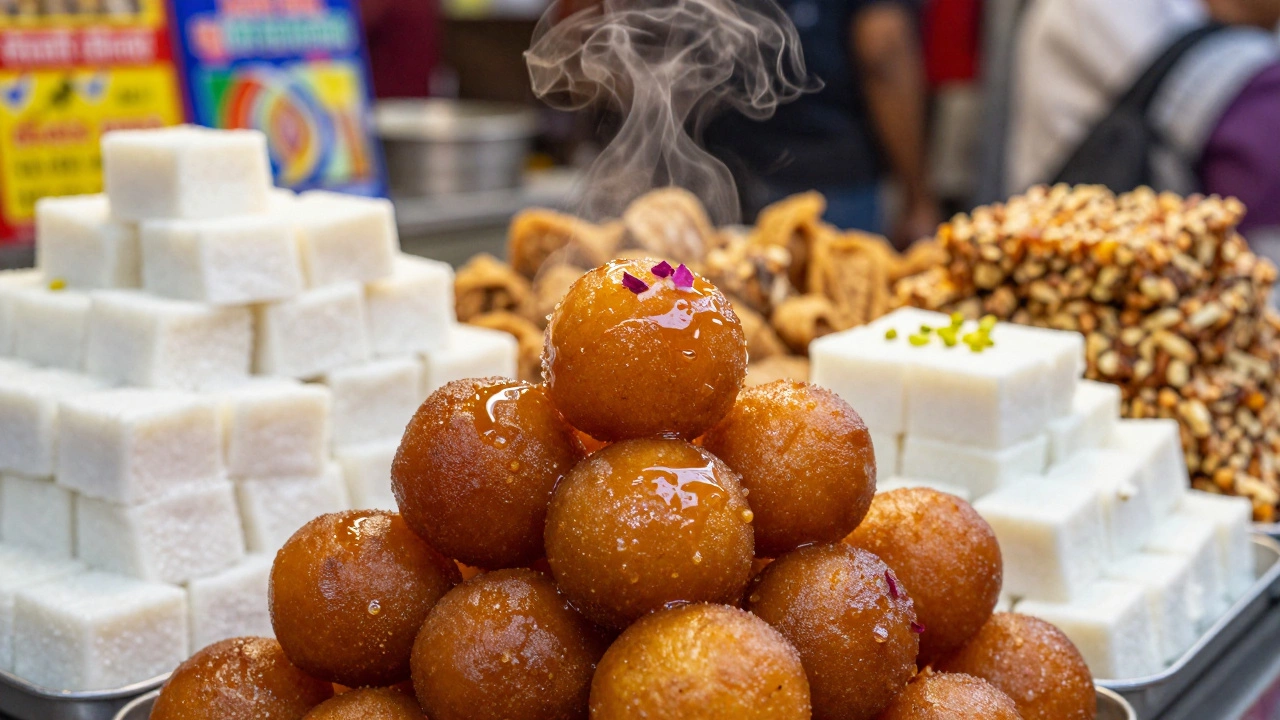
Walk into any sweet shop in Mumbai, Delhi, or Kolkata, and you are hit by a wall of color. There are pyramids of golden Gulab Jamun, soft, fried milk dumplings soaked in rose-flavored sugar syrup, trays of saffron-infused white squares, and boxes of crispy, nutty bars. If you ask an Indian what their national delicacy is, they might pause. Why? Because India does not have one single "delicacy." It has hundreds.
The concept of food in India is deeply tied to geography, religion, and season. What is considered a sacred offering in the north might be a savory snack in the south. However, when people outside India ask about the country's signature treat, they are usually looking for its most famous exports: its sweets, known collectively as Mithai. These aren't just desserts; they are cultural artifacts wrapped in sugar, ghee, and spices.
The Golden Standard: Gulab Jamun
If there is one sweet that represents India to the rest of the world, it is Gulab Jamun. You cannot talk about Indian delicacies without starting here. These deep-fried balls made from reduced milk solids (khoya) and flour are soaked in a warm, fragrant sugar syrup infused with cardamom and rose water.
The magic of a good Gulab Jamun lies in its texture. It should be spongy on the inside, soft enough to melt in your mouth, but firm enough to hold its shape. The syrup should penetrate the center without making it soggy. In my kitchen in Bristol, I often find that British milk behaves differently than Indian milk, so adjusting the ratio of khoya to semolina is key. Too much flour makes them hard; too little makes them crumble. The goal is a golden-brown exterior that puffs up slightly in the oil before being submerged in the syrup.
- Key Ingredient: Khoya (reduced milk solids) or Milk Powder
- Flavor Profile: Sweet, floral, warm spice notes
- Best Served: Warm, never cold
The Royal Treat: Kheer and Payesh
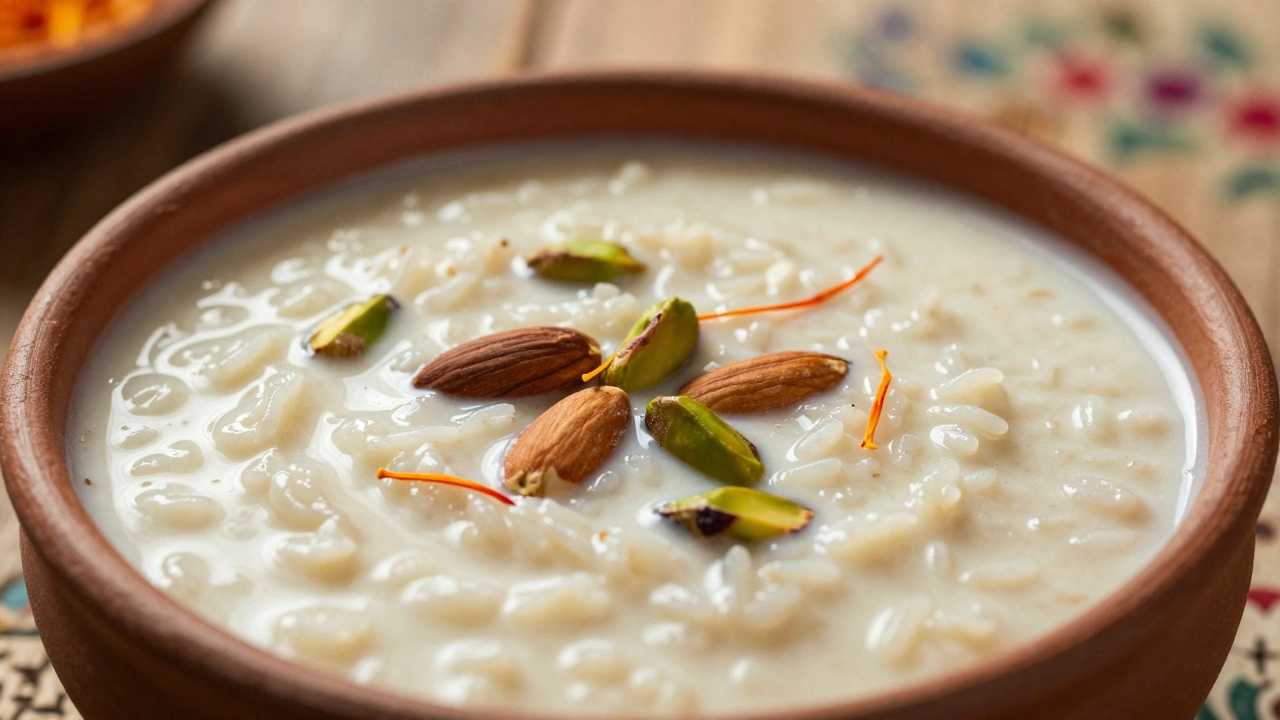
While Gulab Jamun is the king of fried sweets, Kheer is the queen of comfort foods. Known as Payesh in Bengal and Sheer Kurma in Hyderabad, this rice pudding is a staple at weddings and festivals across the subcontinent. It is deceptively simple: rice, milk, sugar, and nuts, simmered for hours until the milk reduces and thickens.
The secret to authentic Kheer is patience. You cannot rush the reduction process. As the milk boils down, the proteins break down, creating a creamy, custard-like consistency that no amount of cream can replicate. Traditionally, it is flavored with cardamom, saffron strands, and garnished with slivered almonds and pistachios. In winter, it is served hot, often paired with savory snacks like pakoras. In summer, it is chilled and eaten as a refreshing dessert.
Unlike Western puddings that rely on cornstarch or eggs for thickness, Kheer relies entirely on the natural starches of the rice and the reduction of the milk. This gives it a distinct, rich mouthfeel that is uniquely Indian.
Festive Favorites: Ladoo and Barfi
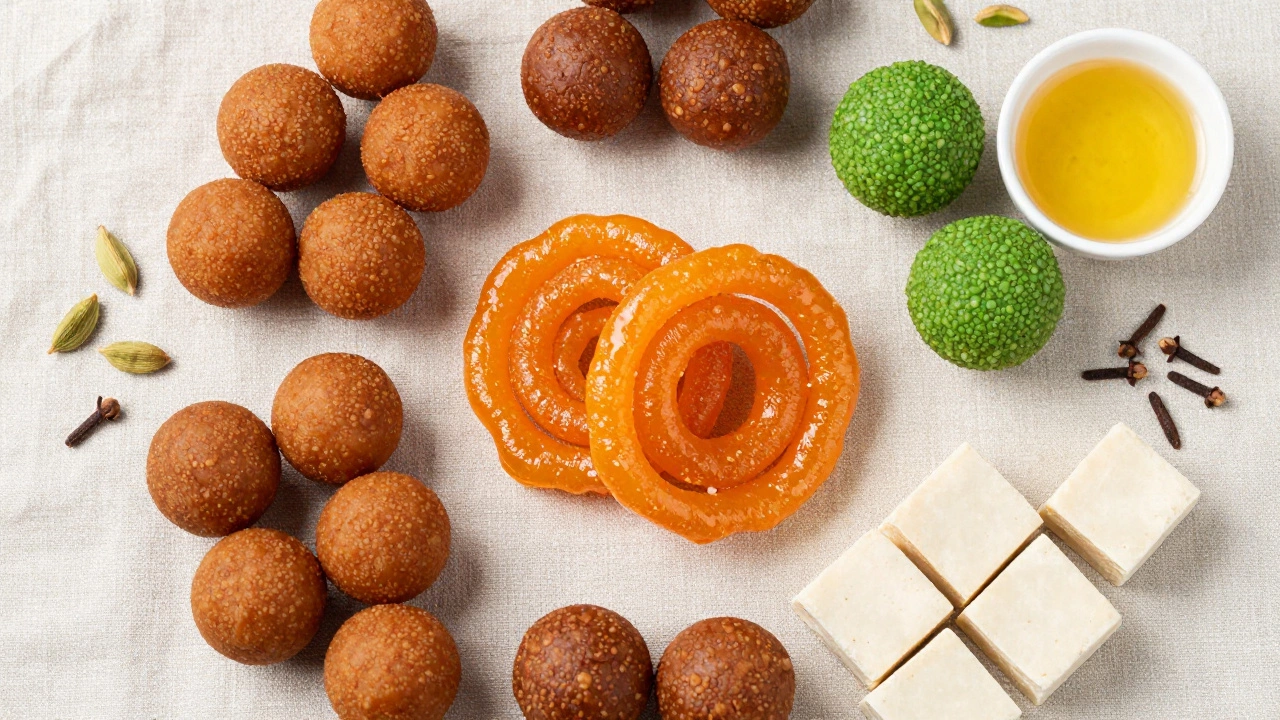
When it comes to celebrations, Indians reach for two specific types of sweets: Ladoos and Barfi. Ladoos are spherical balls made from various bases-gram flour (besan), wheat flour, semolina (suji), or even coconut. They are dense, energy-rich, and travel well, which is why they are packed in boxes for Diwali gifts.
Besan Ladoo, made from roasted gram flour, ghee, and sugar, is perhaps the most iconic. The roasting process brings out a nutty, caramelized flavor that pairs perfectly with the richness of the ghee. On the other hand, Barfi is a fudge-like sweet made by reducing milk until it forms a paste, then cutting it into squares. Pista Barfi (pistachio fudge) and Kaju Katli (cashew fudge) are premium varieties often seen at high-end events.
| Sweet Name | Main Ingredient | Texture | Occasion |
|---|---|---|---|
| Gulab Jamun | Khoya/Milk Solids | Spongy, Syrupy | Daily Dessert, Parties |
| Kheer | Rice, Milk | Creamy, Pudding-like | Weddings, Winter Meals |
| Besan Ladoo | Gram Flour, Ghee | Dense, Crumbly | Festivals (Diwali) |
| Jalebi | Batter, Sugar Syrup | Crispy, Chewy | Breakfast, Snacks |
The Spiral Sensation: Jalebi
No discussion of Indian street food delicacies is complete without mentioning Jalebi. These bright orange, spiral-shaped treats are made from a fermented batter that is poured in circular motions into hot oil. Once fried to a crisp, they are immediately dipped in sugar syrup.
Jalebis are best eaten fresh off the fryer. The contrast between the crunchy outer shell and the soft, chewy interior is addictive. In North India, they are often paired with dahi vada (yogurt-soaked lentil dumplings) for breakfast. In South India, a similar version called Mirchi Bajji (chili fritters) might accompany them, adding a spicy kick to the sweetness.
Making Jalebi at home is tricky because the batter needs the right fermentation level. If it’s too thin, the spirals dissolve in the oil. If it’s too thick, they don’t puff up. Using leftover dosa batter is a common hack, but traditionalists insist on a dedicated jalebi batter made from maida (all-purpose flour) and yogurt, fermented overnight.
Regional Variations: From South to North
India’s diversity means its sweets vary drastically by region. In the South, coconut and jaggery (unrefined cane sugar) play a bigger role. Payasam is the South Indian version of Kheer, often made with vermicelli or broken wheat instead of rice, and topped with cashews fried in ghee. Mysore Pak from Karnataka is a legendary sweet made from gram flour, ghee, and sugar. It is so rich in ghee that it literally melts in your mouth, leaving a greasy residue on your fingers-a sign of quality, not messiness.
In the West, particularly Gujarat and Rajasthan, dairy-based sweets dominate. Mohanthal and Soan Papdi are flaky, layered sweets that resemble shredded pastry. Soan Papdi is incredibly light and airy, dissolving instantly on the tongue. It is often flavored with rose water or kewra water, giving it a delicate floral aroma.
In the East, specifically Bengal and Odisha, sweets are more subtle. Rasgulla, the spongy white ball soaked in light sugar syrup, originated here. Unlike Gulab Jamun, Rasgullas are not fried. They are boiled in milk, which gives them a unique elasticity. The debate over whether Rasgullas belong to Bengal or Odisha is fierce, but the taste remains consistent: mild, milky, and refreshing.
Why Indian Sweets Are Different
You might notice that Indian sweets are intensely sweet. This isn't an accident. Historically, sugar was a luxury item, and sweets were reserved for special occasions. Over time, the palate adapted to higher levels of sweetness. Additionally, many Indian sweets use Jaggery instead of refined white sugar. Jaggery has a deeper, molasses-like flavor and contains minerals like iron and magnesium, making it a slightly healthier alternative, though still high in calories.
Another key difference is the use of Ghee (clarified butter). Ghee has a high smoke point and a distinct nutty aroma that enhances the flavor of sweets. It also acts as a preservative, allowing sweets like Ladoos to last for weeks without refrigeration. This was crucial in ancient times when there was no electricity for cooling.
Modern Twists on Traditional Recipes
Today, chefs across India and abroad are experimenting with these classics. Dark chocolate Gulab Jamuns, mango-flavored Kheer, and alcohol-infused Jalebis are becoming popular in urban cafes. In Bristol, I’ve seen fusion versions where Gulab Jamun is used as a topping for ice cream sundaes, pairing the warm, spiced dough with cold vanilla bean ice cream.
However, purists argue that these innovations dilute the essence of the original recipes. There is a reason these sweets have survived for centuries: they are balanced. The sweetness is cut by the acidity of the yogurt in some dishes, or the heat of spices like cardamom and cloves. When you add chocolate or fruit, you risk overwhelming that balance.
How to Store Indian Sweets
If you plan to make or buy these delicacies, storage is critical. Most Indian sweets contain dairy, which spoils quickly in warm climates. In the UK, where temperatures are cooler, you can keep them at room temperature for 1-2 days if they are sealed properly. For longer storage, refrigeration is necessary, but note that cold temperatures can harden ghee-based sweets like Barfi and Ladoo.
To restore their texture after refrigeration, let them sit at room temperature for 30 minutes before eating. Avoid freezing sweets with high moisture content like Gulab Jamun, as the syrup can separate upon thawing. Dry sweets like Soan Papdi freeze well and can be stored for months.
Conclusion: Finding Your Favorite
There is no single "delicacy" of India. There is only the vast, diverse landscape of flavors that define the country. Whether you prefer the richness of Kheer, the crunch of Jalebi, or the density of Besan Ladoo, each sweet tells a story of its region. Start with one, explore another, and soon you will understand why these treats are central to Indian culture.
What is the most famous sweet in India?
Gulab Jamun is widely considered the most famous Indian sweet globally. It is recognized for its soft, spongy texture and sweet, rose-cardamom syrup. However, regional favorites like Rasgulla in the East and Mysore Pak in the South are equally iconic within their respective areas.
Are Indian sweets vegetarian?
Yes, the vast majority of traditional Indian sweets are strictly vegetarian. They are primarily made from dairy products (milk, cream, ghee), flour, sugar, and nuts. Some sweets may contain gelatin or egg whites in modern variations, but traditional recipes do not.
What is the difference between Kheer and Rice Pudding?
Kheer is thicker and richer than typical Western rice pudding. It uses whole milk that is reduced significantly, rather than diluted with water. It is also flavored with Indian spices like cardamom and saffron, and garnished with nuts, whereas Western pudding often uses cinnamon or vanilla.
Can I make Indian sweets without ghee?
You can substitute ghee with vegetable oil or butter, but the flavor and texture will change. Ghee provides a distinct nutty aroma and a smooth mouthfeel that oil cannot replicate. For vegan versions, coconut oil and plant-based milk can be used, resulting in a different but delicious profile.
Which Indian sweet is best for beginners to make?
Kheer is the easiest for beginners because it requires no frying or complex techniques. Simply simmer rice in milk until thickened. Besan Ladoo is also relatively straightforward, requiring only roasting of flour and mixing with sugar and ghee.