Vegetarian Cheese: Best Homemade Paneer and Indian Dairy Alternatives
When people talk about vegetarian cheese, a dairy-based cheese made without animal rennet, commonly found in Indian cuisine as paneer. Also known as Indian cottage cheese, it's the go-to protein for millions who avoid meat but still crave rich, chewy textures in their meals. Unlike Western cheeses that rely on microbial enzymes, Indian vegetarian cheese is made by curdling hot milk with lemon juice, vinegar, or yogurt—no animals involved, just simple science and patience.
This is why paneer, a fresh, unaged cheese made by curdling milk with acid. Also known as Indian cottage cheese, it's the backbone of dozens of home-cooked meals shows up in so many recipes. It’s firm enough to grill, soft enough to crumble, and absorbs spices like a sponge. You’ll find it in paneer tikka, palak paneer, mattar paneer, and even desserts like rasgulla—where milk is transformed again, this time into syrup-soaked sponges. The process is the same: heat milk, add acid, strain, press. No fancy equipment. No long aging. Just milk, heat, and time.
And it’s not just about taste. Making paneer at home gives you control—over texture, salt, and freshness. Store-bought versions often have additives or sit too long. Homemade paneer? It’s milky, slightly sweet, and holds its shape when you fry it. That’s why recipes like best acid for making paneer matter. Lemon juice gives a clean tang, vinegar is reliable, citric acid is precise. Each changes the final product a little. And if you’ve ever wondered how much paneer you get from a gallon of milk, it’s not magic—it’s math. About 200 to 250 grams, depending on fat content and how hard you press it.
Vegetarian cheese in India doesn’t stop at paneer. You’ll find chhena in Bengal, used for sweets like rasgulla and chhena poda. In some parts of South India, people make soft cheese from buttermilk or whey. Even yogurt, when strained thick, becomes a cheese-like base for dips and spreads. These aren’t imports. They’re ancient, regional, and deeply tied to how Indian households use every drop of milk.
That’s why the posts below cover everything you need: how to fix crumbly paneer, why your batter won’t ferment right, how much milk turns into cheese, and which acids give you the best results. You’ll find tips for making paneer that doesn’t fall apart in curry, how to store it so it stays soft, and why skipping the press ruins the texture. No fluff. Just what works.
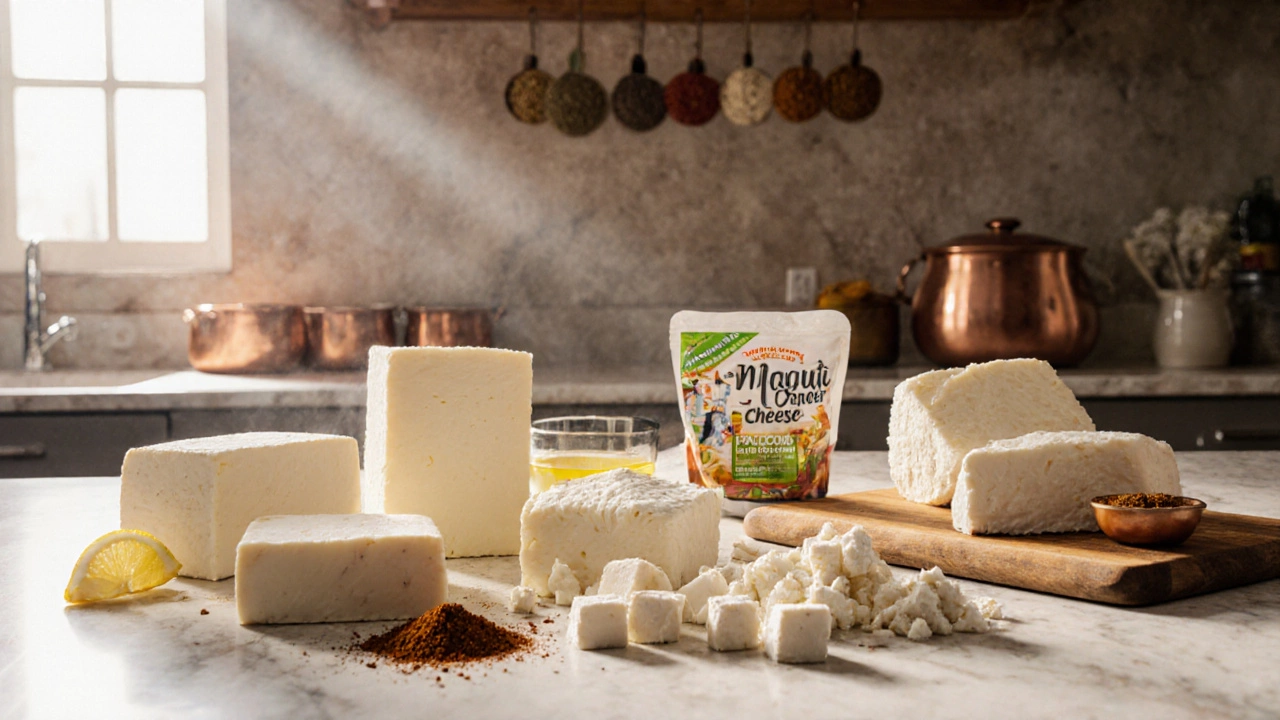
Best Cheese Substitutes for Paneer: A Practical Guide
Discover the top cheese alternatives for paneer, how to prep them, and which dishes they shine in-plus a handy comparison table and FAQs.
Read More