Soft Indian Flatbread: Types, Tips, and Best Recipes
When you think of soft Indian flatbread, a broad category of unleavened or leavened breads made from wheat flour, water, and sometimes milk or yogurt, essential to everyday meals across India. Also known as roti, chapati, or phulka, it’s the quiet hero of every Indian plate—whether paired with dal, curry, or just a smear of ghee. But not all flatbreads are the same. The difference between a simple roti, a thin, whole wheat bread cooked on a dry griddle, traditionally eaten in North and Central India, and a rich, buttery naan, a leavened bread baked in a tandoor, often brushed with ghee or garlic, is huge. One is everyday fuel. The other is a weekend treat. And then there’s paratha, a layered, often stuffed flatbread that’s pan-fried for crispness and softness in one bite—a breakfast favorite from Punjab to Kerala.
What makes a flatbread soft isn’t just the recipe. It’s the kneading, the resting, the heat, and even the water temperature. Too much flour and it turns tough. Not enough rest and it won’t puff. Too hot a pan and it burns before it softens. You’ll find posts here that break down exactly how to fix common problems—like why your roti doesn’t puff, or why your naan turns chewy instead of pillowy. Some recipes use milk instead of water for extra tenderness. Others rely on yogurt or even a touch of sugar to feed the yeast. And if you’ve ever tried making paneer at home, you already know how milk quality affects texture—same principle applies here. The same milk that turns into creamy paneer can also make your flatbread richer and softer.
These aren’t just breads. They’re tools. You wrap your dal in roti. You tear naan to scoop up butter chicken. You fold paratha around spiced potatoes for a quick snack. They’re the canvas for India’s bold flavors. And if you’ve ever wondered why some flatbreads stay soft for days while others go stale in hours, the answer lies in fermentation, fat content, and how they’re stored. The posts below cover everything from the science of fermentation in dosa batter (yes, it’s related) to how to use broken milk to make paneer—because in Indian kitchens, nothing goes to waste. Whether you’re a beginner trying your first chapati or a cook who’s made hundreds but still can’t get the perfect puff, you’ll find practical fixes, real-life tips, and no-nonsense advice here. No fluff. Just results.
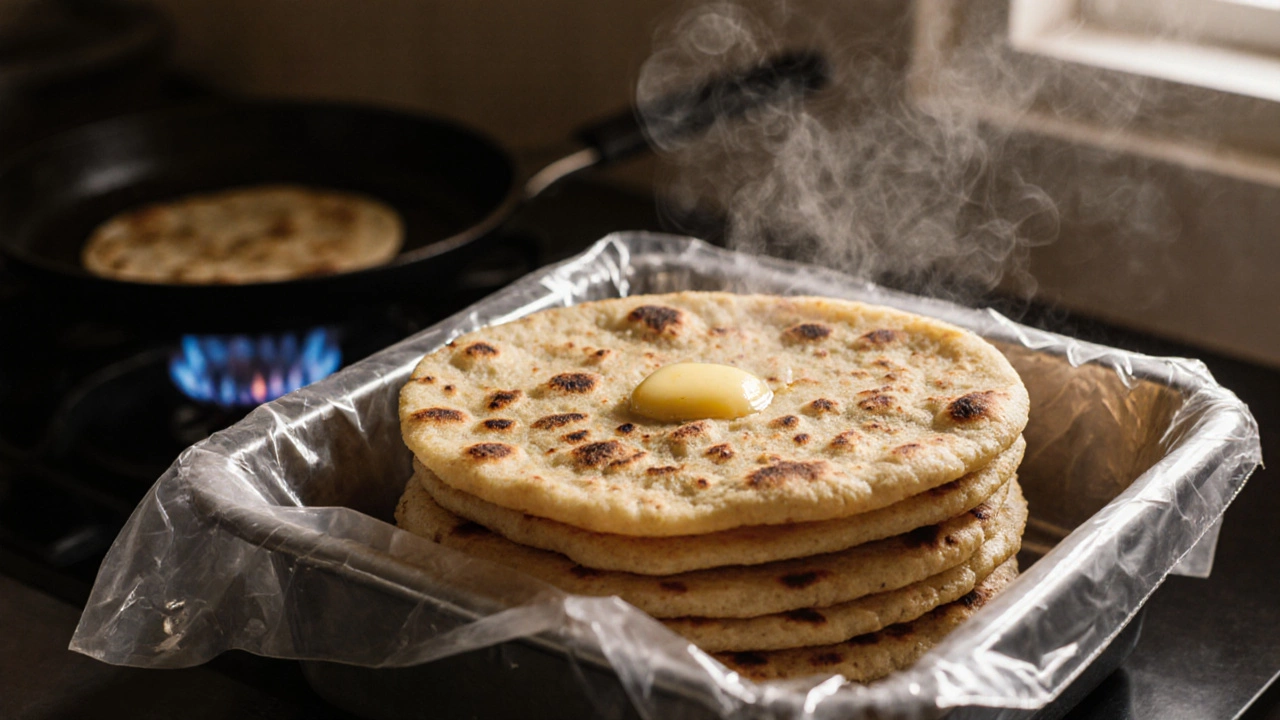
How to Keep Roti Soft for Hours - Proven Tips and Tricks
Learn the exact steps, ingredients and storage tricks to keep roti soft for hours, with easy reheating tips and common mistakes to avoid.
Read More