Soak Paneer: Why It Matters and How to Get It Right
When you make paneer, a fresh, unaged Indian cheese made by curdling milk with acid. Also known as Indian cottage cheese, it's the star of dishes like paneer tikka, palak paneer, and mattar paneer. But if you skip one simple step—soaking paneer—you're risking dry, chewy, flavorless bites. Soaking isn't optional. It's what turns hard cheese into tender, creamy morsels that soak up spices like a sponge.
Why does this work? When paneer is pressed, it loses moisture and tightens up. That’s fine if you’re frying it straight away, but if you’re adding it to a curry, stew, or gravy, that dryness becomes a problem. Soaking it in warm water for 10 to 15 minutes rehydrates the curds, letting them relax and absorb flavor. It’s the same reason you soak dried beans before cooking—they swell, soften, and become more digestible. Think of soaking paneer like giving it a bath before it goes into your curry. Without it, your paneer stays stiff. With it, it melts into the sauce like it was meant to be there.
And it’s not just about texture. The water also washes away any leftover sourness from the acid used to curdle the milk—whether it’s lemon juice, vinegar, or yogurt. That slight tang can throw off the balance of your dish. A quick soak neutralizes it, leaving clean, milky flavor behind. You’ll notice the difference in every bite. Some people skip this step because they think it’s extra work. But it takes less time than boiling water. And it’s the difference between a good curry and a great one.
Don’t use cold water. Don’t soak for hours. And don’t skip the salt. A pinch of salt in the soaking water helps the paneer hold its shape and adds a subtle depth. Use warm—not hot—water. Boiling water will melt it. Ice water won’t help it absorb anything. Ten minutes is enough. Fifteen if it’s been refrigerated. Drain it well before using, or your curry will get watery.
You’ll find this trick in almost every professional Indian kitchen. And if you look at the posts below, you’ll see it’s tied to other key ideas: how to make paneer from scratch, which acid gives the best texture, and how much paneer you actually get from a gallon of milk. These aren’t random recipes. They’re all part of the same chain: milk → curd → press → soak → cook. Skip one link, and the whole thing falls apart.
Below, you’ll find real fixes, real tips, and real stories from people who learned the hard way. No fluff. No theory. Just what works when you’re standing in your kitchen, wondering why your paneer tastes like chalk. This is the kind of detail that turns a good cook into a great one.
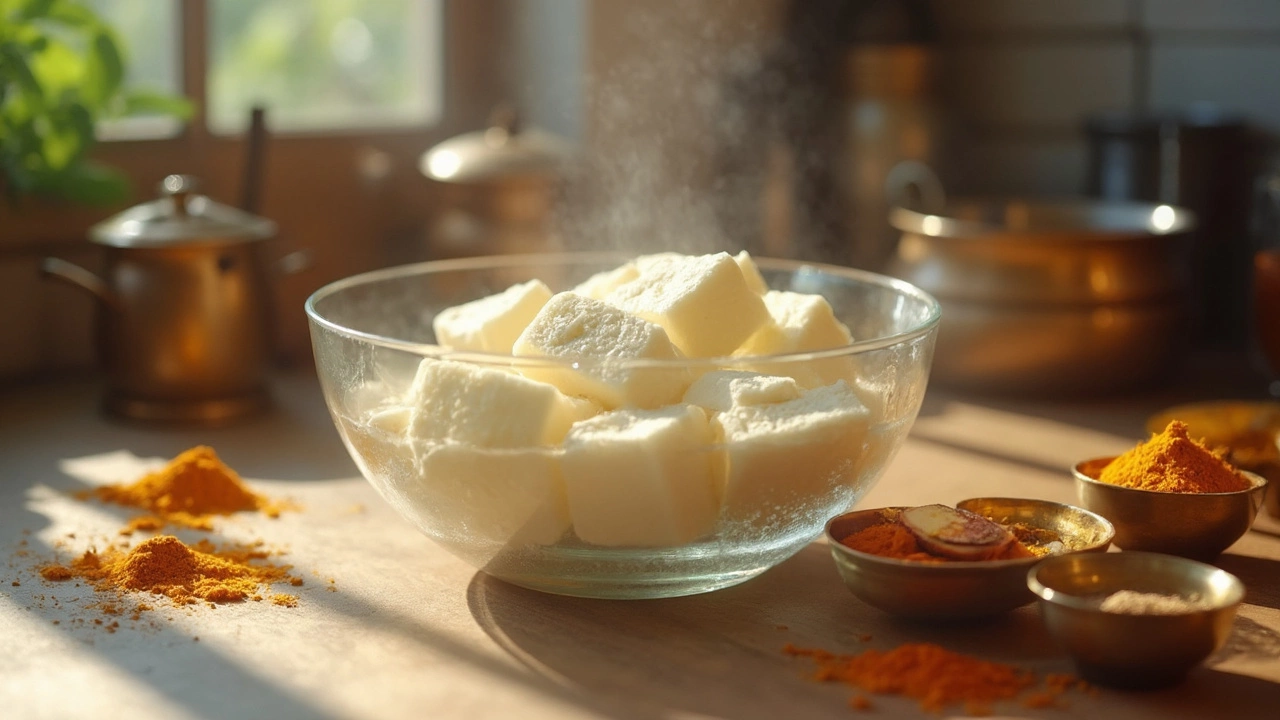
Why Soak Paneer Before Cooking? Simple Reasons You Shouldn't Skip This Step
Soaking paneer before cooking might sound unnecessary, but this simple step can completely change the texture and flavor of your dishes. Fresh or store-bought paneer often ends up rubbery or bland, and a quick soak makes it soft, juicy, and ready to absorb spices. This article explains why soaking matters, when to do it, and shares practical tips for perfect paneer every time. If you've ever wondered why your paneer tastes nothing like restaurant versions, you’ll find answers. Using science and kitchen tricks, we'll help you level up your homemade paneer game.
Read More