Macronutrient Split: Understand Carbs, Protein, and Fat in Indian Cooking
When you eat an Indian meal, you’re not just tasting spices—you’re consuming a mix of macronutrient split, the proportional breakdown of carbohydrates, proteins, and fats in your food. Also known as macro ratio, it determines how your body uses that meal for energy, repair, and satisfaction. Most Indian dishes are built around rice, roti, or lentils, which are rich in carbs, the body’s main fuel source, especially in traditional meals like idli or pulao. But they’re also paired with protein, from dals, paneer, chicken, or eggs—key for muscle health and staying full longer, and fat, often from ghee, coconut oil, or yogurt, which carries flavor and helps absorb nutrients.
Here’s the thing: a macronutrient split isn’t about cutting out your favorite foods. It’s about understanding what’s in them. Biryani? It’s mostly carbs from rice, protein from meat or paneer, and fat from ghee or yogurt-based raita. Dosa? The batter gives you carbs and a little protein from urad dal, while the oil you fry it in adds fat. Even something simple like dal and rice has a clear macro profile: carbs from rice, protein from lentils, and fat from tempering with ghee or oil. You don’t need to count every gram, but knowing these basics helps you tweak meals—swap white rice for brown, use less oil, or add more lentils—without losing taste.
People often think Indian food is too heavy on carbs or fat, but that’s only true if you’re eating it the same way every day. Look at the recipes here: you’ll find tips on making biryani lighter, dosa crispier with less oil, paneer with better yield from milk, and dal pairings that balance your plate. You’ll see how fermentation in dosa batter improves digestion, how soaking dal reduces bloating, and how choosing the right acid for paneer affects texture and nutrition. These aren’t just cooking tricks—they’re smart adjustments to your macronutrient split that keep meals delicious and aligned with how your body works.
Whether you’re cooking for yourself, your family, or guests from abroad, understanding this split lets you make better choices without giving up tradition. You can still enjoy gulab jamun, but now you know how to balance it with a protein-rich meal. You can still make butter chicken, but you’ll know how to cut back on cream without losing richness. The recipes below don’t just teach you how to cook—they show you how to eat smarter, one plate at a time.
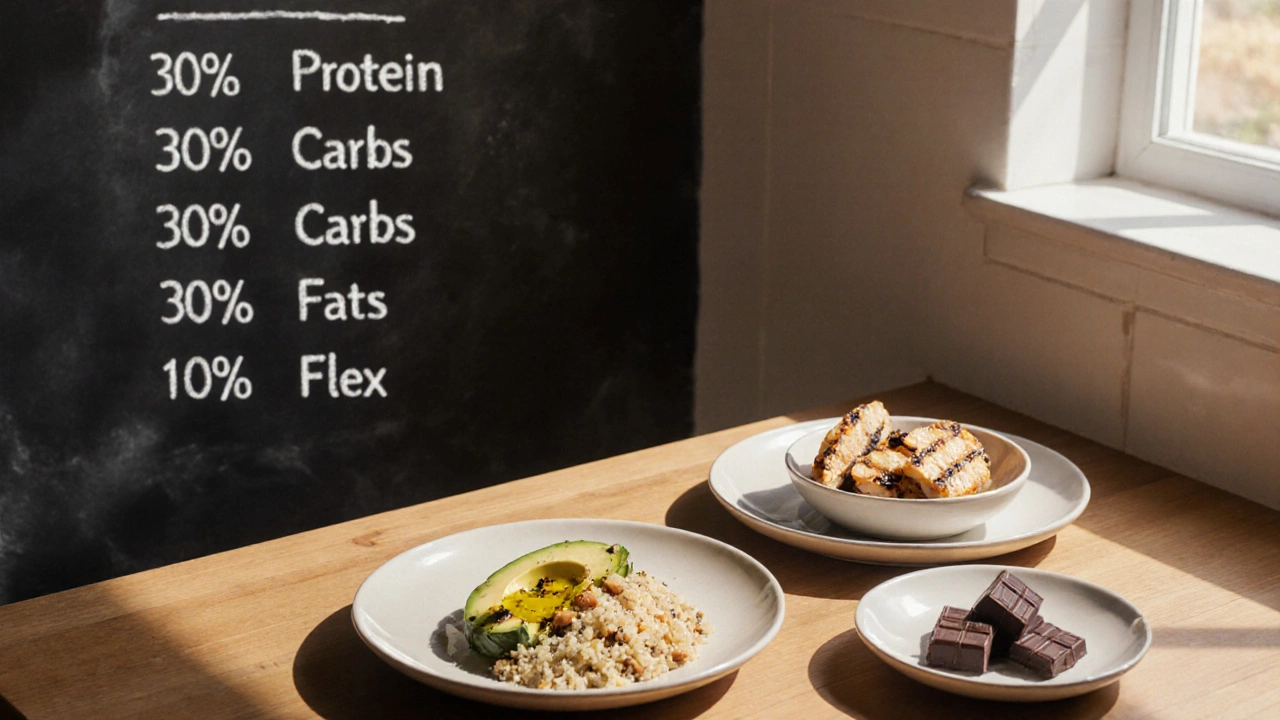
30/30/30 Rule for Weight Loss: How It Works and Indian Snack Ideas
Learn the 30/30/30 weight loss rule, calculate your macro goals, and enjoy Indian snack ideas that fit the plan for sustainable results.
Read More