Khoya Mithai: The Heart of Indian Dessert Culture
When you think of Khoya Mithai, a dense, solid form of reduced milk used to make traditional Indian sweets. Also known as mawa, it's the unsung hero behind some of India’s most loved desserts. It’s not just an ingredient—it’s the foundation. Made by slowly simmering milk until all the water evaporates and the solids thicken into a dough-like paste, khoya is the reason barfi melts in your mouth, peda stays soft, and gulab jamun soaks up syrup like a dream.
Khoya Mithai isn’t just about sweetness. It’s about tradition. In homes from Uttar Pradesh to Gujarat, families still make khoya the slow way—stirring milk in wide pans over low heat for hours. No shortcuts. No powdered substitutes. This isn’t a trend. It’s a ritual passed down through generations. And it shows. The texture, the flavor, the richness—you can’t fake it with store-bought versions. That’s why recipes for gulab jamun, deep-fried milk dumplings soaked in sugar syrup and barfi, a fudge-like sweet cut into squares and often flavored with cardamom or nuts always start with homemade khoya. Even in modern kitchens, people who care about taste know this: if the khoya’s off, the whole sweet falls apart.
It’s also tied to how milk is used in Indian cooking. Unlike Western desserts that rely on cream or butter, Indian sweets lean on milk’s natural sugars and proteins. That’s why you’ll find khoya in everything from festive treats during Diwali to everyday snacks after dinner. It’s not just dessert—it’s comfort. And it’s not just sweet. It’s cultural. When you bite into a piece of khoya-based mithai, you’re tasting history, patience, and a way of life that values slow, careful cooking.
What you’ll find below isn’t just a list of recipes. It’s a collection of real stories behind the sweets you love. From why some people swear by cow’s milk khoya over buffalo, to how fermentation and temperature affect texture, to why certain regions prefer rose water over saffron—these posts don’t just tell you how to make it. They show you why it matters.
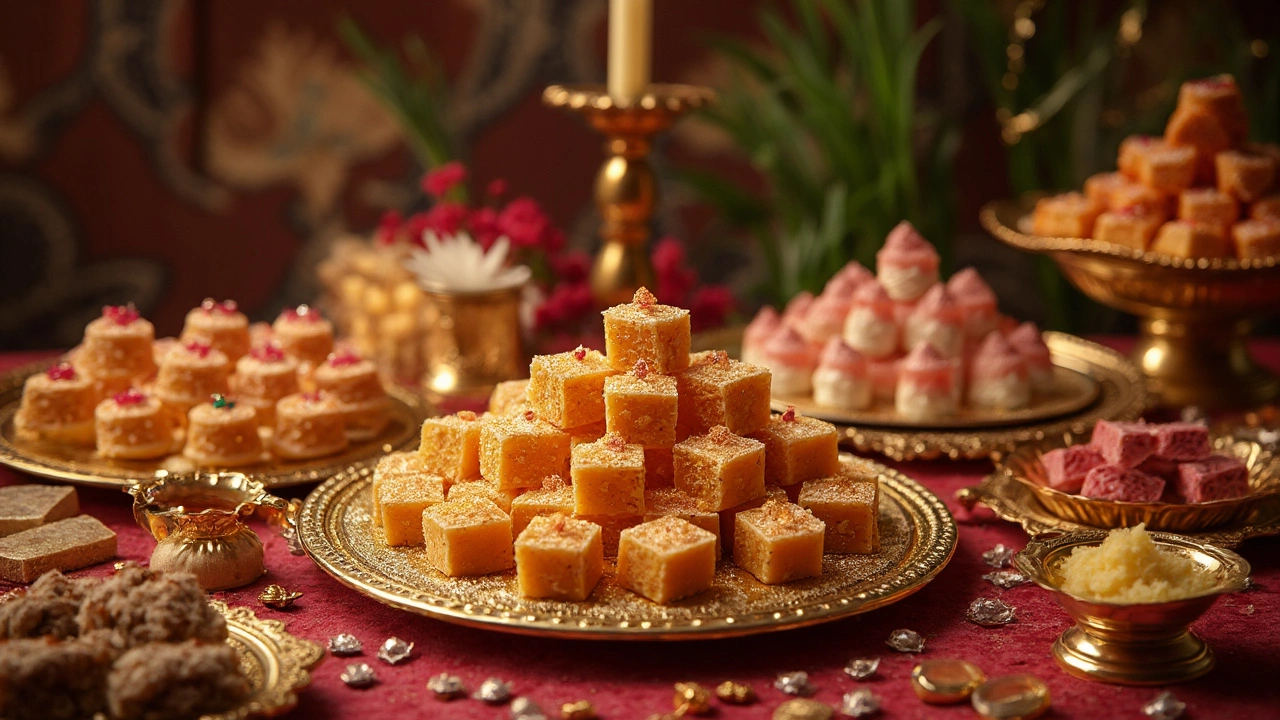
Discovering the Most Expensive Indian Sweet
Ever wondered which Indian sweet takes the crown for the most expensive one? Get ready to uncover the delightful and costly world of mithai where each sweet has a story to tell, especially when it comes with a hefty price tag. From rare ingredients to intricate preparation, learn what makes these sweets not just a treat for the taste buds but also a luxury. This article will guide you through the world of decadent Indian desserts, focusing on the priciest amidst this sugary diversity.
Read More