Jalebi: The Crunchy, Sweet Indian Dessert You Can't Skip
When you think of Indian sweets, jalebi, a bright orange, spiral-shaped fried dessert soaked in sugar syrup. Also known as jilapi, it’s the kind of treat that shows up at weddings, festivals, and street corners alike—crispy on the outside, syrupy inside, and impossible to ignore. It’s not just sugar and flour. Jalebi is made from fermented batter, deep-fried in hot oil, then dipped in warm syrup. The magic happens in the timing: too long in the fryer and it turns bitter; too little and it stays doughy. The syrup? It’s not plain sugar water—it’s often flavored with cardamom, saffron, or rose water, and sometimes spiked with a drop of lemon to balance the sweetness.
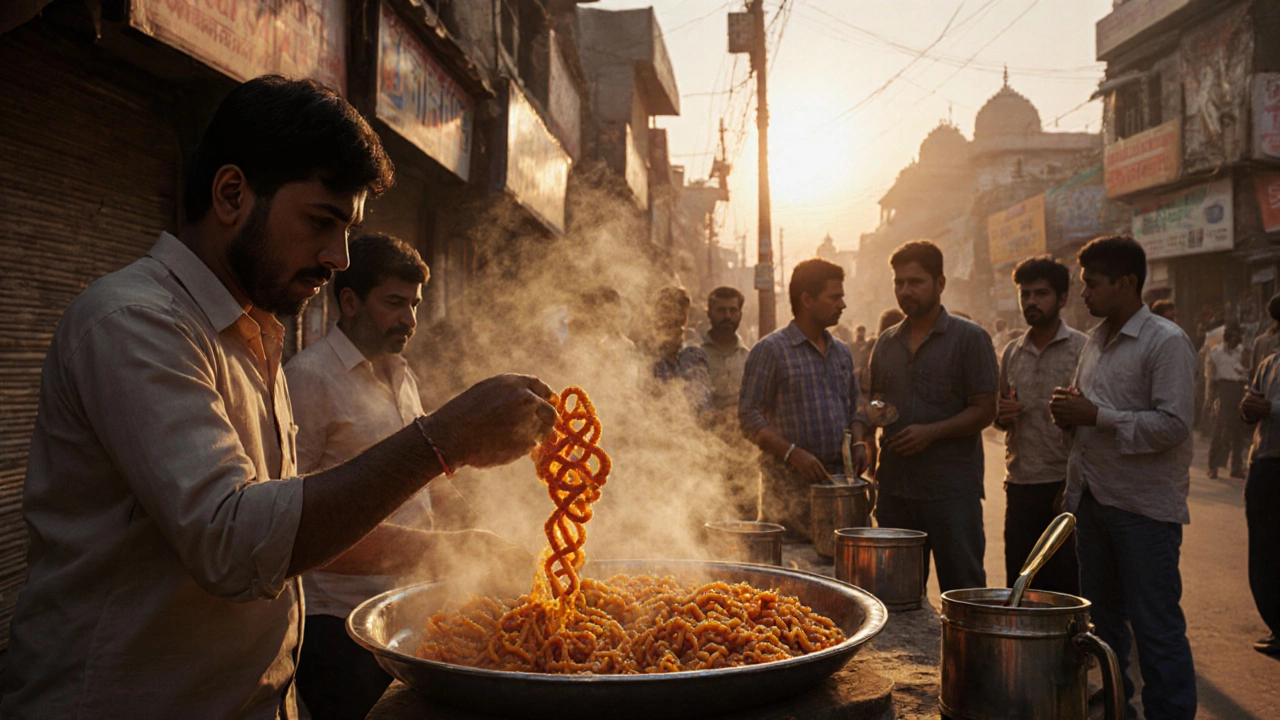
Jalebi doesn’t exist in a vacuum. It’s tied to Indian sweets, a category of desserts deeply rooted in regional traditions and religious rituals. gulab jamun, rasgulla, and barfi are its cousins, but jalebi stands out because of its texture and showmanship. You see it being made fresh at stalls, the batter swirling into golden spirals, then plucked and dunked like candy. It’s eaten hot, often with a scoop of ice cream or a dollop of rabri, turning a simple snack into a luxurious dessert. The batter itself is a science—fermented overnight like dosa batter, but thinner, and often made with maida instead of rice and lentils. That fermentation gives jalebi its slight tang, which cuts through the syrup and keeps it from being cloying. And unlike many sweets that rely on milk or khoya, jalebi is dairy-free, making it a rare sweet that fits into many dietary patterns without compromise.
People don’t just eat jalebi—they remember it. The smell of frying batter on a cold morning. The sound of syrup dripping as you bite into it. The way vendors in Lucknow, Jaipur, or Kolkata each have their own twist—some make it thicker, others crispier, some serve it with a sprinkle of chopped pistachios. It’s a dessert that travels. You’ll find it in Pakistani bazaars, Bangladeshi street carts, and even in Indian grocery stores abroad. But nowhere does it feel as alive as it does in India, where it’s still made by hand, in small batches, every single day.
Below, you’ll find real posts from home cooks and food lovers who’ve cracked the code on perfect jalebi—how to get the right batter consistency, how to avoid soggy spirals, and why some recipes call for yogurt while others stick to just flour and water. You’ll also see how jalebi connects to other Indian staples like rabri, curd, and even fermented batters. No fluff. Just what works.
What Is the Traditional Sweet of India? Top Regional Sweets and Their Stories
India doesn't have one traditional sweet-it has many. Jalebi, rasgulla, and gulab jamun are among the most beloved, each tied to region, festival, and family. These sweets are made with milk, jaggery, and spices, and are still prepared the same way for centuries.
Read More