Indian Home Cooking: Simple Recipes, Real Flavors, and Time-Honored Techniques
When you think of Indian home cooking, the everyday, heartfelt meals made in kitchens across India, not restaurants or fancy events. Also known as desi khana, it’s what feeds families, builds routines, and passes down flavors from one generation to the next. This isn’t about complicated dishes or rare ingredients. It’s about rice that’s cooked just right, dal that warms you up, roti that stays soft all day, and dosa that cracks just enough when you bite into it.
Dosa batter, the fermented mix of rice and lentils that turns into crispy pancakes. Also known as fermented rice batter, it’s the backbone of countless South Indian breakfasts. You don’t need yeast or shortcuts—just patience, the right rice-to-dal ratio, and a warm spot overnight. Same goes for biryani, the layered rice dish with meat or vegetables, slow-cooked to lock in flavor. Also known as dum biryani, it’s often misunderstood as hard to make, but the truth? It’s forgiving if you skip the fancy tools and focus on layering, resting, and steam. And then there’s paneer, the fresh Indian cheese made by curdling milk with lemon juice or vinegar. Also known as Indian cottage cheese, it’s not just for curries—it’s in snacks, salads, and even desserts. The best paneer comes from fresh milk, the right acid, and a little pressure. No fancy equipment needed.
Indian home cooking thrives on small, smart choices: soaking dal for the right time, using raita to balance spicy biryani, keeping roti soft with a cloth and bowl, and knowing when to avoid dal at night. It’s not about perfection—it’s about consistency. Whether you’re making a quick poha for breakfast, fixing a sour dosa batter, or learning why Jains don’t eat carrots, every choice ties back to culture, health, and taste.
Below, you’ll find real fixes for real problems—why your biryani turned out dry, how to get crispy dosa without guesswork, what acid gives you the firmest paneer, and why the white liquid served with biryani isn’t just garnish—it’s essential. These aren’t restaurant tricks. They’re the quiet rules passed down in kitchens from Mumbai to Madurai, from Delhi to Chennai. No fluff. Just what works.
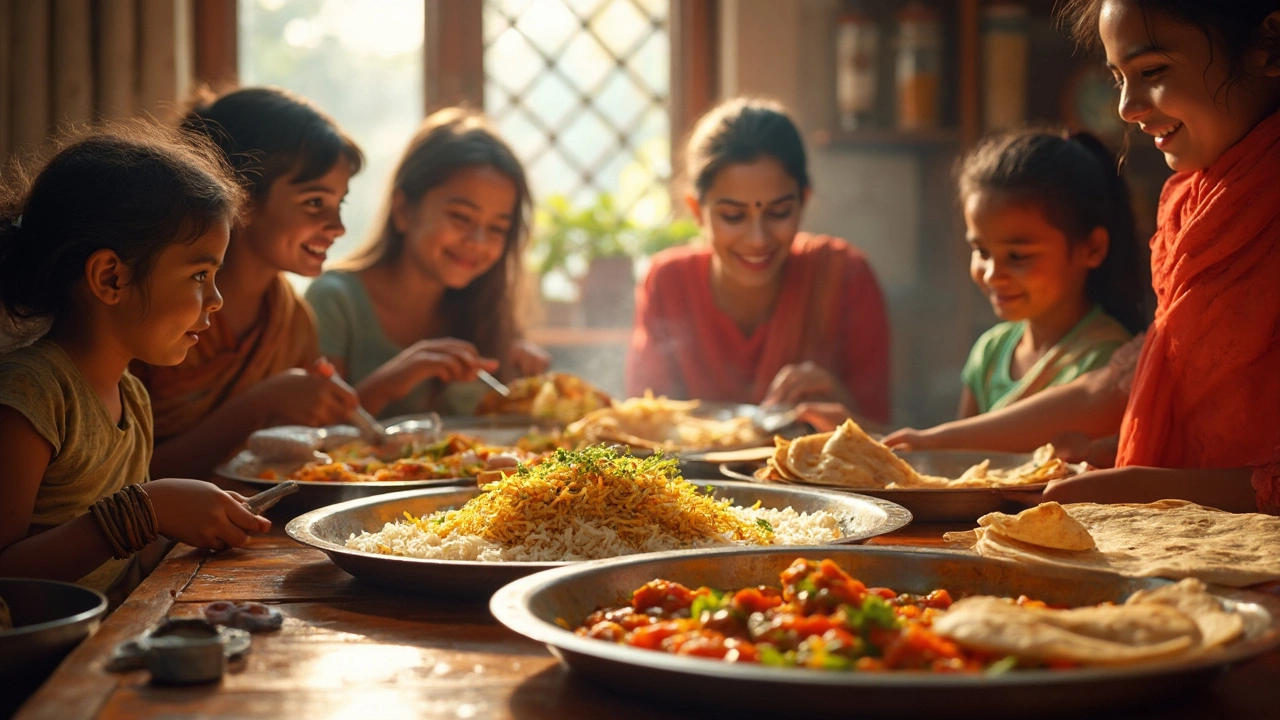
Most Common Indian Meal: What’s Actually On the Table?
Ever wondered what the most common Indian meal really is? This article breaks it down, explains the classic combinations found in Indian homes, and why these dishes are so popular. You'll also learn quick cooking tips and some surprising facts about daily Indian food habits. Simple recipes and smart substitutes will help you bring Indian flavors to your own kitchen. Great for beginners who want to get a true taste of Indian home cooking.
Read More