Indian colloquial terms: Everyday words that define Indian kitchens and meals
When you hear someone say "tadka", a quick sizzle of spices in hot oil that unlocks flavor in Indian cooking. Also known as tempering, it's not just a step—it's a ritual. That’s not a recipe instruction. That’s a cultural code. Indian colloquial terms aren’t just slang—they’re the hidden grammar of Indian kitchens, passed down through generations, whispered in homes, shouted in street stalls, and written in the rhythm of daily meals. These words carry weight: they tell you when something’s ready, when it’s wrong, or when it’s just right.
Think about "dhaba", a roadside eatery serving hearty, no-frills Indian food. Also known as truck stop diner, it’s not a restaurant—it’s a feeling. Or "bhaat", the everyday word for cooked rice across much of India. Also known as chawal, it’s the base of almost every meal, but calling it "rice" misses the soul behind it. These terms aren’t just shortcuts—they’re shorthand for identity, region, and memory. You won’t find them in cookbooks, but you’ll hear them in every home where dal is stirred with a wooden spoon, or where dosa batter ferments overnight under a towel. They connect the way you soak dal to how your grandmother judged if the batter was ready—not by clock, but by smell and bubbles.
These phrases also reveal how Indians think about food. Saying "daal thodi si garam hai" doesn’t just mean the lentils are warm—it means they’re perfectly balanced, not too spicy, just right for the body. Calling something "khana khaane ke layak" isn’t about taste alone—it’s about dignity, care, and whether the meal was made with respect. Even the word "khana"—meaning food—isn’t neutral. It’s the heart of the sentence: "Mera khana ready hai?" isn’t asking if dinner’s cooked—it’s asking if love was poured into it.
And then there’s the quiet power of silence in these terms. No one says "fermented" when they mean dosa batter. They say "achcha hua"—it turned out well. No one lists ingredients for paneer. They just say "choota doodh"—the milk that went sour—and everyone knows what comes next. These aren’t lazy expressions. They’re efficient. They’re alive. They’re the reason you can walk into any Indian home and know, instantly, whether the meal was made by someone who learned from their mother, or someone who just followed a video.
What follows are real posts that dig into these phrases—not as definitions, but as lived experiences. You’ll learn why Jains avoid carrots not because of diet trends, but because of a word they’ve used for centuries. You’ll see how biryani mistakes aren’t just technical—they’re cultural sins. You’ll understand why raita isn’t just a side, but the quiet answer to a spicy meal. These aren’t random recipes. They’re stories wrapped in the language of Indian kitchens. And if you’ve ever wondered why Indian food feels different when it’s made at home, the answer isn’t just in the spices. It’s in the words.
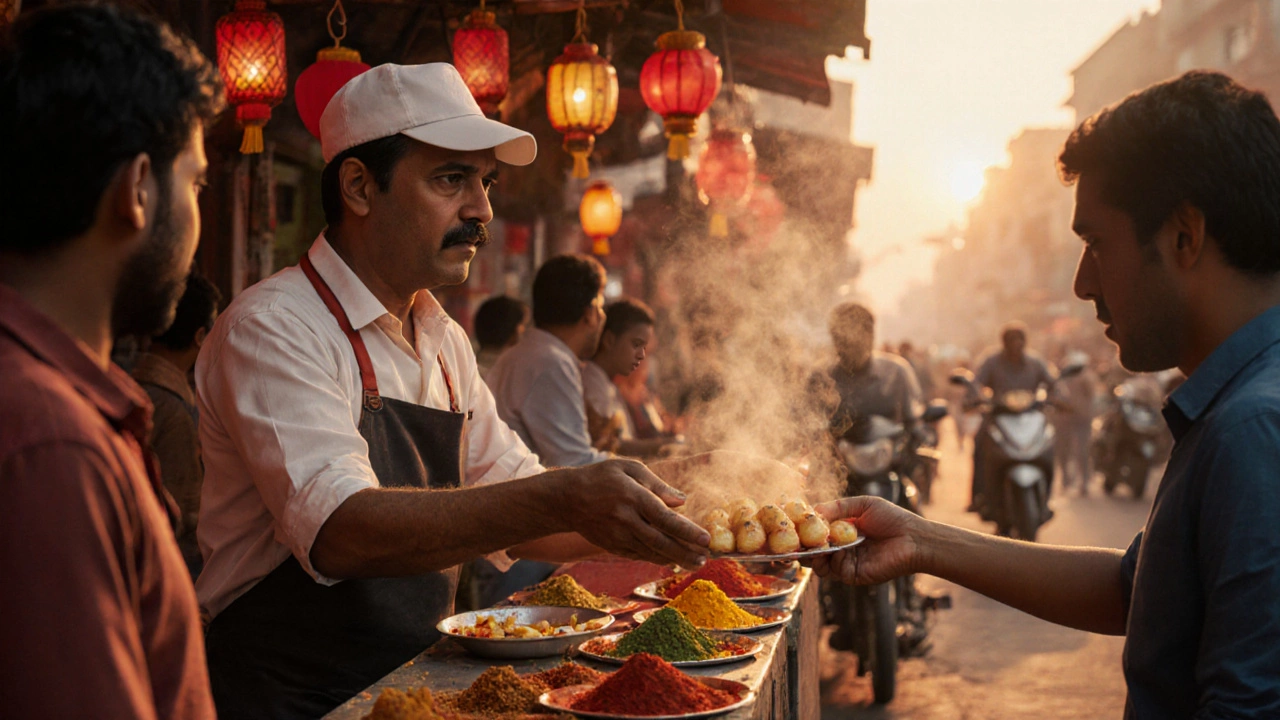
What Is the Indian Slang for Okay? Street Food Lingo You Need to Know
Learn the most common Indian slang for 'okay' used at street food stalls - 'Theekha' - and how to use it to blend in, order faster, and connect with vendors across India.
Read More