Indian Cheese: What It Is, How It's Made, and Why It Matters in Indian Kitchens
When people talk about Indian cheese, a category of fresh, non-melting cheeses used in Indian cooking, primarily paneer. Also known as chenna, it's the backbone of countless dishes—from spicy paneer tikka to creamy palak paneer. Unlike aged Western cheeses, Indian cheese is made fresh daily, using simple ingredients and heat plus acid to curdle milk. It’s not just food—it’s a daily ritual in homes from Delhi to Chennai.
At the heart of Indian cheese is paneer, a firm, crumbly cheese made by curdling hot milk with acid. Also known as cottage cheese in some regions, paneer holds its shape when cooked, making it perfect for grilling, frying, or simmering in gravy. The acid you use—lemon juice, vinegar, or citric acid—makes a real difference in flavor and texture. Too much acid? It turns bitter. Too little? The curds won’t form right. And the milk? Whole milk gives you the most, while toned milk cuts your yield by nearly half. One gallon of whole milk typically gives you 180 to 220 grams of paneer, depending on how much you press it. This isn’t magic—it’s science. The same lactic bacteria that make dosa batter tangy also help in traditional milk storage, but paneer skips fermentation. Instead, it’s all about temperature and timing. Heat the milk to a boil, add your acid, wait for the curds to separate, then strain and press. No cultures, no aging, no waiting. That’s why it’s called fresh cheese.
Indian cheese doesn’t stop at paneer. In some parts of the country, people make chhena—the softer, moister cousin of paneer—used in sweets like rasgulla and sandesh. These are made the same way but with less pressing, keeping the curds tender and juicy. While Western cheese lovers chase aged cheddar or brie, Indian kitchens rely on this quick, no-ripening cheese that fits into breakfasts, lunches, and desserts without missing a beat. It’s dairy that works hard: it soaks up spices, holds up to frying, and melts into sweet syrups without falling apart.
What you’ll find in the posts below isn’t just recipes—it’s the full story of how Indian cheese lives in real kitchens. You’ll learn which acid gives you the best paneer, how much milk you really need to make a block, why your paneer turns rubbery, and how to fix it. You’ll see how it pairs with dal, why it’s in biryani raita, and how it shows up in desserts you didn’t even know were cheese-based. This isn’t about importing cheese from abroad. It’s about understanding the one cheese that’s been feeding India for centuries—made from milk, patience, and a pinch of lemon.
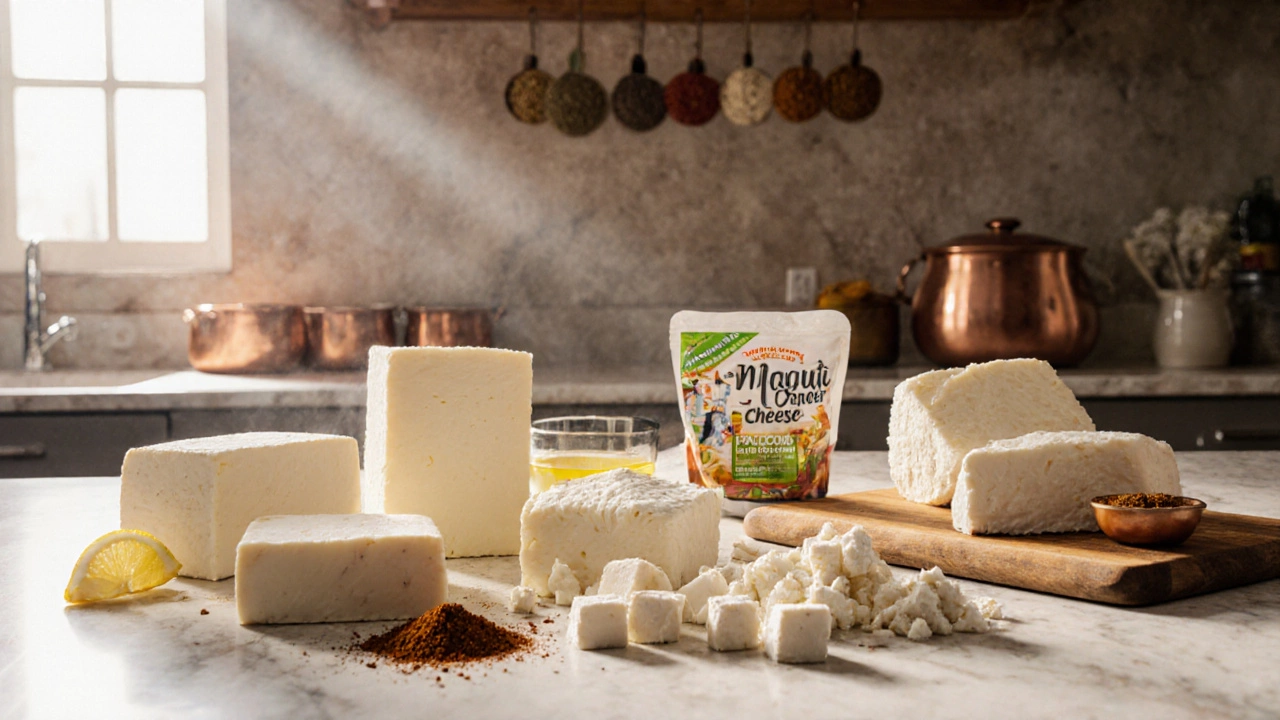
Best Cheese Substitutes for Paneer: A Practical Guide
Discover the top cheese alternatives for paneer, how to prep them, and which dishes they shine in-plus a handy comparison table and FAQs.
Read More
Common Mistakes in Making Perfect Homemade Paneer
Making paneer at home is both rewarding and a bit tricky if you're not careful. Common mistakes often result in crumbly or rubbery textures, but knowing what to avoid can lead to success. The key lies in the right milk and how you curdle it. Explore simple steps to avoid these pitfalls and ensure your paneer is rich and tasty.
Read More