Foods Before Bed: What to Eat and What to Avoid for Better Sleep
When it comes to foods before bed, what you eat in the hours before sleep can directly affect how well you rest, how your body digests food, and even how you feel the next morning. Also known as nighttime eating, this isn’t just about hunger—it’s about timing, digestion, and your body’s natural rhythm. Many people in India reach for a bowl of rice or a plate of dal before turning off the lights, not realizing these choices might be keeping them awake or causing bloating. The truth? Not all meals are created equal when the sun goes down.
Digestion at night, a process that slows naturally as your body prepares for rest, struggles with heavy, oily, or protein-dense foods. That’s why eating dal after sunset, as discussed in our post on why you should avoid eating dal at night, can lead to gas, bloating, and restless sleep. On the flip side, lighter options like warm milk with a pinch of turmeric, a small serving of kheer, or a few soaked almonds are gentle on the stomach and even support melatonin production. These aren’t just traditions—they’re backed by how your body works. Bedtime snacks, when chosen wisely, can help stabilize blood sugar and calm the nervous system, making them more than just a habit—they’re a tool for better health.
Indian kitchens are full of comforting nighttime options, but not all are good for sleep. A bowl of biryani or a plate of paneer curry might feel satisfying, but the spices, fat, and protein can turn your night into a digestive marathon. Meanwhile, a simple glass of milk—a staple in many Indian homes—can be a quiet hero. Milk contains tryptophan and calcium, both linked to better sleep quality. When paired with a little cardamom or saffron, it becomes more than a drink; it becomes a ritual. And if you’re craving something sweet, go for a tiny piece of barfi or a spoonful of rasgulla. These traditional sweets, made with milk and sugar, are easier to digest than fried snacks or heavy curries.
What you avoid matters just as much as what you eat. Skip spicy pickles, fried samosas, or leftover biryani after 8 p.m. These aren’t just bad for digestion—they disrupt your circadian rhythm. Instead, think small, warm, and simple. A cup of warm milk, a few dates, or a slice of whole wheat toast with honey are smarter choices. Even a small bowl of yogurt (raita without onions or garlic) can soothe your gut without weighing you down.
Below, you’ll find real, tested advice from people who’ve been there—trying to sleep after a heavy dinner, wondering why they woke up bloated, or looking for a snack that won’t ruin their night. Whether you’re new to Indian cooking or have been making dal for decades, these posts will help you rethink what happens after the last bite.
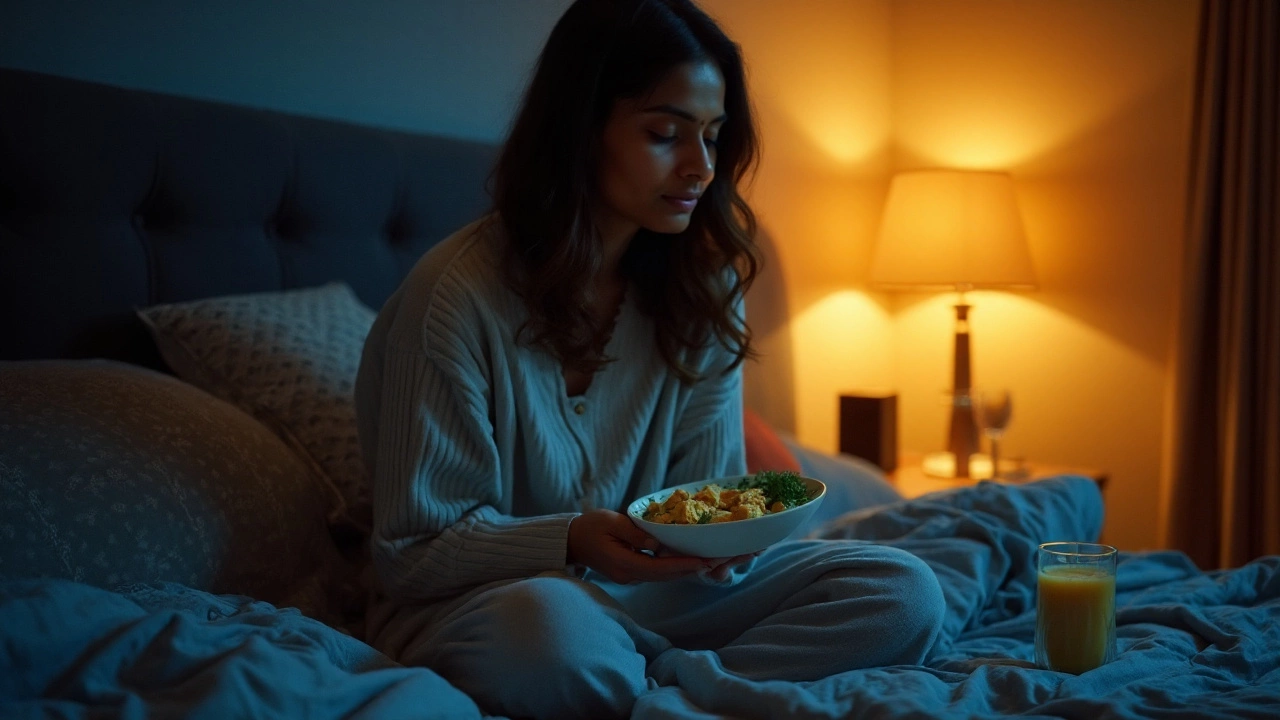
Best Foods to Eat Before Bed for Weight Loss
Discover the top low‑calorie, high‑protein foods you can enjoy before sleep to boost fat burning, protect muscle, and still get a good night’s rest.
Read More