Fermentation Time: How Long It Really Takes for Indian Fermented Foods
When you're making fermentation time, the period during which natural bacteria break down sugars in food to create flavor, texture, and digestibility. Also known as natural rising, it's the quiet magic behind dosa, idli, and even homemade yogurt. This isn't just about waiting—it's about understanding what’s happening in your batter or milk. Skip this step, and you get flat dosas, gummy idlis, or bland curd. Get it right, and your food tastes better, digests easier, and lasts longer.
Dosa batter fermentation, the process where lactic acid bacteria turn rice and lentil batter sour and airy usually takes 8 to 12 hours in warm climates, but can stretch to 24 hours in winter. Temperature matters more than you think—your kitchen being too cold is the #1 reason batter doesn’t rise. Same goes for idli batter fermentation, a close cousin to dosa batter that needs the same patience and warmth. No shortcuts. Adding yeast might speed things up, but it kills the tangy flavor and probiotic benefits you’re after. And don’t forget yogurt fermentation, where milk cultures turn lactose into lactic acid over 6 to 10 hours. Too short? It’s sweet and thin. Too long? It gets too sour or separates. It’s not guesswork—it’s science you can control.
What affects fermentation time? Water quality, grain-to-lentil ratio, ambient heat, even the bowl you use. A steel bowl conducts heat better than plastic. Rainy season? Add a tablespoon of cooked rice to your batter—it feeds the good bacteria. Leftover batter from yesterday? That’s your starter. Fermentation isn’t a timer you set—it’s a rhythm you learn. And once you do, you’ll notice the difference in every bite: crispier dosas, fluffier idlis, creamier curd. The posts below show you exactly how to fix failed batches, adjust for seasons, and get perfect results without fancy gadgets. No fluff. Just what works.
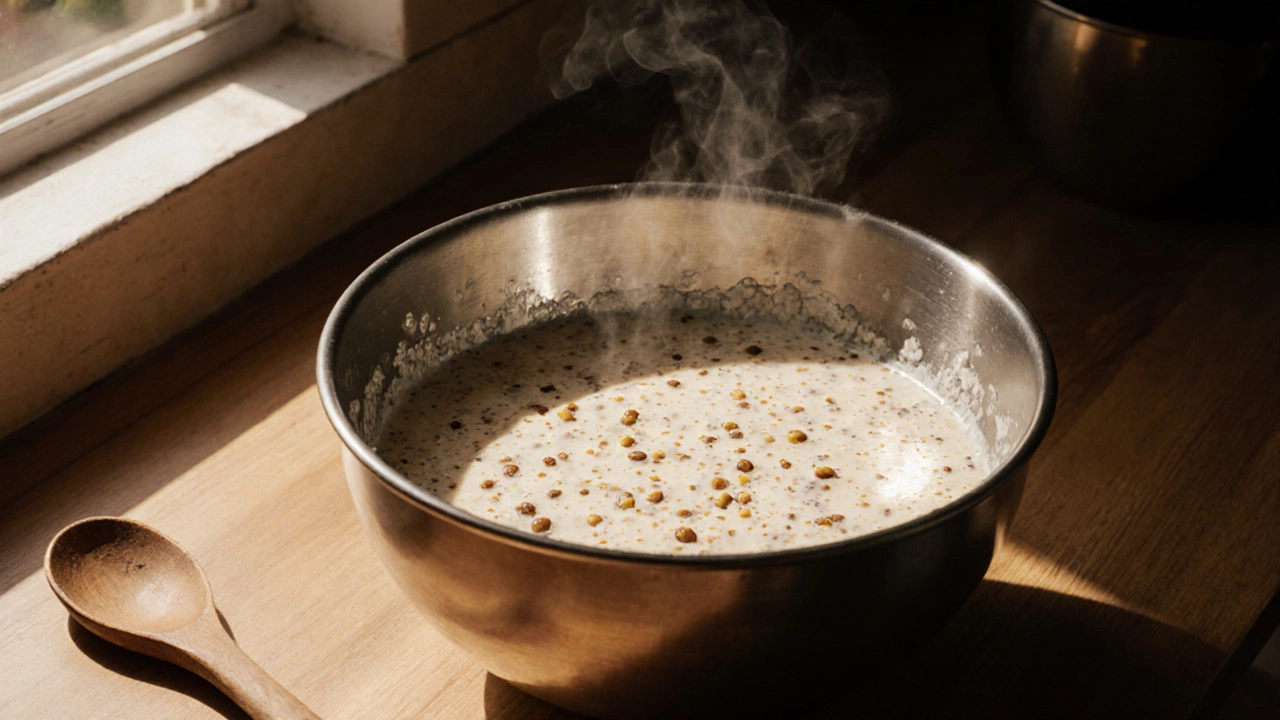
Dosa Batter Fermentation Time: How Many Hours Needed?
Learn the exact fermentation time for dosa batter, how temperature and starter culture affect it, and get tips to achieve perfect dosas every time.
Read More