Dosa Recipe Tips: Fix Sour Batter, Crispiness, and Fermentation Issues
When you make dosa, a thin, fermented rice and lentil crepe from South India. Also known as dosai, it's meant to be crispy on the outside, soft inside, and slightly tangy from natural fermentation. But if your batter turns too sour, doesn’t crisp up, or sticks to the pan, it’s not the recipe—it’s the technique. The key isn’t more salt or more oil. It’s understanding how fermentation works, what rice-to-dal ratio actually matters, and how heat changes everything.
Dosa fermentation, the natural process where lactic acid bacteria break down starches and sugars in the batter. Also known as natural leavening, it’s what gives dosa its light texture and subtle tang. This isn’t like yeast rising—it’s slower, smarter, and sensitive to temperature. In winter, your batter might take 12 hours. In summer, it can over-ferment in 6. That’s why your dosa turns sour: bacteria go too far. You don’t need to add vinegar or lemon juice. Just control the environment. Keep the batter in a warm spot—near the stove, in an oven with the light on, or wrapped in a towel. If it smells like alcohol or tastes too sharp, it’s past its prime. Use it for uttapam instead, or restart with fresh batter.
Dosa batter not crispy, a common frustration caused by wrong rice type, too much water, or a cold griddle. Also known as soggy dosa, this happens when the batter lacks structure or the surface doesn’t sear fast enough. The fix? Use parboiled idli rice—not regular white rice. It holds starch better. Mix it with urad dal in a 3:1 ratio. Blend it just until smooth, not watery. Let it rest overnight. Before cooking, stir in a pinch of salt and a splash of water if needed. Heat your griddle until a drop of water sizzles and vanishes instantly. Pour the batter from the edge inward, spreading it thin with the back of a ladle. Use just enough oil—too much makes it greasy, too little makes it stick. The first dosa is always a test. Adjust heat, then cook the rest.
Most people think dosa is about speed. It’s not. It’s about patience. Waiting for the batter to ferment right. Waiting for the pan to get hot enough. Waiting to flip only when the edges lift easily. You can’t rush the science. And you can’t fix a bad batter with more oil or a fancy spatula. The real dosa recipe tips are simple: use the right rice, control the fermentation, and trust the heat. The posts below show you exactly how to fix each problem—whether your batter smells off, your dosas are rubbery, or your griddle turns them into glue. No guesses. No fluff. Just what works.
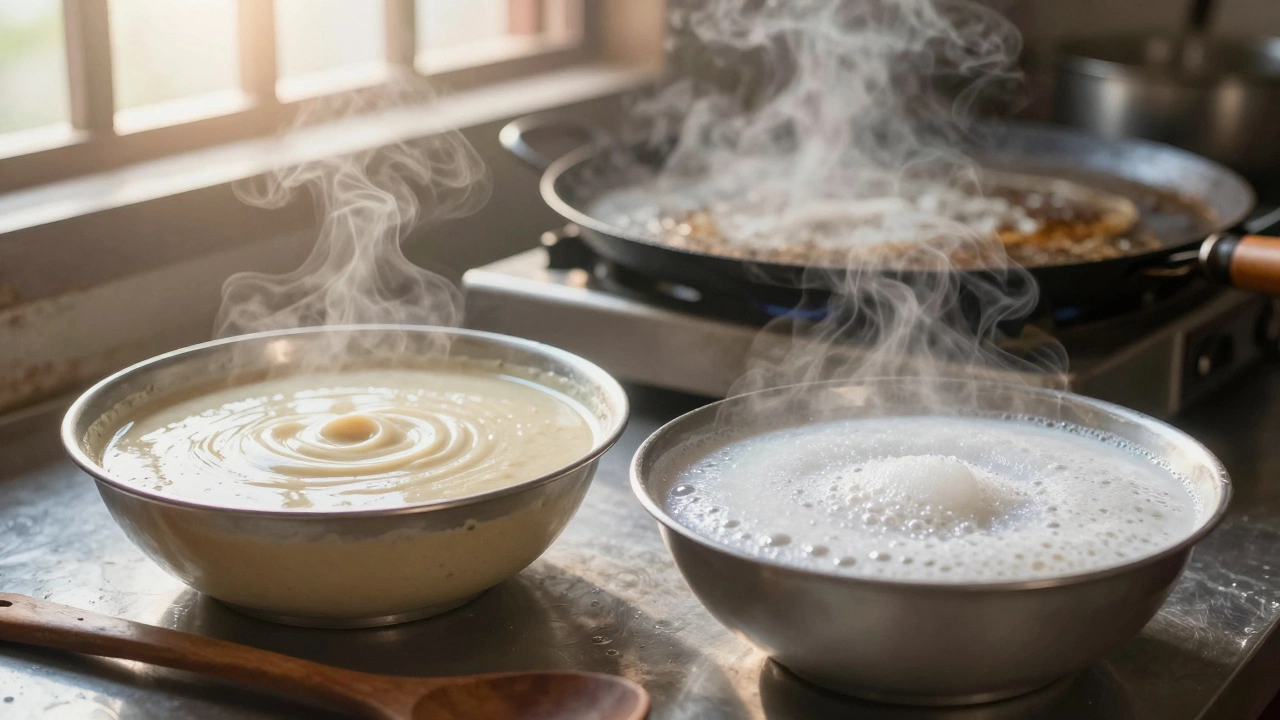
Why is baking soda added to dosa batter? The science behind the perfect crisp
Baking soda in dosa batter isn't a shortcut - it's a chemical helper that improves crispness and texture by balancing fermentation's acidity. Learn why it works, how much to use, and when to skip it.
Read More
Alternatives to Baking Soda in Dosa Batter
Need a substitute for baking soda in your dosa batter? Look no further. Explore simple, effective, and natural alternatives that can help you keep making fluffy and delicious dosas without baking soda. Whether you're out of baking soda or seeking a healthier option, there's something here for everyone. Discover new ways to perfect your dosa recipe.
Read More